
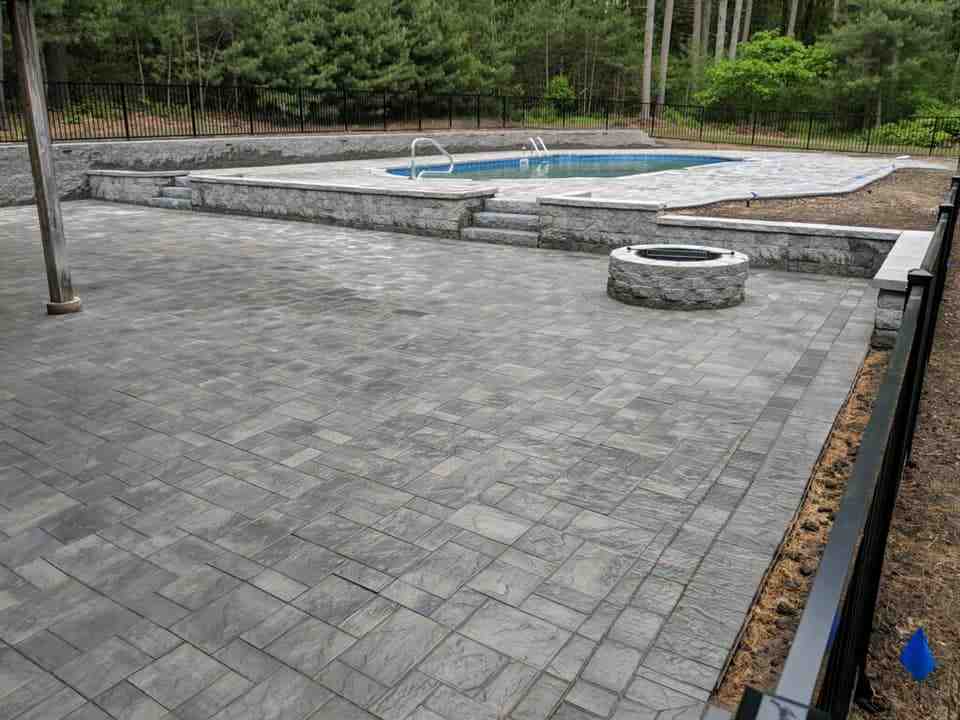
Retaining wall design is crucial for both function and aesthetics in landscaping projects. A well-thought-out retaining wall can prevent soil erosion, manage slopes, and improve the visual appeal of your property. Here’s a brief rundown of what you need to know:
I’m Scott McLeod, with over 30 years of experience in landscaping and hardscaping. At McLeod Landscaping, we specialize in retaining wall design, offering custom solutions to meet the unique needs of commercial and residential properties. With our expertise, we ensure each project not only meets functional requirements but also improves the overall landscape design.
Retaining wall design vocabulary:
– retaining wall ideas
– retaining wall drainage
– how much does a retaining wall cost
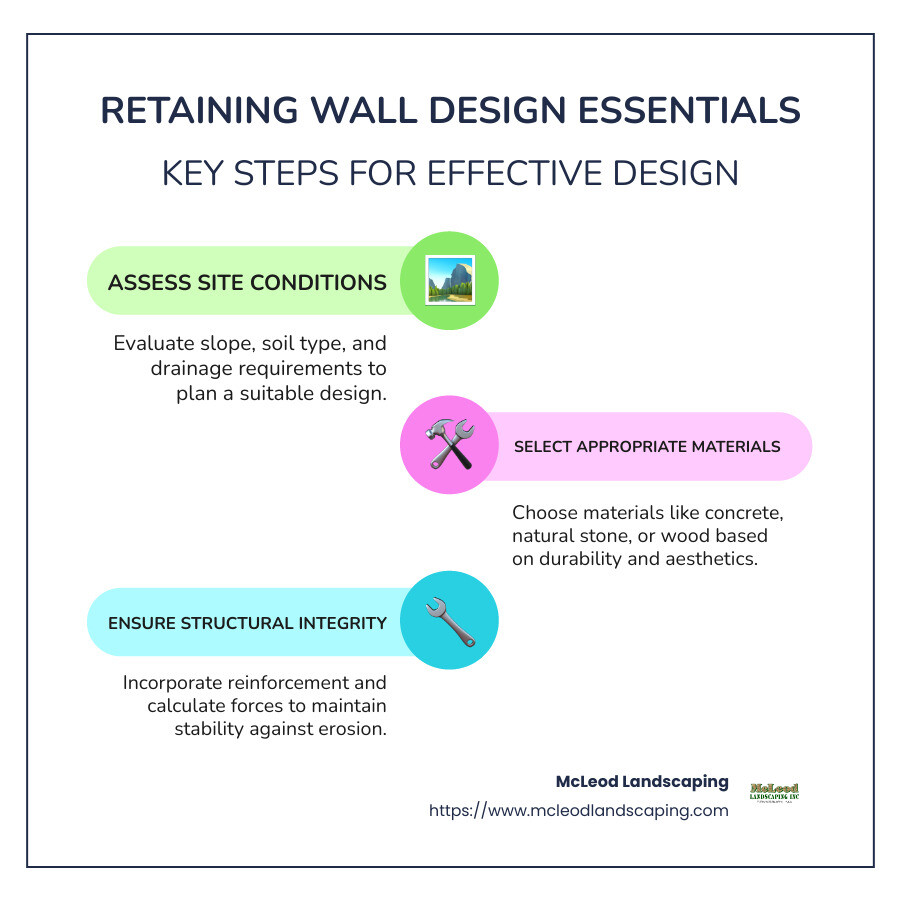
Creating a retaining wall design that is both functional and visually appealing involves a few key components. Let’s explore the essentials: materials, geometry, and structural requirements.
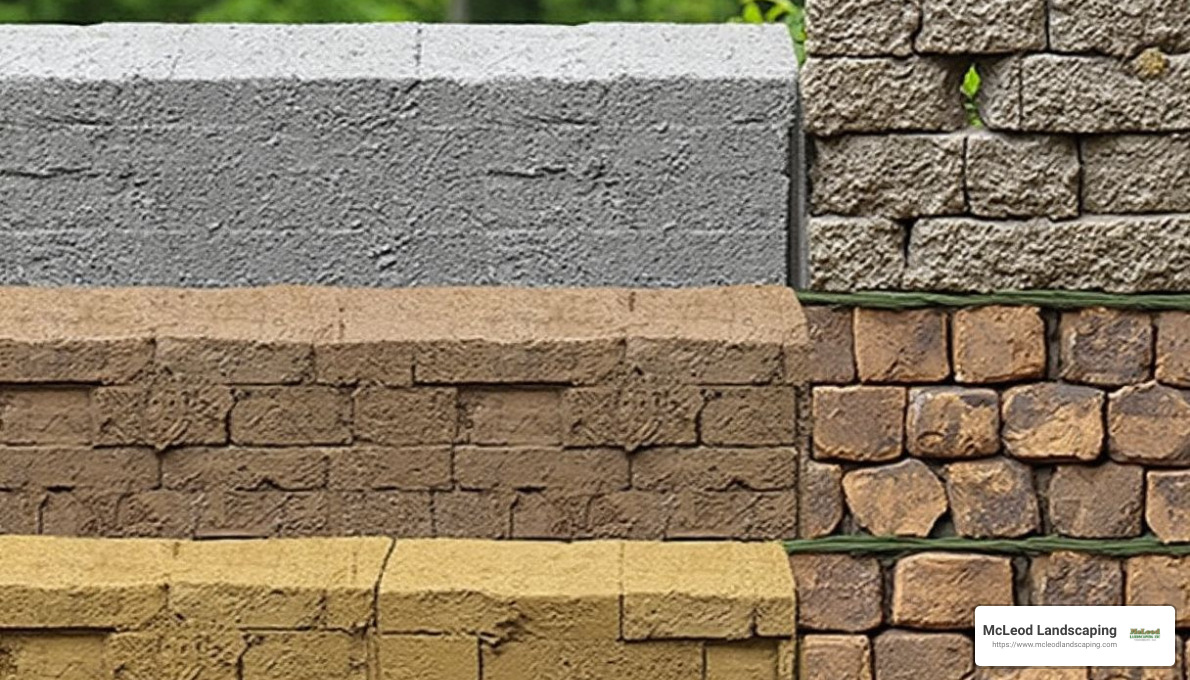
The choice of materials is foundational in retaining wall design. Each material comes with its benefits and limitations.
The geometry of your retaining wall is critical for its stability and function. Here are the main elements to consider:
Ensuring the structural integrity of a retaining wall involves understanding reinforcement needs and stability factors.
By carefully selecting materials, planning the geometry, and addressing structural requirements, you can create a retaining wall that is both sturdy and visually appealing. This foundation is vital for the subsequent steps in your retaining wall project.
Next, we will explore how to calculate forces and ensure stability in retaining wall design.
Designing a retaining wall involves understanding various forces and ensuring that the wall remains stable under those forces. Let’s break it down into three key areas: understanding loads, lateral pressure theories, and stability analysis.
Retaining walls must handle several types of loads:
Two main theories help calculate the lateral earth pressures exerted by the soil:
Depending on the wall’s movement, different pressure states may occur:
Ensuring the stability of a retaining wall involves checking for several potential failure modes:
By understanding these forces and stability factors, you can design a retaining wall that stands strong against the elements. This knowledge is essential for creating a safe and effective retaining wall design.
Next, we’ll explore advanced techniques in retaining wall design, including seismic considerations and drainage solutions.
When designing retaining walls, it’s crucial to incorporate advanced techniques that address unique challenges. Let’s dig into seismic design, effective drainage solutions, and enhancing the wall’s aesthetic appeal.
In regions prone to earthquakes, retaining walls must withstand seismic forces. The Mononobe-Okabe Method is a widely used approach for calculating seismic loads. This method considers both horizontal and vertical seismic accelerations, providing a comprehensive analysis of the forces acting on the wall during an earthquake.
Seismic loads add complexity to the design process. They require careful consideration of the wall’s height, weight, and the type of soil it retains. By integrating seismic design principles, you ensure the wall remains stable and safe even in the event of an earthquake.
Proper drainage is essential to prevent water buildup behind the wall, which can lead to hydrostatic pressure and potential failure. Here are some effective drainage solutions:
By incorporating these drainage solutions, you protect the wall from the damaging effects of water and extend its lifespan.
While functionality is key, the visual impact of a retaining wall should not be overlooked. Here are some ways to improve its aesthetic appeal:
These aesthetic improvements not only improve the wall’s appearance but also increase the overall appeal and value of your property.
By using these advanced techniques, you can create retaining walls that are not only functional but also visually appealing and capable of withstanding environmental challenges.
Next, we’ll cover practical tips and best practices for constructing retaining walls, ensuring your project is executed smoothly and successfully.
Constructing a retaining wall is a meticulous process that requires careful planning and execution. Let’s explore some practical tips and best practices to ensure a successful project.
Excavation and Soil Compaction
Start by selecting the right location for your wall. Minimize soil excavation to reduce costs and disturbance to the site. Once the area is marked, proceed with excavation. It’s crucial to compact the soil properly to create a stable foundation. This step helps prevent future settling and ensures the wall’s longevity.
Foundation Soil
Before laying the foundation, assess the soil’s bearing capacity. The soil should be firm and well-drained. If necessary, improve the foundation soil by adding gravel or other suitable materials to improve stability.
Block Storage and Geogrid Protection
Proper material handling is essential to maintain the integrity of your retaining wall components. Store blocks on wood pallets and protect them from moisture and dirt. Geogrid materials should be kept dry and clean to maintain their strength and effectiveness.
Wall Rock
Use compactible aggregate, known as wall rock, in the base and behind the blocks. It should range in size from 0.25 to 1.5 inches and have a balanced mix for good compaction. This ensures proper drainage and stability.
Layering and Compaction
When constructing the wall, build it in layers. Each layer should be compacted thoroughly to eliminate air pockets and increase stability. This technique is crucial for maintaining the wall’s structural integrity.
Alignment and Connection
Ensure each block is aligned correctly to maintain a straight and stable wall. Use a string line or laser level to guide your alignment. Properly connect each layer, especially when using geogrid reinforcement, to improve the wall’s strength.
By adhering to these best practices, you can construct a retaining wall that is both durable and visually appealing. Next, we’ll discuss how McLeod Landscaping can assist with your retaining wall projects, offering comprehensive services and expert solutions.
When it comes to retaining wall design, McLeod Landscaping stands out with its comprehensive services and experienced professionals. Let’s explore how we can transform your outdoor space with custom solutions custom to your needs.
At McLeod Landscaping, we offer a full spectrum of services for designing and building retaining walls. From the initial consultation to the final installation, our team is committed to delivering exceptional results. We understand that each project is unique, and we strive to provide solutions that blend functionality with aesthetic appeal.
Our services include:
Our team at McLeod Landscaping is composed of seasoned experts with years of experience in the landscaping industry. We pride ourselves on our professionalism and reliability, ensuring that every project is completed on time and to the highest standards.
We recognize that every outdoor space is unique, which is why we offer personalized solutions to fit your specific needs and preferences. Whether you’re looking for a simple garden wall or an elaborate hardscaping project, McLeod Landscaping can bring your vision to life.
With McLeod Landscaping, you can expect a seamless process from start to finish. Our team is dedicated to making your landscape vision a reality, ensuring that your retaining wall not only serves its purpose but also improves the beauty and functionality of your property.
In the next section, we’ll summarize the importance of professional design and how to get started with McLeod Landscaping for your retaining wall projects.
Designing an effective retaining wall is not just about stacking stones or pouring concrete. It involves understanding the science behind retaining wall design, from selecting the right materials to ensuring structural stability. At McLeod Landscaping, we bring over 30 years of experience to every project, ensuring that your retaining wall not only meets functional needs but also improves your outdoor space.
Retaining walls play a crucial role in landscape design by preventing erosion, managing water flow, and creating usable outdoor spaces. McLeod Landscaping excels in delivering custom solutions that blend engineering precision with aesthetic appeal. Our comprehensive services cover every aspect of retaining wall design and installation, ensuring a seamless and stress-free experience.
Engaging professionals like McLeod Landscaping for your retaining wall project is essential. Our expertise ensures that your wall is structurally sound, visually appealing, and built to last. We consider all factors, including soil type, load pressures, and environmental conditions, to craft a design that is both effective and sustainable.
Professional design not only guarantees safety and durability but also maximizes the functionality and beauty of your outdoor space.
Ready to transform your landscape with a professionally designed retaining wall? Trust McLeod Landscaping to bring your vision to life. Our team is committed to delivering exceptional service, from the initial consultation to the final installation.
Find our retaining wall installation services and let us help you create an outdoor space that you and your family will enjoy for years to come. Reach out to us today to schedule a consultation and take the first step towards enhancing your property with a beautifully designed retaining wall.
At McLeod Landscaping, we’re not just building walls; we’re crafting the backdrop for your family’s best memories.
Contact McLeod Landscaping today at (978) 640-0957 or click here to schedule a consultation for retaining wall installation. Let our experienced team design and install a functional and visually appealing retaining wall that enhances your landscape.

1881 Main St Unit 1, Tewksbury, MA 01876