
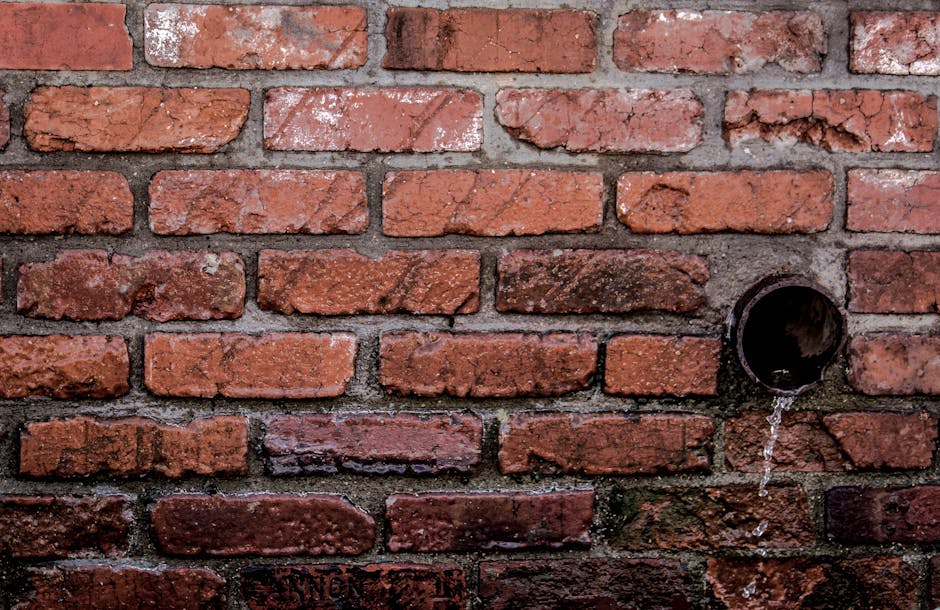
Retaining wall drainage is more crucial than you might think. Without proper drainage, water builds up behind the wall. This can cause erosion, wall movement, and even collapse. A good drainage system reduces pressure, directs water away, and helps keep the wall stable.
I’m Scott McLeod, and I’ve spent over three decades mastering landscaping and hardscaping solutions, including expert retaining wall drainage systems. My team at McLeod Landscaping ensures your walls stand strong and handle water efficiently.
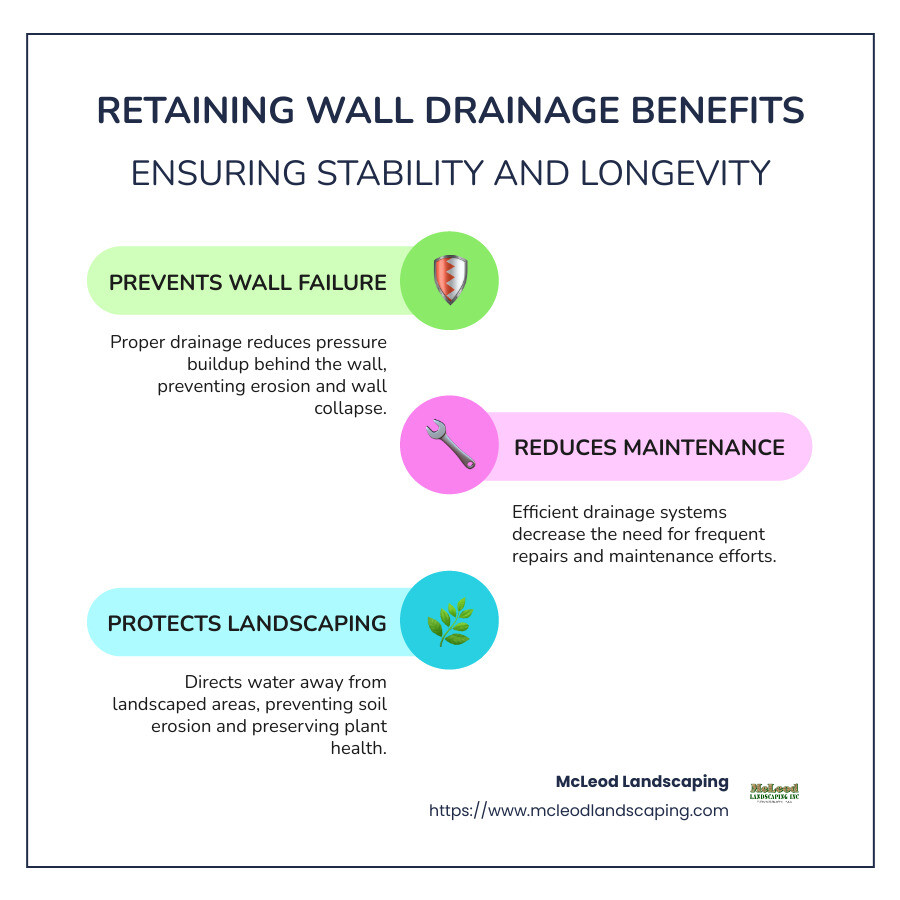
Glossary for retaining wall drainage:
– concrete retaining walls
– how much does a retaining wall cost
– retaining wall ideas
Retaining wall drainage is not just a technical detail; it’s a cornerstone of effective landscape design. Let’s explore why it’s so vital.
Purpose and Importance
The primary role of drainage in retaining walls is to control water flow. When it rains, water naturally flows down the wall, seeking the path of least resistance. Without proper drainage, this water builds up behind the wall, leading to increased pressure and potential failure. A well-designed drainage system ensures water is collected and redirected safely away from the wall, maintaining its integrity and functionality.
Benefits
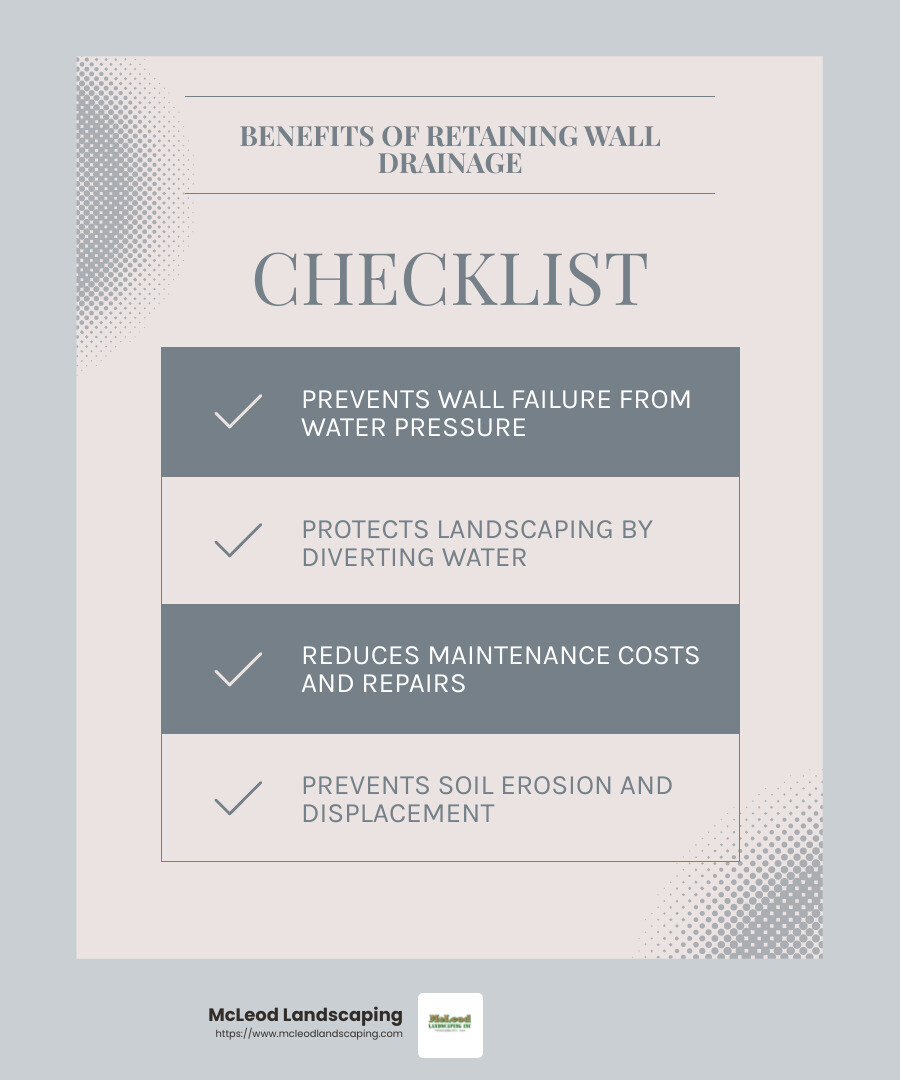
Prevention, Protection, and Maintenance
Investing in retaining wall drainage is about safeguarding your landscape and ensuring long-term stability and beauty. It’s a small step that makes a big difference in the health of your outdoor spaces.
Selecting the right materials is crucial for effective retaining wall drainage. Each component plays a distinct role in ensuring water flows away from the wall, preventing damage and maintaining stability.
1. Perforated Pipe
A perforated pipe is a must-have for subsurface drainage. Its tiny holes allow water to enter and be redirected away from the wall. This type of pipe is typically placed at the base of the wall, ensuring that any water collecting behind it can escape efficiently.
2. Gravel
Gravel acts as a filter and a conduit. It prevents soil from clogging the drainage system while allowing water to flow freely. Use clean, crushed stone or gravel between 1/2 and 3/4 inch in size. It’s recommended to have at least 12 inches of gravel backfill behind the wall, though more is better. This not only improves drainage but also improves the wall’s structural integrity.
3. Filter Fabric
Also known as geotextile fabric, this material is placed between the soil and gravel. It keeps soil particles from entering the gravel, thus preserving the effectiveness of the drainage system. Use filter fabric at all points where soil and gravel meet, including under the wall’s gravel footing and between the footing drain’s gravel and the soil.
Proper installation techniques are just as important as choosing the right materials. Let’s look at some key techniques that ensure your drainage system works efficiently.
1. Footing Drain
A footing drain is installed at the base of the retaining wall to collect and redirect water. This drain typically consists of a perforated pipe placed within a trench filled with gravel. The pipe should lead out, or be “daylighted,” to allow water to flow away from the wall. This step is critical for long-term wall performance.
2. Backfill
Proper backfilling is essential for drainage and wall stability. After placing the footing drain, backfill the area with gravel. This helps manage water flow and reduces pressure on the wall. The gravel layer should be compacted to ensure stability and further improve drainage.
3. Weep Holes
Weep holes are small openings in the wall that allow trapped water to escape. They are strategically placed along the wall to relieve pressure and prevent water buildup. These holes are especially important in taller walls where water pressure can be significant.
By using the right materials and techniques, you can create a robust drainage system that protects your retaining wall from water damage. This ensures your wall remains stable and functional for years to come.
When it comes to retaining wall drainage, understanding the different systems available is crucial. Each system has its own benefits and is suited to different environments and wall designs. Let’s explore both natural and engineered solutions for effective drainage.
Gravel Base
A gravel base is one of the simplest and most effective natural drainage techniques. By laying a substantial layer of gravel at the base of your retaining wall, you create a foundation that allows water to flow away from the wall. The gravel acts as both a filter and a drainage path, preventing soil from clogging the system while letting water escape.

The gravel base should extend at least 12 inches behind the wall, though more is recommended for improved drainage and structural integrity. This natural method is efficient and improves the wall’s longevity by reducing hydrostatic pressure.
For more complex drainage needs, engineered solutions offer precision and efficiency.
French Drain
A French drain is a highly effective engineered solution for managing water flow. It consists of a perforated pipe placed in a trench filled with gravel. The pipe collects and redirects water away from the wall, preventing buildup and potential damage.
Dry Well
A dry well is another engineered option that can handle excess water. It involves creating a large underground cavity filled with gravel or a pre-fabricated unit that allows water to percolate into the surrounding soil.
Both natural and engineered drainage options play vital roles in maintaining the stability and effectiveness of your retaining wall. By choosing the right system for your specific needs, you ensure your wall remains strong and functional, protecting your property for years to come.
Even the best retaining wall drainage systems can face issues over time. Identifying these problems early can save you from costly repairs. Here are some signs to watch for:
Once you’ve identified a drainage problem, the next step is to fix it. Here are some common solutions:
Preventing drainage issues is always better than fixing them. Here are some tips to keep your system functioning well:
By staying vigilant and addressing issues promptly, you can ensure your retaining wall remains a strong and reliable feature of your landscape.
Absolutely! Even a 2-foot retaining wall needs an effective drainage system. Without it, water can build up behind the wall, leading to pressure that might cause the wall to lean or even collapse. All walls need systems to manage water effectively, preventing damage over time. A simple solution like a perforated pipe can make a huge difference in maintaining the wall’s integrity.
When it comes to retaining wall drainage, depth matters. It’s recommended to have at least 12 inches of gravel behind the wall. This gravel layer acts as a filter, allowing water to pass through while keeping soil in place. The gravel should be clean, angular, and compacted to ensure optimal drainage and structural support.
For wood retaining walls, lightweight drainage options are key. Pea gravel is an excellent choice due to its small size and rounded shape. It ensures water flows freely while minimizing pressure against the wood. Lightweight options help maintain the wall’s stability without adding excessive weight, which is crucial for wood structures.
By understanding these basics, you can ensure your retaining wall remains sturdy and functional for years to come.
Retaining walls are essential for creating usable space and preventing erosion, but their effectiveness largely depends on proper drainage. Without it, even the sturdiest walls can succumb to water pressure, leading to costly repairs or complete failure. By implementing effective retaining wall drainage solutions, you ensure the longevity and stability of your structure.
Longevity is not just about building a wall that lasts; it’s about maintaining its strength and function over time. Proper drainage keeps water from accumulating behind the wall, reducing pressure and preventing structural damage. Techniques such as using a gravel base, installing weep holes, and opting for engineered solutions like French drains can all contribute to a long-lasting retaining wall.
At McLeod Landscaping, we understand the importance of comprehensive drainage solutions. With over 30 years of experience, our team is dedicated to providing high-quality services that improve both the functionality and aesthetic appeal of your landscape. Whether you’re looking to install a new retaining wall or repair an existing one, our expertise ensures your project is handled with care and precision.
For more information on how we can help with your retaining wall installation and drainage needs, visit our service page. Trust McLeod Landscaping to deliver solutions that stand the test of time, keeping your outdoor spaces beautiful and secure.
Contact McLeod Landscaping today at (978) 640-0957 or click here to schedule a consultation for retaining wall installation. Let our experienced team design and install a functional and visually appealing retaining wall that enhances your landscape.

1881 Main St Unit 1, Tewksbury, MA 01876