
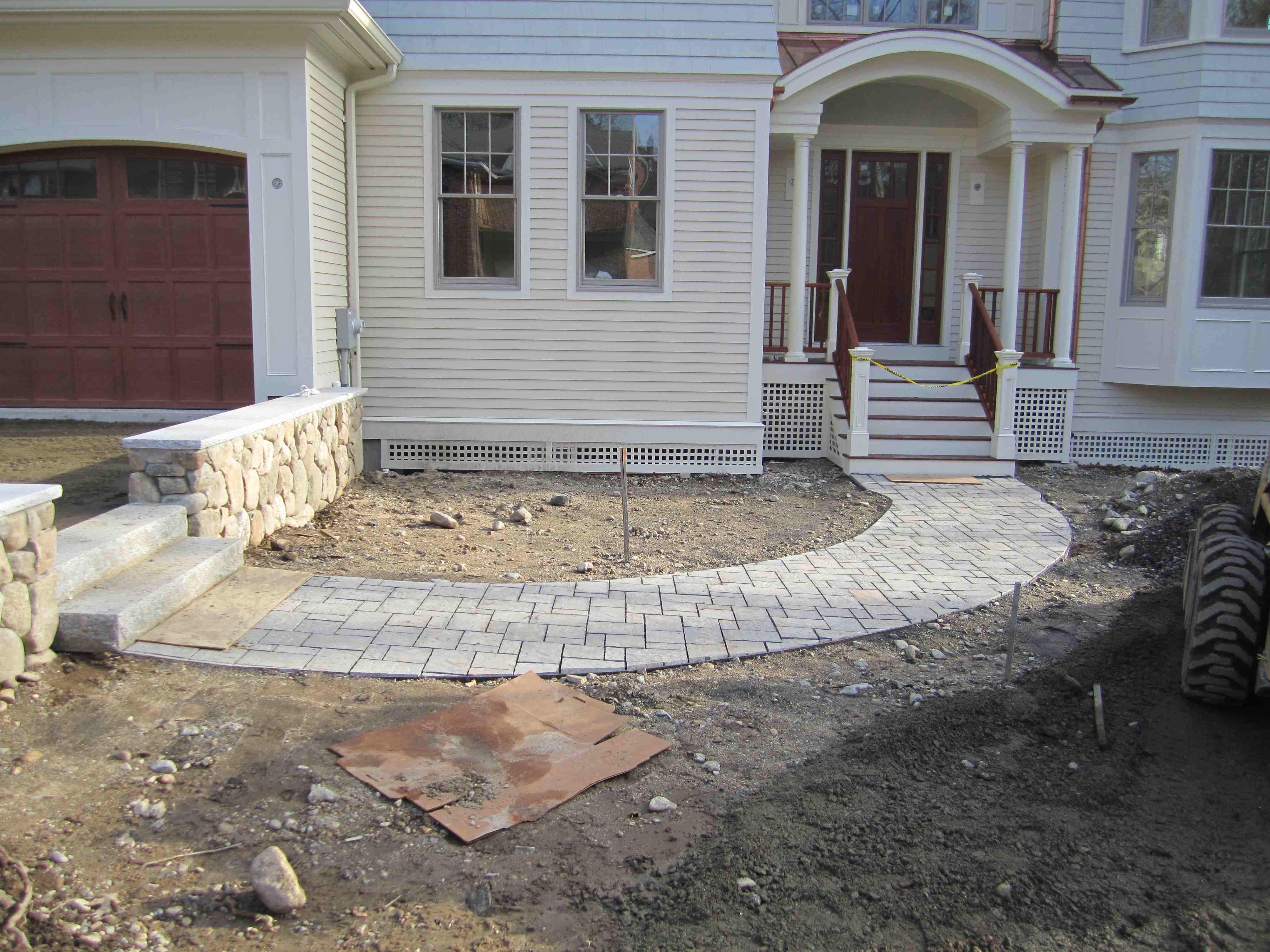
How much does a retaining wall cost? On average, the price ranges between $3,565 and $9,645. However, the cost per square foot typically falls between $20 and $53 for professional installation and $4 to $20 if you opt for a DIY approach.
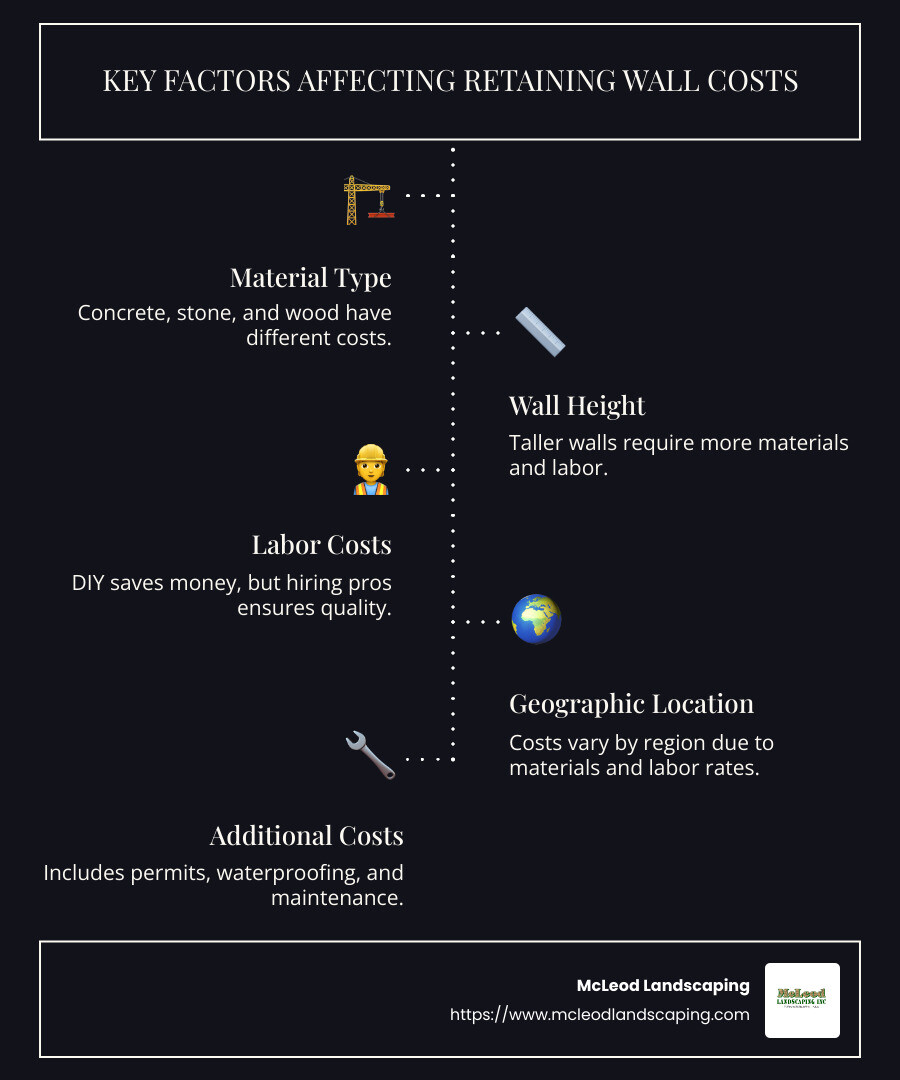
Key Factors Affecting Cost:
– Material Type: Concrete, stone, and wood each have different price points.
– Wall Height: Taller walls generally require more materials and labor.
– Labor Costs: DIY can save money but hiring a professional may ensure quality.
– Geographic Location: Costs vary by region due to material availability and local labor rates.
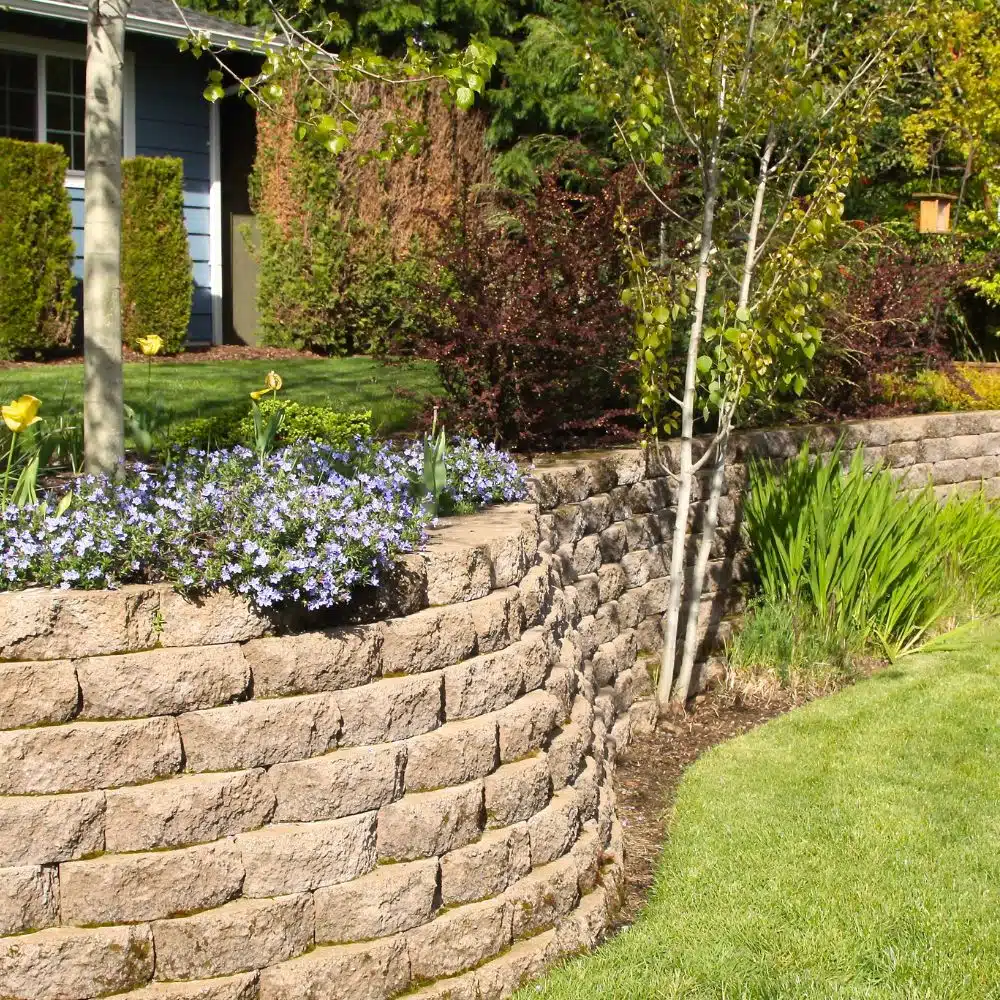
Retaining walls are more than just functional structures. They play a crucial role in preventing soil erosion, enhancing curb appeal, and maximizing usable outdoor space. Whether changing slopes into gardens or protecting property from stormwater runoff, a well-constructed retaining wall is invaluable to both residential properties and commercial landscapes.
At McLeod Landscaping, we understand the nuances involved in building durable and aesthetically pleasing retaining walls. With over 30 years of expertise in the Merrimack Valley, we’ve helped numerous clients understand how much does a retaining wall cost and achieve their landscaping goals. Our focus on quality craftsmanship ensures your satisfaction and is a testament to our commitment to excellence.
Must-know how much does a retaining wall cost terms:
– concrete retaining wall blocks
– landscape blocks
– retaining wall stone
When planning for a retaining wall, several factors influence the overall cost. These include the materials used, the size and height of the wall, and labor expenses. Let’s break these elements down to give you a better understanding of what to expect.
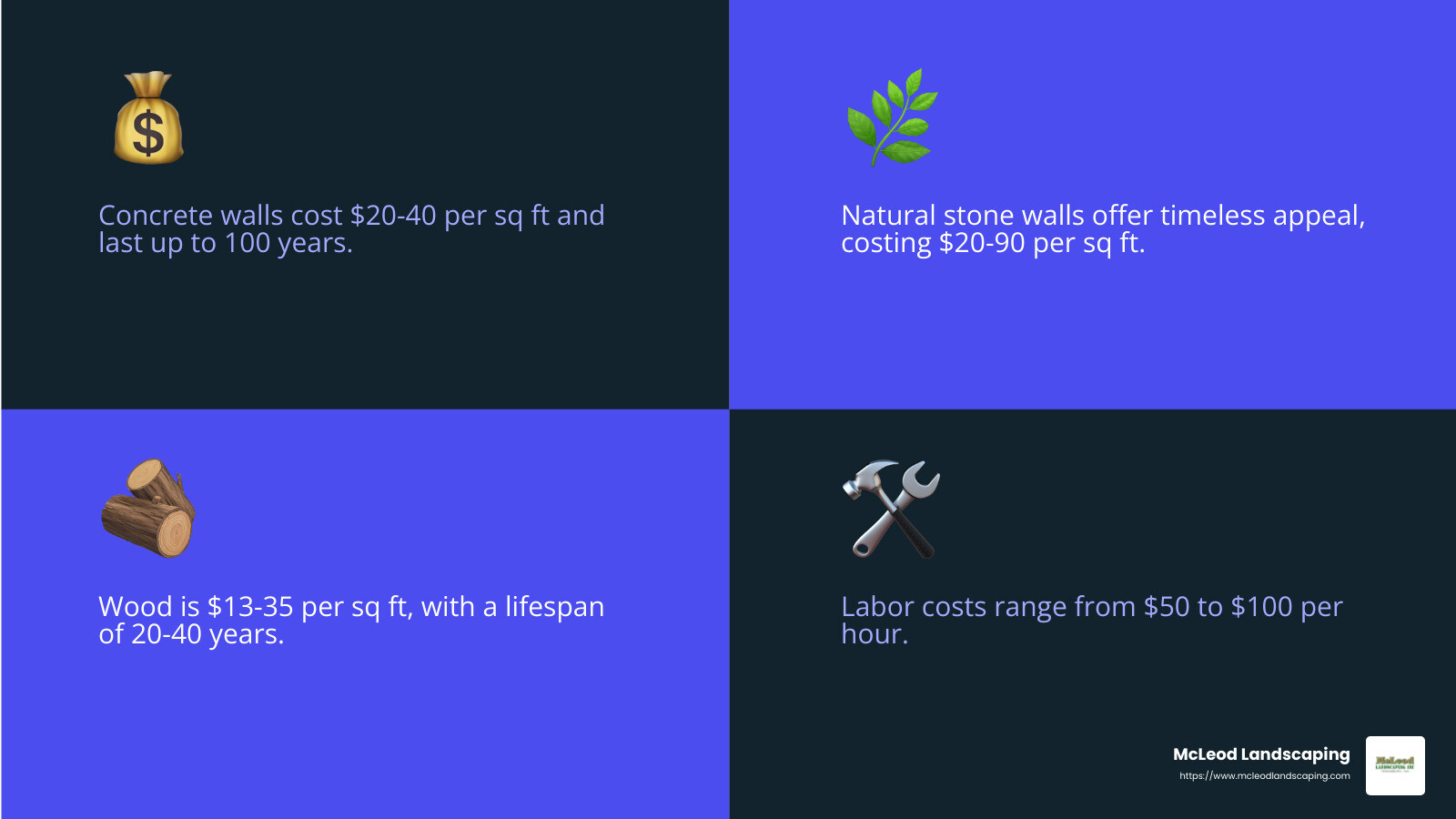
The choice of material greatly impacts the cost of your retaining wall. Here’s a quick overview:
The size and height of your retaining wall significantly affect the cost. Here’s how:
Labor costs can vary based on your location and the complexity of the project:
Building a retaining wall is a significant investment. Understanding how much does a retaining wall cost and the factors involved can help you make informed decisions. Whether you go the DIY route or hire professionals, knowing these details ensures you get the best value for your money.
Next, we’ll dive into the key factors that can affect retaining wall costs, including material choice, wall location, and terrain considerations.
When budgeting for a retaining wall, several key factors come into play. These include material choice, wall location, terrain, labor, drainage, and soil type. Each factor can significantly influence the overall cost.
The materials you choose for your retaining wall can impact not just the cost, but also the wall’s durability and aesthetic appeal.
Choosing the right material is crucial for balancing cost, durability, and design preferences.
The location and environmental conditions of your site can also affect the cost of building a retaining wall.
Understanding your terrain and environmental conditions helps you plan for potential challenges and additional costs. Proper planning ensures your retaining wall is both functional and cost-effective.
When planning your retaining wall, consider these factors to ensure a successful project that meets your needs and budget. Next, we’ll explore additional costs and considerations that could impact your retaining wall project, such as permits and geographical location.
When planning a retaining wall, consider not just the initial costs but also various additional expenses that might arise. These can include permits, waterproofing, and the impact of geographical location and time of year.
Enhancing your retaining wall can add both beauty and functionality to your space.
Once your wall is built, regular maintenance is key to keeping it in good condition.
Keeping these additional costs and considerations in mind will help you budget more accurately for your retaining wall project. Up next, we’ll tackle some frequently asked questions about retaining walls, including their value and longevity.
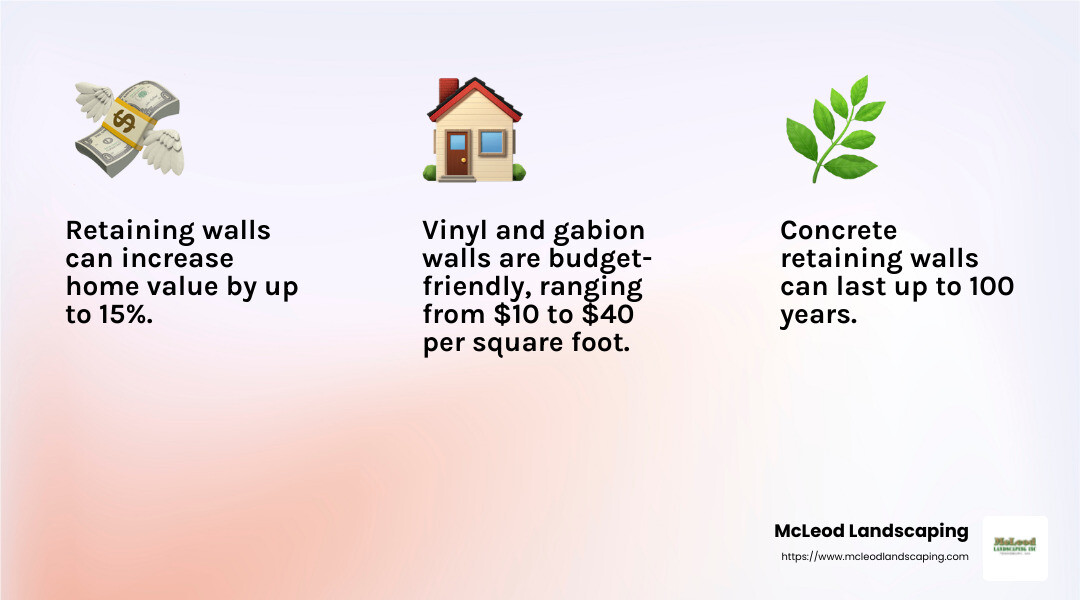
When it comes to affordability, vinyl and gabion walls are often the most budget-friendly choices. Vinyl walls typically cost between $10 and $15 per square foot, while gabion walls range from $10 to $40 per square foot. These materials are not only economical but also offer durability and low maintenance. If you’re looking to save on costs, these options might be worth considering.
The lifespan of a retaining wall depends largely on the materials used. Concrete walls are among the most durable, lasting up to 100 years. Stone walls can also stand the test of time, with a lifespan ranging from 50 to 200 years. On the other hand, wooden retaining walls generally have a shorter lifespan, lasting between 10 and 40 years. Choosing the right material is crucial for ensuring the longevity of your wall.
Yes, retaining walls can significantly boost your property’s value. They improve curb appeal and provide functional benefits like erosion control and increased usable space. A well-designed retaining wall can increase your home’s value by up to 15%. This makes it a wise investment, especially if you’re planning to sell your home in the future.
Understanding these aspects can help you make informed decisions when planning your retaining wall project. Next, we’ll dive into some tips and guidelines for maintaining your retaining wall to ensure it remains a valuable asset to your property.
In summary, understanding the costs associated with building a retaining wall is crucial for effective budgeting. Factors like material choice, size, labor, and location can all impact the final price. On average, costs can range from a few thousand dollars to over $10,000, depending on these variables.
When deciding on a retaining wall, it’s important to weigh the long-term benefits against the initial investment. Retaining walls not only improve the appearance of your property but also add functional value by preventing erosion and creating additional usable space. This can significantly boost your property’s market value, making it a worthwhile investment.
Decision-Making Tips:
At McLeod Landscaping, we specialize in creating retaining walls that are both beautiful and functional. Our team has over 30 years of experience in the Merrimack Valley, making us a trusted choice for both residential and commercial projects. We are committed to helping you make the best choices for your landscaping needs.
For more information on our retaining wall installation services, visit McLeod Landscaping’s Retaining Wall Installation. Let us help you transform your outdoor space into a stunning and sustainable environment.
Contact McLeod Landscaping today at (978) 640-0957 or click here to schedule a consultation for retaining wall installation. Let our experienced team design and install a functional and visually appealing retaining wall that enhances your landscape.

1881 Main St Unit 1, Tewksbury, MA 01876