
Paver patio contractors play a crucial role in changing your outdoor space into a functional and attractive area. Whether you’re looking to uplift your backyard, add curb appeal to your property, or create a welcoming entrance, hiring the right professional is essential. Here’s what you need to know at a glance:
My name is Scott McLeod, and I’ve spent over three decades in the landscaping industry. During this time, my team and I at McLeod Landscaping have mastered the art of paver patio installation. We strive to deliver high-quality and cost-effective solutions custom to our clients’ needs. Let’s dig into the details to ensure your next project is smooth and successful.
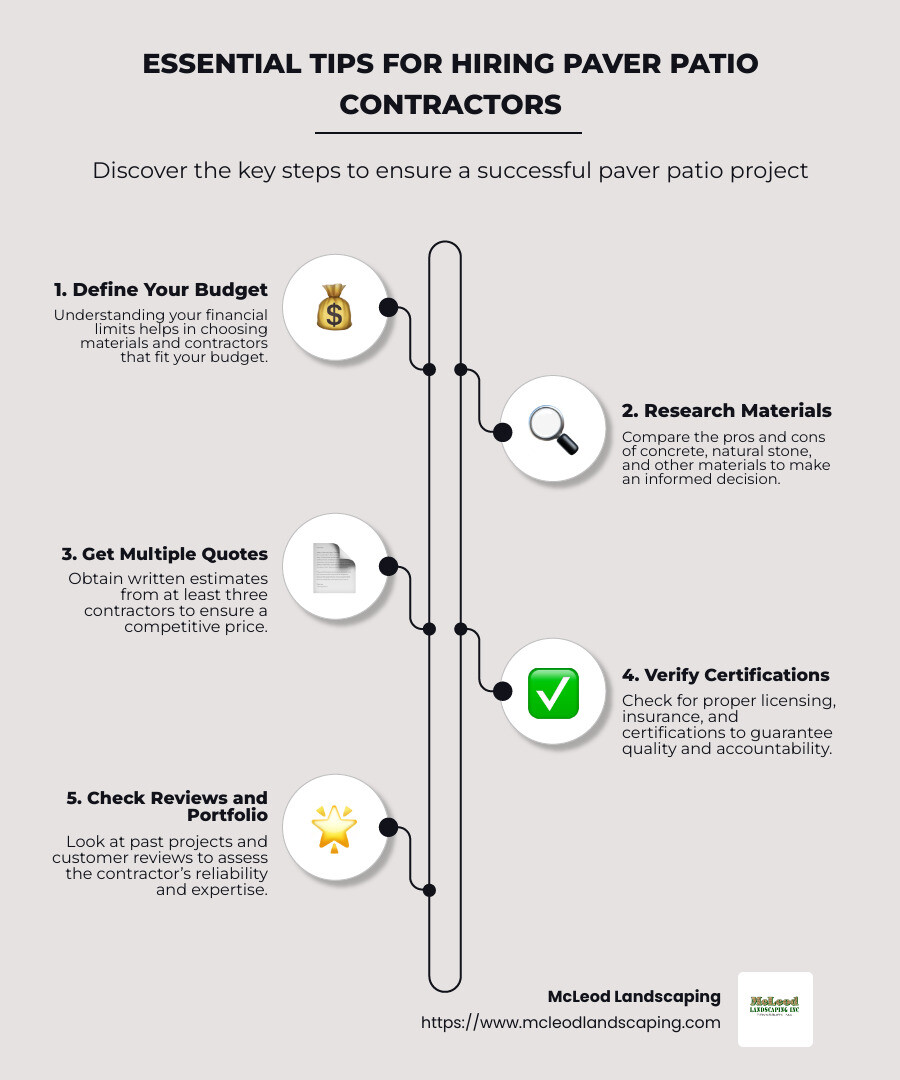
Quick look at paver patio contractors:
When planning a paver patio, understanding the costs involved is crucial. This section breaks down the key factors that influence the overall expense: square footage, material types, labor costs, and cost estimators.
The size of your patio is a primary cost driver. Larger patios require more materials and labor, which increases the total cost. To get a rough estimate, measure the area where you want to install the patio. For example, a 500-square-foot patio will naturally cost more than a 200-square-foot one.
The type of pavers you choose significantly impacts the cost. Here’s a quick guide:
Concrete is a popular choice for its balance between affordability and durability. Flagstone, while more expensive, offers a natural look that many homeowners find appealing.
Labor costs can vary based on the complexity of the project and the contractor’s expertise. On average, labor can account for 30% to 50% of the total project cost. For instance, intricate patterns or designs will require more time and skilled labor, thus increasing the cost.
To get an accurate estimate, you can use online cost estimators or consult with professional paver patio contractors. These tools and experts consider various factors such as:
For example, a well-constructed patio can cost between $2,000 and $5,800, depending on the materials and size.
Consider a homeowner’s experience with a paver patio project. Despite initial promises, the project faced multiple issues, including poor craftsmanship and incomplete work. This story underscores the importance of choosing the right contractor and getting a detailed, written estimate.

Understanding these cost factors helps you plan effectively and avoid unexpected expenses. Up next, we’ll explore the value addition of a paver patio and how it can improve your home’s worth.
Next, we’ll dig into the benefits of installing a paver patio and how it can boost your property’s value.
Investing in a paver patio is not just about adding beauty to your outdoor space; it also offers significant financial benefits. Let’s break down the key advantages: ROI, outdoor space improvement, and home value increase.
A paver patio is a smart financial move. It offers a high return on investment (ROI). For example, installing a new deck can provide an ROI of around 80%. This is much higher compared to other home improvement projects like bathroom remodels, which typically see an ROI of about 50%.
In simpler terms, if you spend $5,000 on a paver patio, you could see an $4,000 increase in your home’s resale value. This makes a paver patio a wise investment for homeowners looking to boost their property’s worth.

A well-designed paver patio improves your outdoor living space, making it more functional and enjoyable. Here are some ways it can transform your yard:
Beyond immediate enjoyment, a paver patio significantly boosts your home’s value.
For instance, a customer review from Greenlife Gardens highlights how a simple paver patio installation transformed their backyard into a beautiful and functional space, significantly increasing their enjoyment and the property’s value.

Next, we’ll explore how to choose the most cost-effective pavers for your patio.
When it comes to selecting pavers for your patio, you want something that looks great, lasts long, and doesn’t break the bank. Let’s explore the main options: concrete vs. natural stone. We’ll also look at durability and long-term value to help you make an informed decision.
Concrete pavers are a popular choice for many homeowners. They offer a balance of affordability and durability. Here are some key points:
However, concrete pavers may not have the same natural beauty as stone. They can also fade over time, especially in areas with harsh weather conditions.
Natural stone, such as flagstone or limestone, offers a timeless and neat look. Here’s what you need to know:
While natural stone is more costly upfront, its beauty and durability can make it a worthwhile investment.
Durability is a crucial factor when choosing pavers. You want a material that can withstand the elements and heavy foot traffic.
When considering long-term value, think about both maintenance and longevity.
By choosing the right material, you ensure a beautiful, durable, and cost-effective patio that enhances your outdoor living space and increases your property’s value.
Estimating your paver patio project correctly is crucial for staying within budget and avoiding surprises. Here are the key steps to ensure an accurate estimate: Area Calculation, Waste Factor, Paver Quantity, and Rounding Up.
First, you need to determine the total area of your patio. Here’s a simple way to calculate it:
For example, if your patio is 20 feet long and 15 feet wide, the area calculation would be:
[ 20 \text{ ft} \times 15 \text{ ft} = 300 \text{ square feet} ]
Next, account for a waste factor. This includes pavers that will be cut to fit edges and corners, as well as any damaged or unusable pieces. A common waste factor is 10%.
Using our example:
[ 300 \text{ square feet} \times 0.10 = 30 \text{ square feet} ]
So, you need to account for:
[ 300 \text{ square feet} + 30 \text{ square feet} = 330 \text{ square feet} ]
To find out how many pavers you need, you should know the size of each paver. Pavers come in various sizes, so check the dimensions on the packaging.
For example, if each paver is 0.25 square feet:
[ \frac{1}{0.25} = 4 \text{ pavers per square foot} ]
So, for a 330-square-foot area:
[ 4 \text{ pavers} \times 330 \text{ square feet} = 1,320 \text{ pavers} ]
Always round up to ensure you have enough pavers. It’s better to have a few extra than to run short, which can delay your project.
For instance, if you calculated 1,318.7 pavers, round up to 1,319 pavers.
By following these steps, you can ensure a smooth and cost-effective installation of your paver patio.
Hiring the right paver patio contractor is crucial for a successful project. Here are the key factors to consider:
Always ensure your contractor is certified through the Interlocking Concrete Pavement Institute (ICPI). This certification means they have the training and expertise to install pavers correctly. Ask them directly: “Are you certified through the ICPI?”
Experience matters. Ask potential contractors: “Are you experienced with this kind of job?” Look for those who have handled projects similar to yours. Experienced contractors can foresee potential issues and offer solutions, ensuring a smoother process.
Ask to see a portfolio of their previous work. This gives you a clear idea of their style and quality. A strong portfolio can provide peace of mind that they can handle your project. For example, at McLeod Landscaping, we showcase our work and provide reading materials and samples, which helps clients feel confident in their decision.
Check online reviews and call references provided by the installer. Positive reviews and testimonials are crucial. For instance, one of our clients, Hugh T., praised our patience and responsiveness, which are essential qualities in a contractor.
Get written estimates from multiple contractors. Aim for three to five bids to compare prices and services. Make sure the estimate includes all costs and details about what could affect the final price. Confirm the payment schedule upfront to avoid surprises. At McLeod Landscaping, we provide detailed quotes and multiple options, making it easy for clients to decide.
At McLeod Landscaping, we pride ourselves on our certification, extensive experience, and a portfolio that speaks for itself. Our customers’ satisfaction is our top priority. As one customer noted, “McLeod Landscaping transformed our outdoor space into a functional and beautiful oasis.” We provide detailed, written estimates and maintain open communication throughout the project.
By focusing on these key factors, you can find a reliable and skilled paver patio contractor who will bring your vision to life. Next, let’s address some frequently asked questions about paver patio installation.
The cost to pave 500 square feet can vary significantly based on several factors, including the type of materials used and labor costs. On average, you might expect to pay between $2,000 and $5,800. Here’s a quick breakdown of potential costs per square foot for various materials:
That additional factors such as the complexity of the design, site preparation, and any added features (like a fire pit or outdoor kitchen) will also impact the final cost.
Yes, a paver patio can significantly add value to your home. Not only does it improve your outdoor living space, but it also increases your property’s overall appeal. According to industry insights, a well-constructed patio can offer a return on investment (ROI) of up to 70%. This makes it a smart investment for homeowners looking to boost their property’s market value.
For example, Savine Masonry Inc completed a project where the addition of a beautiful paver patio not only improved the homeowner’s quality of life but also increased their home’s resale value. The blend of aesthetics and functionality makes a paver patio a desirable feature for potential buyers.
When it comes to cost-effective pavers, concrete and brick pavers are often the best choices. Here’s why:
Choosing the right material depends on your budget and desired look. Concrete pavers offer a modern and clean aesthetic, while brick pavers provide a timeless appeal. Always consider the long-term durability and maintenance costs when selecting your pavers to ensure you get the best value for your investment.
By addressing these common questions, we hope to provide clarity and assist you in making informed decisions about your paver patio project. For more personalized advice and detailed estimates, contact McLeod Landscaping.
In summary, installing a paver patio is a fantastic way to improve your outdoor living space and increase your home’s value. With the right paver patio contractors, you can achieve a beautiful, durable, and functional patio that meets your needs and budget.
At McLeod Landscaping, we specialize in creating custom outdoor spaces that you’ll love. With over 30 years of experience, we offer a comprehensive range of services, including patio installation, fire pits, outdoor kitchens, walkways, stairs, and retaining walls. Our skilled professionals are dedicated to delivering exceptional craftsmanship and customer satisfaction.
Choosing McLeod Landscaping means opting for quality materials, transparent pricing, and personalized designs custom to your specific requirements. We take pride in our work, ensuring that every project is completed to the highest standards.
Ready to transform your outdoor space? Contact McLeod Landscaping today to schedule a consultation and take the first step toward creating the outdoor oasis of your dreams. Let us help you turn your patio and deck dreams into reality.
Contact McLeod Landscaping today at (978) 640-0957 or click here to schedule a consultation for retaining wall installation. Let our experienced team design and install a functional and visually appealing retaining wall that enhances your landscape.


1881 Main St Unit 1, Tewksbury, MA 01876