
When you’re on the hunt for patio companies near me, finding a reputable service to design and install the perfect patio or deck for your commercial property or home is crucial. In the Merrimack Valley area, several companies excel in crafting these outdoor spaces, whether you’re envisioning a cozy patio for tenant enjoyment or a deck that elevates the aesthetics and functionality of your property.
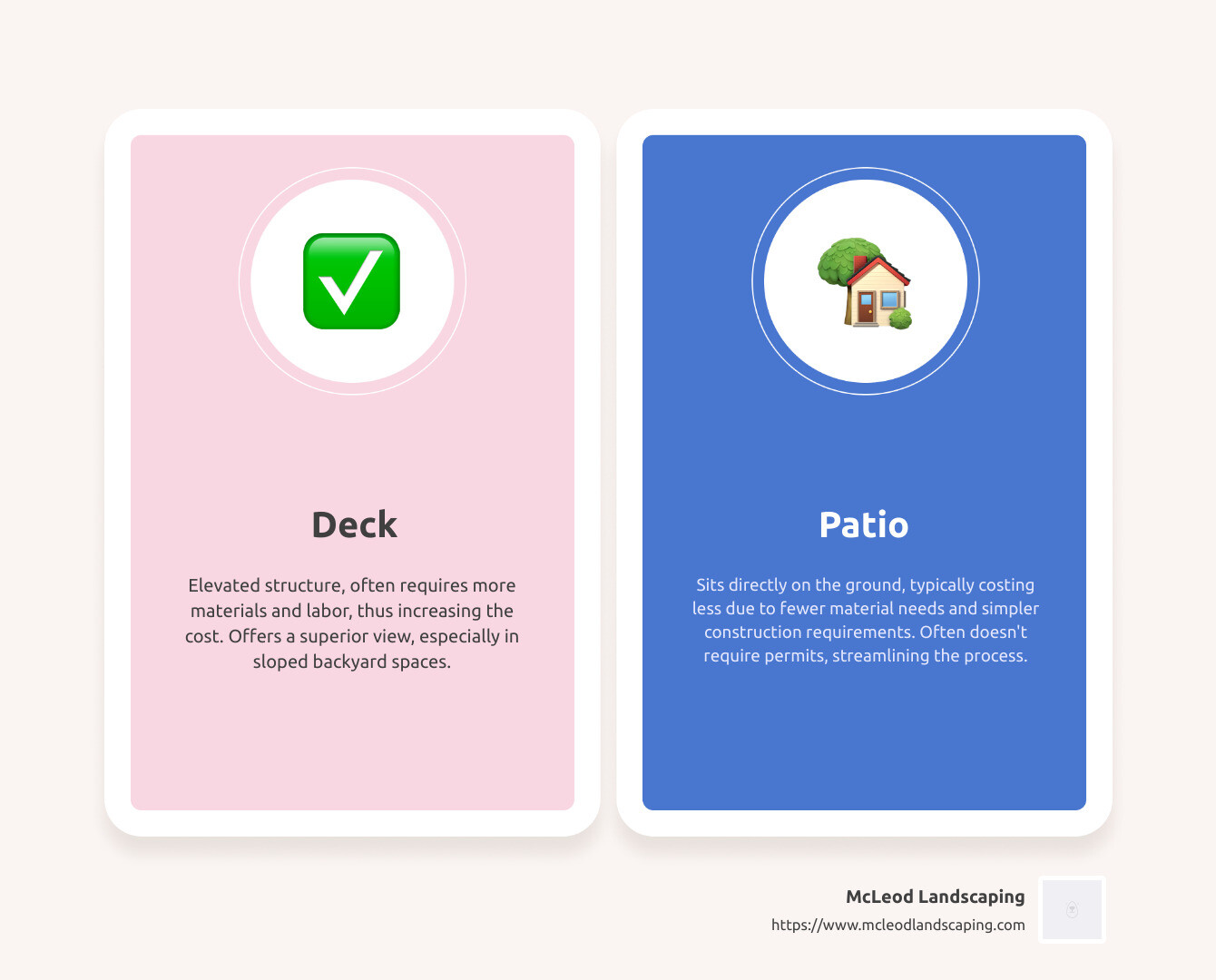
Choosing between a deck or a patio can significantly impact both the project’s cost and outcome. Decks, being elevated structures, often require more materials and labor, thus increasing the cost. They also come with weight restrictions but offer a superior view, especially in sloped backyard spaces. Patios, on the other hand, sit directly on the ground and typically cost less due to fewer material needs and simpler construction requirements. Plus, they often don’t require permits, which can streamline the process.
Understanding these differences and the associated cost estimates is the first step toward making an informed decision that aligns with your property’s needs and your budget.
In this guide, we’ll delve deeper into the critical factors of choosing between a patio and a deck, from foundational requirements to privacy concerns and weight restrictions. We’ll also provide you with essential tips on selecting the right landscaping company in the Merrimack Valley area, understanding local zoning and permit requirements, and making the most of your investment with a beautifully designed outdoor space that meets your specific needs.
When deciding between a patio and a deck for your outdoor space, several key factors come into play. Let’s break down these considerations to help you make an informed decision.
The foundation is a fundamental difference between patios and decks. Patios are built directly on the ground and can be made of various materials, including concrete, stone, or brick. This direct contact with the earth means they generally require less structural support than decks.
Decks, on the other hand, are elevated structures, requiring a sturdy foundation and support system to hold them above ground. This often involves the construction of posts, beams, and footings, making the deck’s foundation more complex and sometimes more costly.
Cost is a major consideration for many homeowners. Generally, patios are less expensive to install than decks because they require fewer materials and labor. The cost of a patio depends on the materials used, with options like concrete being on the lower end of the price spectrum.
Decks tend to be more expensive due to the additional materials and labor required for their elevated structure. The type of wood or composite material you choose can also significantly affect the cost.
Weight restrictions are particularly relevant for decks. Since decks are elevated, they have a maximum weight capacity they can safely support. This is crucial to consider if you plan on hosting large gatherings or placing heavy objects like hot tubs on your deck.
Patios, being on the ground, do not have weight restrictions in the same way decks do. This makes them a more versatile option for heavy outdoor furniture or features.
Privacy can be a deciding factor for many homeowners. Decks, especially those built high off the ground, can offer less privacy because they are more visible to neighbors and passersby. However, they can provide better views of your surroundings.
Patios, being at ground level, offer more privacy naturally, especially when combined with landscaping features like fences, walls, or tall plants.
Choosing the Right Option for You
Deciding between a patio and a deck comes down to your personal needs, preferences, and budget. Consider how you plan to use the space, your privacy needs, and whether you’re prepared for the maintenance required for each option. Decks may offer a beautiful view and a strong return on investment, but they come with higher upfront costs and maintenance needs. Patios offer a more affordable, low-maintenance option with excellent versatility and privacy but may require more preparation to deal with drainage and may not provide the same view or elevation as a deck.
Regardless of your choice, finding the right patio company near you to handle the installation is crucial. Look for companies with strong ratings, a portfolio of previous work, and the necessary licenses and insurance. This will ensure that your outdoor space is not only beautiful but also safe and durable.
With the right planning and a knowledgeable team, you can transform your outdoor space into a comfortable, inviting extension of your home. Whether you choose a deck or a patio, the key is to tailor the space to fit your lifestyle and enjoy the outdoor living space of your dreams.
[Next, we’ll discuss the cost of building a patio, including average costs, labor, and material costs to give you a comprehensive understanding of what to expect financially from your project.]
When it’s time to turn your outdoor space dreams into reality, picking the right patio company is crucial. Here’s how to make sure you choose wisely:
First things first, check if the company is accredited. Accreditation is like a badge of honor. It means the company has passed certain standards of excellence. For example, the Better Business Bureau (BBB) gives accreditations and ratings ranging from A+ to F. A company with a high rating or accreditation is a good sign. They’re likely to do a great job and treat their customers right.
Every area has its own rules. Before you start your project, you need to know about local zoning laws and permit requirements. Some places need a permit if you’re building something new or making big changes to your yard. Your patio company should know these rules inside out. They should be able to handle the paperwork and get the right permits, so you don’t run into trouble later.
Choosing a company that overlooks these important steps can lead to big headaches. Imagine spending time and money on a new patio, only to find out it doesn’t meet local rules. You might have to pay fines or even redo the work. That’s why it’s key to pick a company that pays attention to accreditation, ratings, and local laws.
In Summary:
Choosing the right patio company isn’t just about finding someone to lay down some stones. It’s about finding a partner who will guide you through the process, from understanding local laws to ensuring the work is up to standard. With the right team, you’ll be on your way to enjoying your outdoor space without any unwelcome surprises.
[Next, we’ll dive into the cost of building a patio, including average costs, labor, and material costs. This will give you a clear picture of what to expect financially from your project and help you plan your budget accordingly.]
Building a patio can transform your outdoor space into a haven for relaxation and entertainment. But before diving into this exciting project, it’s crucial to understand the financial aspects involved. Let’s break down the average costs, labor costs, and material costs to give you a clearer picture of what to expect.
The cost of installing a patio varies widely, typically ranging from $800 to $14,000 or more, with an average cost around $4,000. This broad range accounts for various factors such as size, materials, and complexity of the design.
Labor costs can consume a significant portion of your budget, especially for intricate designs or materials that require specialized installation techniques. Labor generally accounts for $35 to $70 per hour depending on the contractor’s expertise and the project’s location. Considering that patio installation can take several days, labor costs can quickly add up.
Material costs for patios can vary as much as the designs themselves. Here’s a quick overview of popular materials and their average cost per square foot:
– Gravel: $1.50 – $4
– Concrete: $4 – $8
– Flagstone: $11 – $30
– Brick pavers: $0.50 – $10
– Other pavers: $0.50 – $10
Choosing the right material plays a crucial role in both the appearance and cost of your patio. For instance, concrete offers a balance of affordability and durability, making it a popular choice for many homeowners. On the other hand, flagstone, while more expensive, can create a stunning, natural look.
Several other factors can influence the final cost of your patio project:
– Size and Shape: Larger and more complex designs will naturally require more materials and labor.
– Appliances and Accessories: Adding a fire pit, outdoor kitchen, or lighting will increase costs.
– Utility Infrastructure: Installing gas, electricity, or water lines for your patio features also adds to the expense.
– Landscaping and Grading: Preparing the site and integrating the patio with your garden or yard can involve additional costs.
When planning your patio project, it’s important to consider all these factors to create a realistic budget. The cheapest option isn’t always the best in the long run. Investing in quality materials and professional installation can save you money on repairs and maintenance down the line.
In summary, building a patio is an investment in your home’s value and your quality of life. By understanding the costs involved, you can make informed decisions that align with your budget and goals. With careful planning and the right team, you can create an outdoor space that you’ll enjoy for years to come.
[In the next section, we’ll explore patio design ideas and trends to inspire your project and help you make the most of your outdoor space.]
When it comes to enhancing your outdoor space, the design and materials you choose for your patio play a crucial role. Let’s dive into some popular materials and design trends that can transform your backyard into a beautiful and functional extension of your home.
Concrete isn’t just for sidewalks anymore. It’s become a favorite for patios due to its versatility and durability. You can go for a simple, smooth finish or get creative with stamped patterns that mimic natural stone, brick, or even wood. Concrete patios are cost-effective, ranging from $4 to $8 per square foot, making them an excellent choice for large areas on a budget.
Stone patios add a touch of elegance and blend seamlessly with the natural landscape. From flagstone to slate, the options are vast, each offering unique colors and textures. While stone patios can be on the pricier side, $11 to $30 per square foot, they are incredibly durable and can last for decades with proper care.
Brick offers a classic look that never goes out of style. Its warm tones and traditional patterns, like herringbone or basketweave, create a cozy, inviting space. Brick pavers are relatively affordable, $0.50 to $10 per square foot, and can easily be replaced if damaged, making maintenance a breeze.
Wood decks and patios bring a natural, rustic charm to your outdoor space. From pressure-treated lumber to exotic hardwoods, wood can be customized to fit any design aesthetic. However, wood requires regular maintenance to prevent decay and termite damage. Composite decking, a blend of wood fibers and plastic, offers a low-maintenance alternative that mimics the look of real wood without the upkeep.
Composite materials are becoming increasingly popular for patios and decks. They offer the beauty of wood without the maintenance, are fade and stain-resistant, and come in a variety of colors and textures. While composite materials can be more expensive upfront, their durability and low maintenance needs make them a cost-effective choice in the long run.
Beyond materials, several design trends are shaping patios across the country:
By considering these materials and design trends, you can create a patio that not only adds value to your home but also becomes your favorite place to relax and entertain. The best patio is one that reflects your personal style and meets your needs for comfort and functionality.
[In the next section, we’ll cover how to maintain your patio, ensuring it remains a beautiful and inviting space for years to come.]
Keeping your patio looking its best doesn’t have to be a big chore. With the right cleaning solutions and a little bit of elbow grease, you can keep your outdoor space sparkling clean and inviting. Here’s how:
By using these simple and effective cleaning solutions, you can ensure your patio remains a beautiful and enjoyable extension of your home. Regular maintenance not only keeps your patio looking great but also extends its lifespan, allowing you to enjoy your outdoor space for many years to come.
In the next section, we’ll answer some frequently asked questions about patio companies, covering everything from the difference between decks and patios to permit requirements for your next outdoor project.
When it comes to improving your outdoor space, choosing between a deck and a patio, figuring out how to cover your patio, and understanding permit requirements can be complex. Let’s simplify these topics with clear answers.
Deck: Built above the ground, usually made of wood or composite materials. Decks are attached to your house and require structural support due to their elevation. They offer a great view but may have weight limitations and less privacy.
Patio: Constructed directly on the ground, patios can be made from concrete, stone, pavers, or bricks. They blend seamlessly with your garden and usually cost less than decks. Patios offer more privacy and don’t typically need a permit, as they are not elevated structures.
Covering your patio can extend its use throughout the year. Here are a few effective ways:
Patio: Generally, patios do not require a permit as they are not elevated structures and are considered a part of the landscaping. However, it’s always best to check local regulations as some areas may have specific requirements.
Deck: Most decks will require a permit because they are attached to your home and elevated. The need for a permit stems from safety concerns, as improper construction can lead to accidents. Additionally, an inspection may be required upon completion to ensure the deck meets local building codes.
Regulations can vary greatly by location, so it’s crucial to contact your local building department or zoning office to get the most accurate information for your area.
By understanding these key aspects, you can make informed decisions about your outdoor space and ensure that your project complies with local regulations. Whether you’re adding a cozy patio or a spacious deck, knowing these basics will help you create a beautiful and functional outdoor area.
In the next section, we’ll conclude our guide with an overview of McLeod Landscaping and how they can help you bring your patio and deck dreams to life.
As we wrap up our comprehensive guide on selecting the best local patio design and installation services, let’s focus on how McLeod Landscaping stands out in this competitive landscape. Our commitment to excellence, customer satisfaction, and bringing your outdoor visions to life sets us apart from other patio companies near you.
Why Choose McLeod Landscaping?
In conclusion, when it comes to creating the perfect outdoor space, McLeod Landscaping is your go-to source for professional patio design and installation services. Our dedication to quality, customer service, and attention to detail ensures that your patio project is a success.
Ready to transform your outdoor space? Contact McLeod Landscaping today to schedule a consultation and take the first step toward creating the outdoor oasis of your dreams. Let us help you turn your patio and deck dreams into reality.
Contact McLeod Landscaping today at (978) 640-0957 or click here to schedule a consultation for retaining wall installation. Let our experienced team design and install a functional and visually appealing retaining wall that enhances your landscape.


1881 Main St Unit 1, Tewksbury, MA 01876