
Learning how to repoint brick stairs is a valuable DIY skill for maintaining your property’s safety and curb appeal. Here’s the essential process at a glance:
Quick Guide to Repointing Brick Stairs:
Your brick stairs take a beating daily. Between foot traffic, water infiltration, and New England’s brutal freeze-thaw cycles, the mortar holding your bricks together gradually weakens and crumbles.
When mortar fails, three major problems emerge:
The good news? Repointing is a doable DIY project. With the right materials, tools, and technique, you can restore your brick stairs to like-new condition, saving hundreds compared to professional installation.
Most homeowners see immediate results – not just in appearance, but in the solid, secure feel underfoot. Plus, properly repointed stairs can last 30-50 years before needing attention again.
I’m Scott McLeod. With over 30 years in the landscaping industry, I’ve guided countless property owners through how to repoint brick stairs projects that improve safety and curb appeal. My experience shows that with proper preparation and the right approach, this home improvement project delivers lasting value.
Think of your brick stairs as the hardest working part of your home’s exterior. Every day, they endure foot traffic, weather extremes, and the relentless cycle of seasons. Understanding why mortar fails is the first step in learning how to repoint brick stairs successfully.
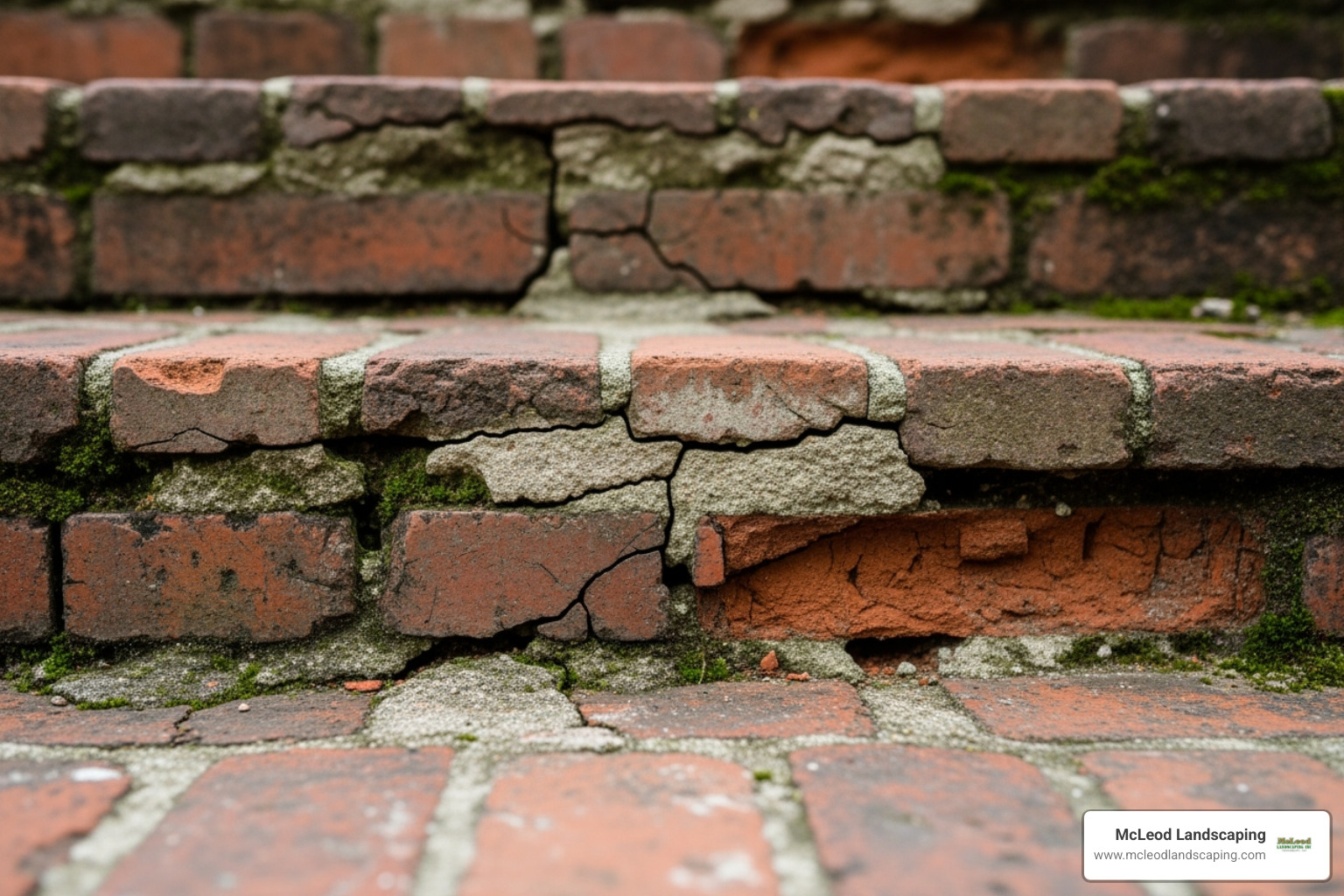
The biggest enemy of your brick stairs isn’t actually foot traffic – it’s water infiltration. When moisture seeps into tiny cracks and then freezes, it expands with tremendous force. These freeze-thaw cycles gradually push your mortar apart, creating larger gaps that let in even more water. It’s like nature’s slow-motion demolition crew, working 24/7 during winter months.
Add in the constant pressure from foot traffic, and you’ve got a recipe for deteriorating mortar joints. But here’s the encouraging part: catching these issues early means you can handle the repair yourself with the right preparation.
Before you start, let’s talk safety. After 30 years in this business, I’ve learned that safety precautions are essential. You’ll need a quality dust mask (mortar dust is no joke), safety glasses to protect from flying debris, and sturdy gloves to shield your hands from the caustic lime in fresh mortar.
Timing matters too. The sweet spot for this project is when temperatures stay consistently between 40°F and 100°F for at least three days. This temperature range gives your new mortar the best chance to cure properly without freezing or baking in extreme heat.
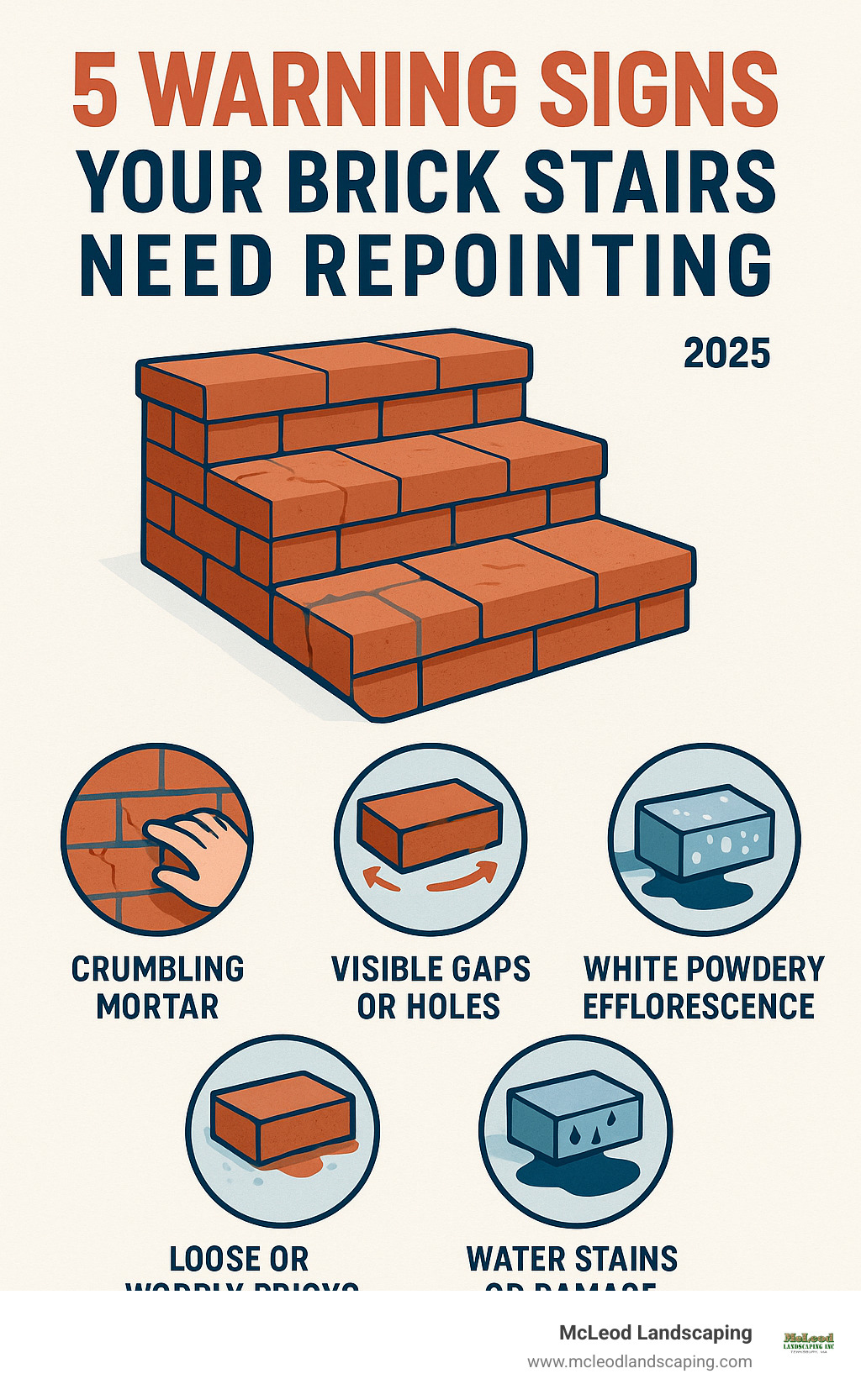
Wondering if your stairs actually need repointing? Let me walk you through the telltale signs I look for during inspections.
Crumbling mortar is usually the first red flag. Take a house key and gently scratch at the mortar between your bricks. If it crumbles away easily or feels sandy, the binding agents have likely deteriorated. This is especially common with older lime-based mortars that gradually leach out over time.
Visible cracks in the mortar joints might start as hairlines but don’t stay that way. Even small cracks invite water penetration, which accelerates the damage through those freeze-thaw cycles we discussed.
When you notice holes in joints – especially gaps deeper than ¼-inch – you’re looking at compromised structural integrity. These openings are like welcome mats for water damage.
Loose bricks are perhaps the most concerning sign. If you can wiggle individual bricks or they feel unstable underfoot, the surrounding mortar has failed to hold them securely. This creates both safety hazards and potential for more extensive damage.
Keep an eye out for water damage signs like damp or discolored bricks, which suggest moisture is penetrating through compromised joints.
Finally, efflorescence – that white, powdery substance on your brick surfaces – indicates water is moving through the masonry, dissolving salts and depositing them as it evaporates. While not directly harmful, it’s your stairs’ way of telling you there’s a moisture problem that needs attention.
If you’re seeing multiple warning signs or the damage seems extensive, our Brick Stair Repair services can help assess whether DIY repair is the right approach.
Here’s where many DIY projects go wrong – using the wrong mortar type. Not all mortars are created equal, and choosing incorrectly can actually cause more problems than you started with.
Type N mortar is my go-to recommendation for brick stairs, and here’s why. It strikes the perfect balance between strength and flexibility. While it’s strong enough to handle daily foot traffic, it’s also flexible enough to move with your bricks during temperature changes and freeze-thaw cycles. This flexibility prevents new stress cracks from forming.
Type S mortar offers more structural strength but comes with a trade-off. Its rigidity can work against you on stairs, as it may not flex with the natural movement of bricks. This can lead to stress cracks in either the mortar or the bricks themselves.
Type M mortar provides high strength and maximum durability, but it’s overkill for most stair applications. Its extreme hardness can actually damage softer bricks over time, making it rarely the right choice for repointing work.
Why Type N is best for stairs comes down to longevity. A slightly softer mortar that moves with your bricks will outlast a rigid mortar that fights against natural expansion and contraction. You can learn More about Type N Mortar Mix and its specific properties.
Getting organized before you start makes the difference between a smooth project and a frustrating one. Here’s everything you’ll need for successful repointing:
Your tuckpointing grinder will handle most of the old mortar removal efficiently. Look for one with a diamond blade and, if possible, a vacuum attachment for dust control. For tight spots where the grinder can’t reach, keep a chisel and hammer handy.
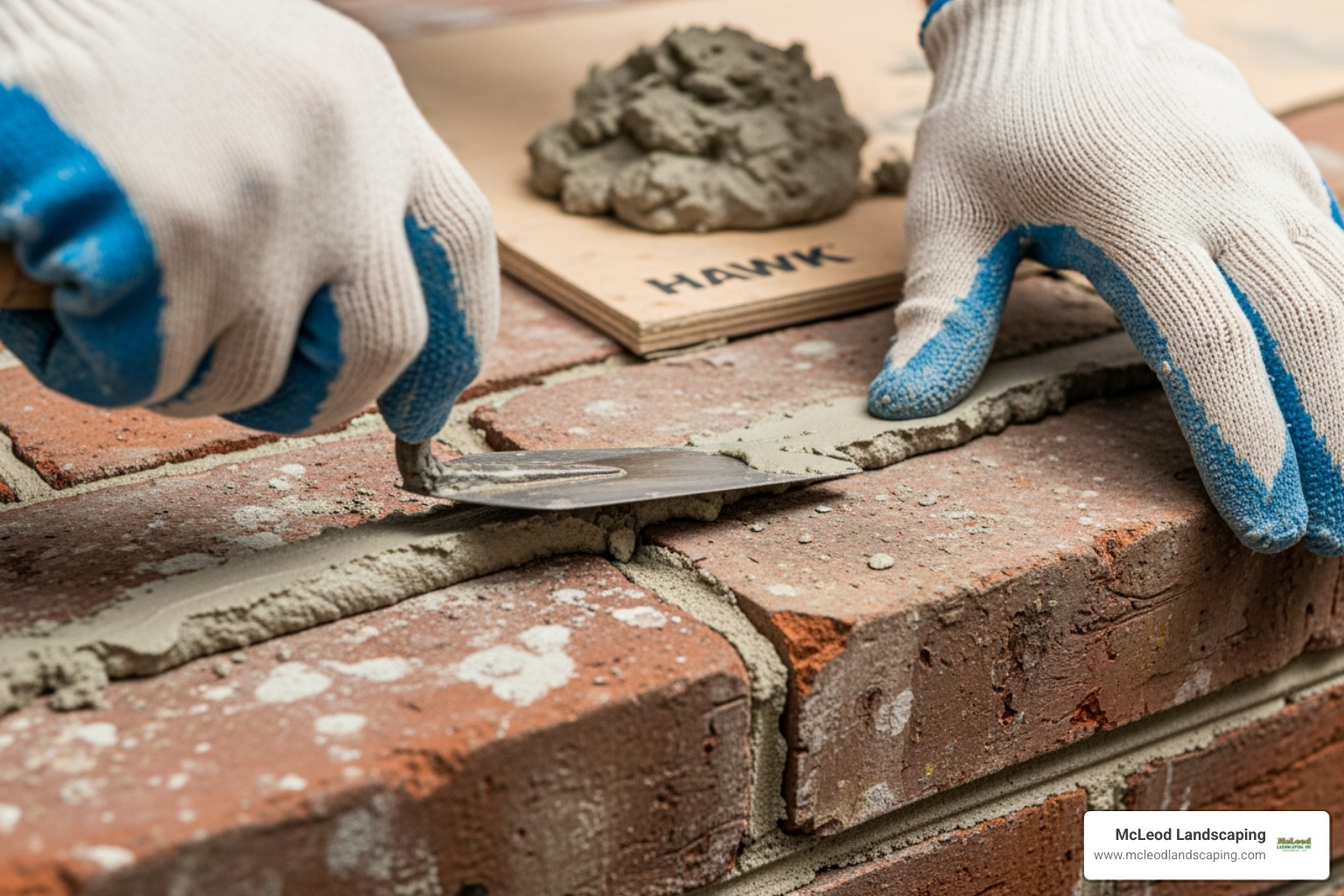
A pointing trowel becomes your precision instrument for pressing new mortar into joints. Pro tip: grinding down the edges lets you customize its width to fit perfectly between your brick courses. Your flat jointer will compress and smooth the finished joints, creating that weatherproof seal.
A grout bag works like a pastry bag for controlled, clean mortar application. This tool alone can make your finished work look professional rather than amateur. Don’t forget a sturdy wire brush for cleaning debris from joints and removing excess mortar from brick faces.
You’ll need a mixing tub for your mortar, along with measuring tools for precise water addition. Stock up on Type N mortar mix and have a reliable water source nearby.
For comprehensive hardscape projects beyond DIY scope, our Hardscape Repair Services team has all the professional-grade equipment needed for larger repairs.
Ready to transform those crumbling steps into something you’ll be proud of? Now that we’ve covered the prep work, it’s time for the main event. Learning how to repoint brick stairs isn’t just about slapping some mortar between bricks – it’s about understanding the process, taking your time, and doing it right the first time.
Think of this process like surgery for your stairs – precision matters, patience is key, and the right technique makes all the difference. We’ll walk through each step methodically, ensuring your repointing job will last decades, not just a few seasons.
The beauty of mastering how to repoint brick stairs lies in the change. What starts as weathered, crumbling joints becomes a solid, attractive entrance that adds real value to your home. Let’s dive in.
Here’s where many DIYers go wrong – they either don’t remove enough old mortar, or they damage the bricks trying to remove too much. The sweet spot? Twice the width of your joint, which typically means going about ¾-inch deep.
Why this depth? Think of it like preparing a foundation. If you only scrape the surface, your new mortar won’t have enough “tooth” to grab onto. Go too deep, and you risk weakening the entire structure. That ¾-inch depth gives you the perfect balance of stability and bonding surface.
Your best friend for this job is a tuck pointing grinder. Yes, it creates dust – lots of it. But paired with a HEPA vacuum and proper dust control, it makes quick work of what would otherwise be hours of chiseling. Trust me, your back will thank you.
Here’s the technique that saves both time and bricks: start with horizontal joints first, then tackle the vertical ones. This creates natural stopping points for your grinder blade, preventing those heart-sinking moments when you accidentally nick a brick face.
Once you’ve ground out the old mortar, grab a wire brush and clean those joints until they’re spotless. Any loose debris or dust will compromise your new mortar’s bond – and nobody wants to do this job twice.
Getting your mortar consistency right is key. Aim for a peanut butter texture that spreads easily but doesn’t droop out of the joints.
Here’s a pro tip: mix small batches. Mortar doesn’t wait around – once it starts setting, you’re racing the clock. Better to mix three small batches than waste half of one large batch that hardens before you can use it.
Before you even think about applying new mortar, dampen those joints. Dry bricks are like sponges – they’ll suck the moisture right out of your fresh mortar, leaving you with weak, crumbly joints that’ll fail within a year or two.
Now for the fun part: application. A grout bag transforms this messy job into something almost neat. Load it halfway, twist the top closed, and squeeze that mortar right where it needs to go – no waste, no mess on the brick faces.
Don’t just squirt and move on. Pack those joints with your pointing trowel, making sure every void is filled. This compaction step is what separates amateur work from professional results. For more insights on creating beautiful exterior features, check out our Exterior Brick Stairs services.
Patience pays off here. After applying your mortar, resist the urge to immediately start smoothing. Let it rest for 30 to 45 minutes until it’s firm but still workable. This waiting period – called “striking time” – is when the mortar develops just enough stiffness to finish properly.
When the time is right, run your flat jointer tool along each joint. This isn’t just about looks – you’re creating a weatherproof seal that will shed water and protect your stairs for decades. The goal is a smooth, slightly concave surface that naturally directs water away from the joint.
Think of this finishing step as slicking the joint – you’re compressing the surface into a dense, weather-resistant barrier. Done correctly, this eliminates the need for additional sealants and prevents those slippery conditions that can make stairs hazardous in wet weather.
Clean up immediately while the mortar is still workable. Brush away excess mortar from the brick faces with a soft wire brush, being careful not to disturb your freshly finished joints. Any smears left on the bricks will be much harder to remove once they cure – and they can permanently stain your beautiful brickwork.
The satisfaction of seeing those crisp, clean joints emerge is worth every bit of effort. You’ve just added years to your stairs’ lifespan while creating an entrance that truly welcomes visitors home.
Congratulations! You’ve successfully learned how to repoint brick stairs and restored their beauty and structural integrity. But our journey doesn’t end here. Like any worthwhile home improvement, your newly repointed steps deserve some ongoing TLC to ensure they serve your family safely for decades to come.
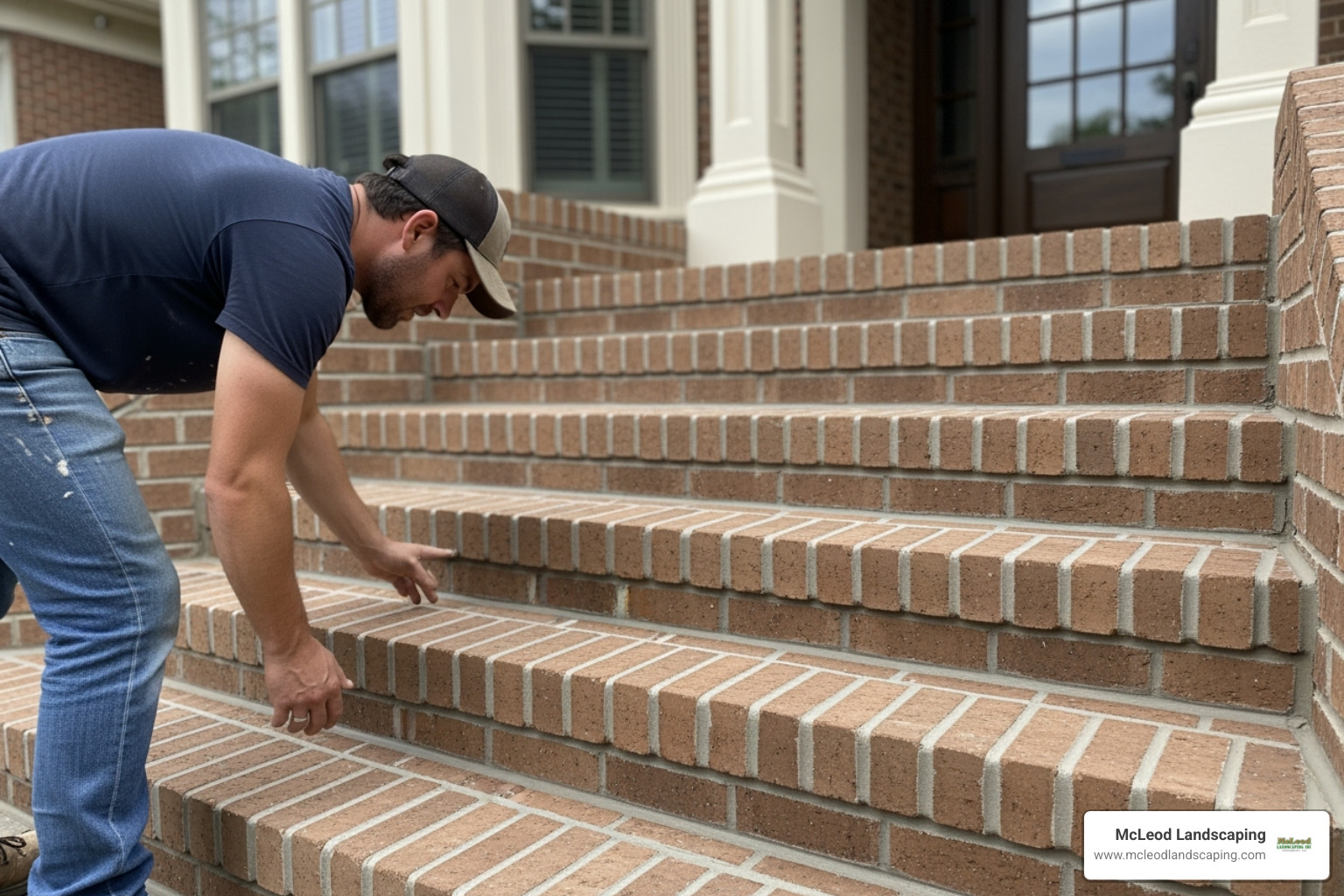
Think of maintenance as protecting your investment. After all the hard work you’ve put into this project, a little preventive care can save you from having to repeat the entire process for many years. Plus, well-maintained brick stairs continue to boost your home’s curb appeal and value.
The secret to long-lasting repointed stairs lies in staying ahead of potential problems. Regular inspection should become part of your seasonal home maintenance routine. Take a few minutes each spring and fall to walk around your stairs, looking for any new hairline cracks, minor settling, or that telltale white powdery efflorescence we discussed earlier.
Water remains the biggest enemy of brick and mortar. Proper drainage around your stairs can make the difference between repairs lasting 30 years versus needing attention again in just 5-10 years. Make sure water flows away from your steps, not toward them. This might mean adjusting your landscaping grade, cleaning out gutters more frequently, or redirecting downspouts.
When it comes to waterproofing sealants, we recommend proceeding with caution. While the weatherproof seal we created by slicking the joints should provide excellent protection, some homeowners consider applying a breathable sealer to the entire brick surface. If you go this route, choose a siloxane-based product that allows the brick to breathe. Never use non-breathable sealers, as they can trap moisture and cause more damage than they prevent.
Seasonal cleaning doesn’t require anything fancy – just remove leaves, dirt, and debris that can trap moisture against your beautiful repointing work. A stiff brush and garden hose usually do the trick. Most importantly, address minor cracks early if you spot them. A small touch-up job today prevents a major repointing project tomorrow.
For homeowners who prefer professional ongoing care, we offer comprehensive Hardscape Maintenance Service to keep your investment protected year-round.
Now that you understand how to repoint brick stairs yourself, you might wonder when it makes sense to tackle future projects versus calling in the pros. The answer depends on several key factors.
Project scope plays a huge role in this decision. If you’re dealing with a few scattered joints that need touch-ups, DIY makes perfect sense. But when you’re looking at extensive damage across multiple steps or entire sections of deteriorated mortar, the time commitment can quickly become overwhelming for a weekend warrior.
Your skill level and comfort with tools also matter. If you enjoyed this project and felt confident with the grinder, mortar mixing, and finishing techniques, you’re probably well-equipped for future repairs. However, if any part of the process felt intimidating or if you’re not satisfied with your results, there’s no shame in calling professionals next time.
Structural issues should always trigger a call to the experts. When damage extends beyond simple mortar replacement to problems like significant settling, large cracks in the bricks themselves, or foundation concerns, you need professional assessment. Safety isn’t worth the DIY savings.
The time commitment factor can’t be understated. Quality repointing work takes patience and can’t be rushed. If you don’t have several full days or weekends available, or if you’re working under time pressure, professionals can complete the job efficiently while you focus on other priorities.
For complex projects or when you simply want the peace of mind that comes with professional expertise, our Masonry Contractors Near Me team has the experience to handle any brick stair repointing challenge.
Understanding the financial side helps you make smart decisions about future maintenance. Let me break down the numbers so you can plan accordingly.
DIY costs remain quite reasonable for most homeowners. You’re looking at approximately $0.50 per square foot for materials when you handle the labor yourself. An 80-pound bag of Type N mortar costs around $10 and covers 35-40 square feet with standard 3/8-inch joints. For a typical set of front stairs (around 100 square feet), you might spend $50-75 on materials alone, not including any tools you need to purchase or rent.
Professional costs vary significantly. Please note, these are average costs based on internet data and not actual costs for McLeod Landscaping. You can expect professional repointing to range from $4 to $17 per square foot for standard jobs, but complex projects can push the cost to $50 per square foot or more. For that same 100 square foot stair project, this means professional costs could range from $400 to $5,000 depending on the various factors involved.
Geographic location heavily influences pricing, with major metropolitan areas typically commanding higher rates. The extent of damage also affects cost – more deteriorated mortar means more labor time and materials. Accessibility matters too; difficult-to-reach areas or intricate architectural details increase labor costs.
While professional services cost more upfront, they often provide better long-term value through superior craftsmanship, proper materials, and warranties. Plus, you get your weekends back for more enjoyable activities than mixing mortar!
The key is matching your choice to your situation. For routine maintenance and small repairs, DIY makes great sense. For major restoration work or when you want guaranteed results, professional services deliver peace of mind and lasting quality.
Over my three decades in the landscaping business, I’ve fielded countless questions from homeowners who want to understand how to repoint brick stairs better. These are the questions that come up most often, and I’m happy to share what I’ve learned from years of hands-on experience.
This question comes up all the time, and honestly, I don’t blame folks for being confused! Even some contractors use these terms interchangeably, but there’s actually a meaningful difference.
Repointing is exactly what we’ve been discussing throughout this guide – removing old, crumbling mortar and replacing it with fresh material. It’s all about restoring structural integrity, keeping water out, and making your masonry last longer. Think of it as the essential repair work that keeps your stairs safe and sound.
Tuckpointing, on the other hand, is repointing’s fancier cousin. It’s a decorative technique that creates the illusion of perfectly uniform, razor-thin mortar lines. Here’s how it works: first, you fill the joints with mortar that matches your brick color, then you apply a thin, contrasting line of mortar right down the center. The result looks incredibly precise and clean – almost too perfect to be real!
Historically, tuckpointing was used to make rough, uneven brickwork look like it was laid by a master craftsman. It’s beautiful work, but it’s purely aesthetic. For most brick stair repairs, standard repointing does the job perfectly well.
Ah, the waiting game! This is where patience really pays off, and I’ve seen too many homeowners rush this critical phase.
Your newly repointed mortar will feel solid within a few hours, but don’t let that fool you. Full curing takes up to a week, and during this time, the mortar is still gaining strength and durability. I always tell my clients to avoid heavy foot traffic on their newly repointed stairs for at least the first few days, and ideally for the full week.
Here’s a pro tip that makes a real difference: keep the mortar moist during dry weather. In hot or windy conditions, I recommend gently misting the repointed areas with a garden hose once or twice a day. This prevents the mortar from drying too quickly, which can lead to weak spots or surface cracking.
Think of it like letting bread rise – rushing the process never gives you the best results!
After all these years perfecting how to repoint brick stairs, I’ve learned that success comes down to doing each step right, not taking shortcuts. The best technique combines proper preparation with quality materials and careful execution.
Start with thorough mortar removal – this means going deep enough (about ¾-inch) and cleaning out every bit of loose material. I always use a tuck pointing grinder with dust control, tackling horizontal joints first, then vertical ones.
Choose Type N mortar every time for stairs. I can’t stress this enough – it’s the perfect balance of strength and flexibility that handles our New England freeze-thaw cycles beautifully.
Get your mixing consistency right – that peanut butter texture we talked about earlier. Mix small batches, let the mortar slake, and always dampen those old joints before applying new material.
Use a grout bag for precision when applying the mortar, then pack everything firmly with your pointing trowel. No voids, no shortcuts.
Let the mortar rest for 30-45 minutes before striking the joints with a flat jointer. This creates that crucial weatherproof seal that keeps water out.
Finally, protect your work during curing. Keep foot traffic off the stairs and maintain moisture levels for proper strength development.
When you follow this sequence carefully, you’re not just patching a problem – you’re creating a repair that can last decades. That’s the difference between a quick fix and professional-quality work that adds real value to your home.
Learning how to repoint brick stairs transforms what might seem like an intimidating home maintenance task into an achievable project that delivers remarkable results. Throughout this guide, we’ve covered everything from spotting the early warning signs of mortar deterioration to selecting the right Type N mortar, and from properly removing old material to achieving that professional-quality finish.
The change goes far beyond what meets the eye. Improved safety means no more worrying about loose bricks creating tripping hazards for family members and guests. Improved aesthetics restore those clean, precise lines that make brick stairs so appealing, giving your home’s entrance the welcoming appearance it deserves. Most importantly, structural longevity protects your investment by preventing water infiltration that can cause expensive damage throughout your home’s foundation.
Whether you tackle this as a weekend DIY project or decide to bring in professionals, you’re making a smart investment in your property. Properly repointed brick stairs don’t just look fantastic – they create a solid, dependable entrance that can withstand New England’s harsh weather cycles for 30 to 50 years.
The sense of accomplishment from completing this project yourself is incredibly rewarding. You’ll feel the difference immediately when you walk up those stairs, knowing they’re structurally sound and built to last. Plus, the boost to your home’s curb appeal and value makes this one of those rare home improvement projects that pays dividends both now and in the future.
If the scope of your project feels overwhelming, or if you find structural issues that go beyond simple repointing, don’t hesitate to call in the experts. For professional Hardscape Installation Services, trust the experienced team at McLeod Landscaping. We’re here to help you create that lasting first impression your home deserves.
Contact McLeod Landscaping today at (978) 640-0957 or click here to schedule a consultation for retaining wall installation. Let our experienced team design and install a functional and visually appealing retaining wall that enhances your landscape.


1881 Main St Unit 1, Tewksbury, MA 01876