
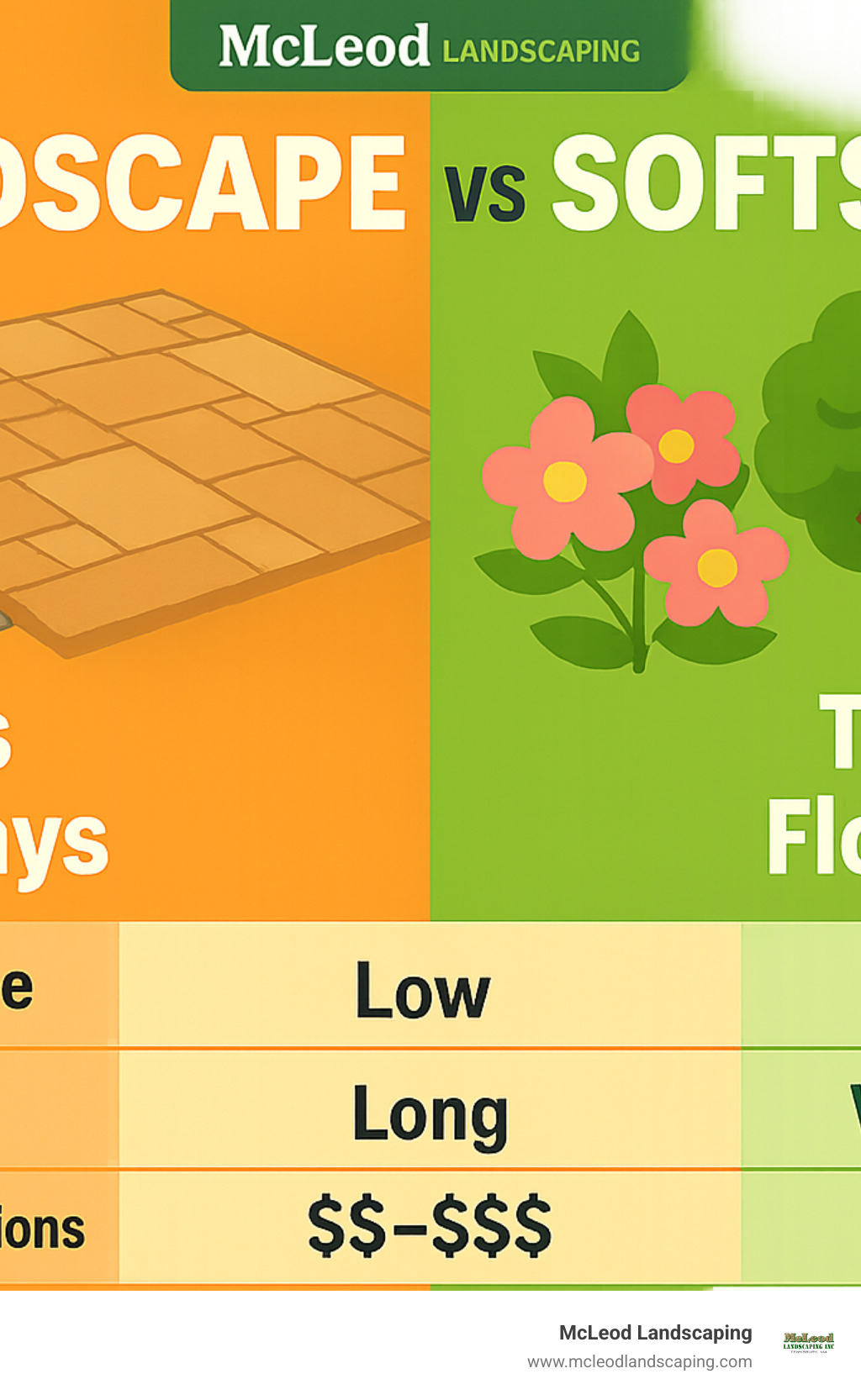
Hardscape vs Softscape refers to the two fundamental elements that make up any landscape design. If you’re wondering about the difference:
| Element | Definition | Examples | Maintenance |
|---|---|---|---|
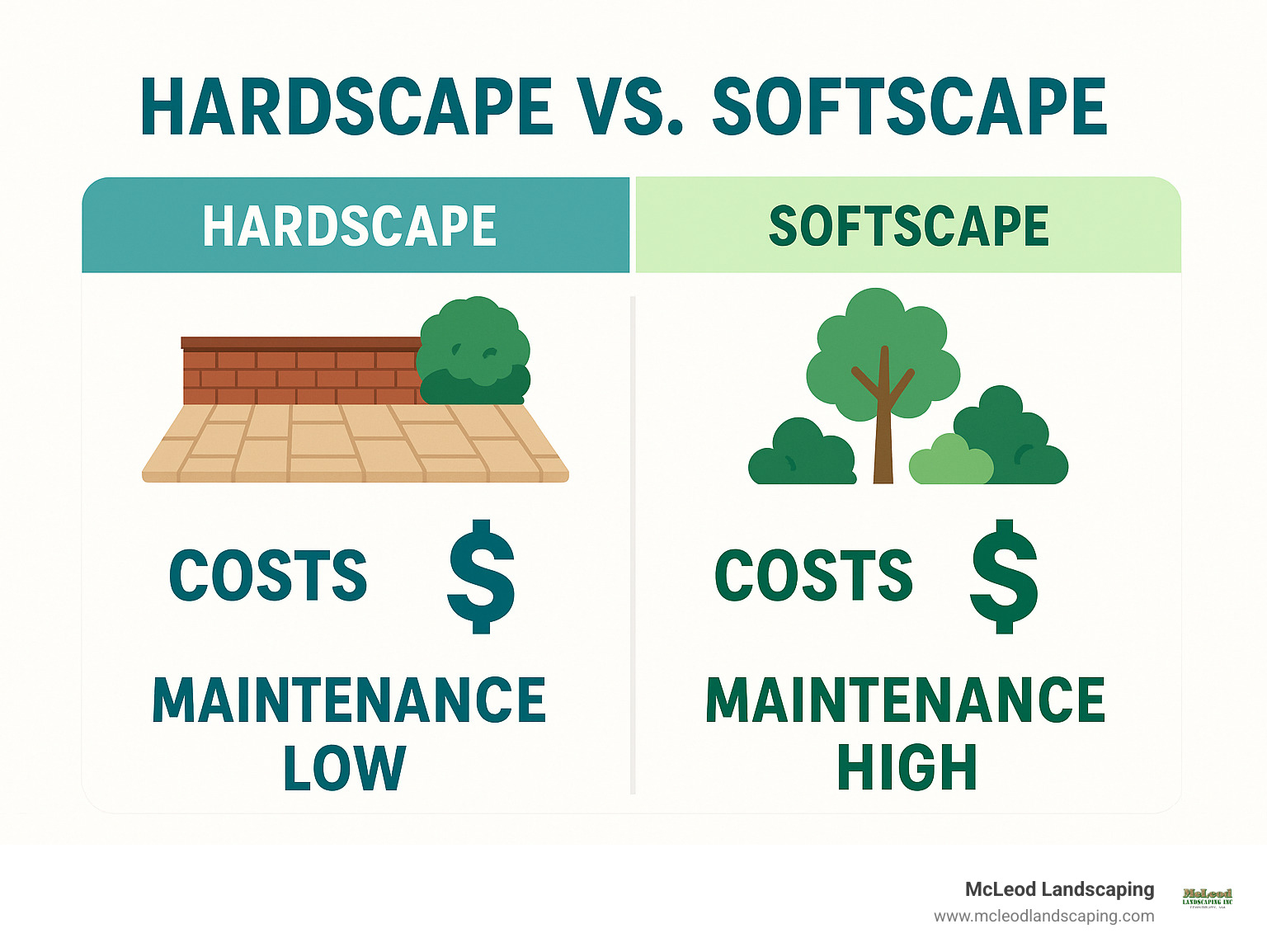
| Hardscape | Non-living, structural elements | Patios, walkways, retaining walls, driveways | Low: occasional cleaning, sealing |
| Softscape | Living, horticultural elements | Plants, trees, flowers, grass, soil | High: watering, pruning, fertilizing |
When planning your outdoor space, understanding the difference between hardscape and softscape is crucial. These complementary elements work together to create a balanced, functional, and beautiful landscape that improves your property.
Hardscape elements provide structure, define spaces, and create usable areas in your yard. They’re permanent features that require significant planning but minimal ongoing maintenance. From stone patios and brick walkways to wooden pergolas and concrete retaining walls, these non-living components form the backbone of your landscape design.
Softscape brings your outdoor space to life with plants, trees, flowers, and grass. These living elements add color, texture, and seasonal interest while providing environmental benefits like improved air quality and temperature regulation. While more temporary and changeable than hardscape, softscape requires regular care to maintain its beauty.
A well-designed landscape strikes the right balance between these two elements. Too much hardscape can make your yard feel cold and sterile, while too much softscape might create an overgrown, high-maintenance environment.
I’m Scott McLeod, owner of McLeod Landscaping, and with over three decades of experience balancing hardscape vs softscape elements in hundreds of commercial and residential properties throughout the Merrimack Valley, I’ve seen how the right combination creates stunning, functional outdoor spaces that stand the test of time.
Hardscape vs Softscape word roundup:
– softscaping
– define hardscaping
– hardscape maintenance service
When you step into a beautiful landscape, you’re experiencing the careful dance between structure and life. This fundamental balance is what we mean when we talk about hardscape vs softscape elements in your yard.
Hardscape creates the backbone of your outdoor living space. These are the sturdy, non-living elements that provide structure and define how you use your property. Think of your patio where summer barbecues happen, the stone walkway that guides visitors to your front door, or the retaining wall that tames a sloping yard. These permanent features stand firm through New England’s harshest winters and hottest summers, giving your landscape consistency and usability year-round.
Softscape, by contrast, brings your landscape to life with plants and greenery. These living elements add color, texture, and seasonal change to your outdoor space. Your flowering perennials, shade trees, lush lawn, and vegetable garden all contribute to the softscape portion of your landscape. Unlike hardscape elements, your softscape evolves and changes—trees grow taller, perennials spread, and annuals come and go with the seasons.
One crucial function of softscape that many homeowners overlook is erosion control. Your plants’ root systems help hold soil in place, preventing runoff during heavy rains. Meanwhile, hardscape elements like retaining walls can manage more significant erosion challenges on sloped properties.
| Feature | Hardscape | Softscape |
|---|---|---|
| Materials | Stone, concrete, brick, wood, metal | Plants, trees, shrubs, flowers, grass, soil |
| Permanence | Long-lasting, difficult to change | Temporary, easily modified or replaced |
| Maintenance | Low; occasional cleaning and repairs | High; regular watering, pruning, fertilizing |
| Installation | Typically requires professional equipment | Often can be DIY for smaller projects |
| Drainage | May impede water absorption | Absorbs water, prevents runoff |
| Seasonal changes | Remains constant year-round | Changes with seasons, growth cycles |
| Environmental impact | Can increase heat retention, runoff | Improves air quality, reduces erosion |
The aesthetics of your landscape depend heavily on how these elements interact. Hardscape provides clean lines and architectural interest, while softscape adds natural beauty and softens hard edges.
This isn’t just landscape jargon—understanding the balance between hardscape vs softscape directly affects your home’s value, appearance, and functionality.
Your property value benefits significantly from thoughtful landscaping. Research shows that professional landscape design can increase home value by 5-12%, with hardscape features like patios and outdoor kitchens offering some of the highest returns on investment.
Curb appeal starts with the right mix of hard and soft elements. A welcoming front walkway (hardscape) bordered by colorful perennials (softscape) creates an entrance that makes visitors feel instantly at home.
The usability of your outdoor space depends largely on your hardscape elements. Without a patio, deck, or defined seating area, even the most beautiful garden lacks functionality. Hardscape creates the “rooms” of your outdoor living space, while softscape decorates and improves them.
Your lifestyle should guide your landscape choices. If you’re an avid entertainer, you’ll want more hardscape space for gathering. If gardening brings you joy, allocating more area to plantings makes sense.
Planning your dream landscape means weighing three crucial factors: what it’s made of, how much care it needs, and what it costs.
For hardscape, you have several beautiful options. Natural stone like granite, bluestone, and fieldstone bring timeless appeal and incredible durability. Manufactured pavers offer endless possibilities with their variety of colors, shapes, and textures. Brick adds a classic, orderly look that complements traditional homes. Wood brings natural warmth to decks and pergolas, while concrete provides versatility at a more budget-friendly price point. Metal elements add sophisticated accents to railings and decorative features.
Your softscape choices are equally important. Trees provide shade, structure, and wildlife habitat. Shrubs create natural borders and privacy screens. Perennials reward you year after year with reliable blooms, while annuals let you play with different colors each season. Groundcovers suppress weeds and prevent soil erosion. Ornamental grasses add movement, texture, and winter interest. And turf creates usable space for family activities while cooling your property.
When it comes to your wallet, hardscape vs softscape investments differ significantly. Hardscape typically requires a larger upfront investment but rewards you with longevity and minimal ongoing costs. Softscape usually costs less initially but requires continued investment in maintenance.
The return on investment (ROI) can be impressive for both elements. Well-designed patios typically return about 80% of your investment when selling your home. Fire features warm up your ROI at 70-80%, while outdoor kitchens cook up returns of 50-70%. A professionally designed landscape with balanced hardscape vs softscape elements can actually return 100-200% of your investment.
Don’t overlook the value of mature trees in your softscape planning. They can add 3-5% to your property value while significantly reducing energy costs through strategic shading.
For more detailed information about these landscape elements, our Hardscaping vs Softscaping page offers an in-depth comparison.
Hardscape maintenance is relatively straightforward. You’ll need periodic cleaning (sweeping, power washing) to keep surfaces looking their best. Sealing every 2-5 years protects porous materials. Paver installations might need occasional joint sand refreshing. Repairs are typically minimal, and careful snow and ice management protects your investment from damage.
Softscape, by contrast, demands more regular attention. Plants need watering based on their specific needs and current weather conditions. Pruning and trimming keeps everything shaped and healthy, while fertilizing supports robust growth. The never-ending battle of weeding continues through the growing season, and annual mulching helps suppress those weeds while retaining moisture. You’ll also need to stay vigilant with pest and disease management and perform seasonal cleanup.
The timing sensitivity is another key difference. Miss a watering session during a July heat wave, and your prized hydrangeas might wilt beyond recovery. Delay your patio cleaning by a few weeks? No big deal—a good power washing will still make it look like new.
For expert guidance on maintaining your hardscape features, check out The Ultimate Guide to Understanding Hardscaping Services.
Creating a landscape that remains beautiful and functional throughout all seasons requires thoughtful planning and design. Here in the Merrimack Valley, where we experience distinct seasonal changes, this is particularly important.

When designing outdoor spaces, start by considering how people will move through and use the yard. Your hardscape elements create the pathways and destinations that guide this movement. Think about entry points, gathering areas like patios and decks, circulation paths, and functional zones for cooking, dining, relaxing, or play areas.
Once these structural elements are established, weave in softscape to improve each area. A shade tree positioned near your patio provides natural cooling. Privacy plantings around gathering spaces create intimate outdoor rooms. Colorful borders along walkways make even routine trips to the mailbox a pleasure. And fragrant plants near seating areas improve the outdoor experience.
Every landscape needs moments that catch your eye and create visual interest. These focal points can be either hardscape or softscape elements that draw attention and create a sense of place.
Hardscape focal points might include a fire pit, a bubbling water feature, an artistic sculpture, or a pergola draped with flowering vines. These permanent structures provide anchor points in your design.
On the softscape side, consider a specimen Japanese maple with its distinctive form and seasonal color changes, ornamental grasses that catch the light, mass plantings of coneflowers or black-eyed Susans that attract butterflies, or container gardens you can refresh with the seasons.
A truly successful year-round landscape incorporates both hardscape and softscape elements that provide visual interest in every season. In spring, flowering bulbs, trees, and emerging perennials bring your landscape back to life. Summer showcases lush foliage, colorful annuals, and perennial blooms. Fall delivers nature’s grand finale with foliage color changes, ornamental grasses reaching maturity, and late-blooming perennials.
Winter is where your hardscape vs softscape balance becomes most apparent. While many plants go dormant, your hardscape provides the constant structural elements that remain visually appealing. Stone walls, brick pathways, and wooden arbors take center stage, especially when dusted with snow.
For more information on green infrastructure and sustainable landscape design, visit the EPA’s green infrastructure guide.
For more detailed information about softscape elements, visit our Softscaping page.
Creating a beautiful landscape isn’t just about choosing the right elements—it’s about implementing them in the proper sequence.
Before the first shovel hits the ground, we take time to truly understand your property through a thorough site analysis:
We examine the existing topography and drainage patterns to work with natural water flow. Your soil conditions tell us what might grow well naturally. We map sun exposure and microclimates around your property. We identify views worth enhancing and areas that might benefit from privacy screening.
Any existing vegetation worth preserving gets special protection during construction. Finally, we locate all utilities and setbacks to ensure our design respects these practical constraints.
The proper sequence for landscape installation isn’t just about efficiency—it’s about protecting your investment:
There’s a good reason professional landscapers install hardscape vs softscape elements in this specific order. The heavy equipment needed for hardscape work can severely damage plants if they’re already in place. Excavation for patios and retaining walls often alters drainage patterns, which might require adjusting your planting plan.
Your hardscape establishes the structural framework that defines your outdoor spaces—think of it as the “bones” of your landscape. Plants are then positioned to complement and soften these structural elements.
Before breaking ground, understand what permissions you might need. Common requirements include:
In many local communities, you’ll need permits for retaining walls over a certain height (typically 4 feet), significant grading changes that alter drainage patterns, and any work near wetlands or water bodies.
For more information about our design and installation process, visit our Landscape and Hardscape Design page.
Our distinctive New England climate presents unique challenges that inform every landscape decision.
Hardscape Considerations for New England:
Our region’s notorious freeze-thaw cycles demand materials and installation methods that can withstand repeated expansion and contraction. We install proper base materials and drainage to prevent frost heaving. Snow management is another crucial consideration—we design hardscape with adequate space for snow storage. Materials must offer salt resistance, and proper drainage design prevents dangerous ice formation.
Softscape Selections for Our Climate:
Plants in the Merrimack Valley must have appropriate cold hardiness—generally rated for USDA Hardiness Zones 5-6. We often recommend native species that have evolved to thrive in our local conditions. The best landscapes provide four-season interest through thoughtful combinations of spring flowering trees, summer perennials, fall foliage, and winter structure.
For more information on the environmental benefits of thoughtfully designed landscapes, visit Scientific research on environmental benefits.
Your landscape is more than just a pretty picture—it’s a significant investment in your property that deserves proper care. When you balance hardscape vs softscape elements correctly, you create something truly special that improves your home’s value for years to come.
Mother Nature sets the rhythm for landscape care, and following her lead makes maintenance more manageable and effective.
Spring wakes up your landscape and sets the stage for the growing season. Start by inspecting your hardscape for any winter damage. A thorough cleaning to remove winter salt residue and debris will prevent staining and deterioration. This is also the perfect time to apply fresh mulch to your planting beds and cut back ornamental grasses.
When summer arrives, your attention shifts primarily to your softscape. Regular watering becomes crucial, especially during dry spells. Keep an eye on weeds that love to sneak between pavers and in garden beds. Your flowering plants will reward deadheading with continued blooms.
As fall colors emerge, it’s time to prepare for the coming cold. Fallen leaves may look picturesque, but they can stain hardscape surfaces if left too long. Cut back perennials after frost and apply protective treatments to wooden elements. Don’t forget to drain and winterize your irrigation system before the first freeze.
During winter, careful snow removal from hardscape surfaces prevents damage while maintaining safe access to your home. Avoid harsh de-icing chemicals on sensitive materials like natural stone or newer concrete.
Your hardscape elements are built to last, but they’ll look better and last longer with some regular attention. Sealing is perhaps the most important protective measure for natural stone and concrete features—typically needed every 2-5 years depending on material and exposure.
For paver installations, maintaining the joint sand between units keeps your hardscape stable and weed-free. Regular cleaning doesn’t need to be complicated—a simple broom keeps surfaces looking fresh, while an annual power washing removes deeper stains and buildup.
The living elements of your landscape require more frequent attention, but they reward your efforts with growth, color, and seasonal change. Consistent watering based on plant needs and weather conditions forms the foundation of plant health. Consider a smart irrigation system that adjusts automatically based on rainfall.
Your plants’ nutritional needs vary by type and season. Spring fertilization supports vigorous growth, while fall feeding helps develop strong roots for winter. Proper pruning maintains both health and appearance, but timing matters. Spring-flowering shrubs should be pruned after blooming, while summer-flowering varieties typically benefit from early spring pruning.
Healthy soil creates healthy plants. Maintain soil quality through regular mulching, occasional aeration for compacted areas, and soil amendments based on testing results rather than guesswork.
At McLeod Landscaping, we offer comprehensive maintenance programs that keep your hardscape vs softscape elements looking their best year-round. For more detailed information about hardscape care, visit our Define Hardscaping page.
Both hardscape vs softscape elements can significantly boost your property’s value, though they contribute in different ways.
Hardscape elements add value through functionality and structure. By creating outdoor living spaces like patios and fire pits, you’re essentially adding usable “rooms” to your home without the cost of a traditional addition. These permanent features provide lasting structure to your property while solving practical issues like erosion control, improved drainage, and better accessibility.
On the softscape side, well-designed plantings create that all-important curb appeal that makes potential buyers fall in love with a property at first sight. Beyond aesthetics, your trees, shrubs, and garden beds provide tangible environmental benefits like improved air quality, natural cooling through shade, and habitat for birds and beneficial insects.
According to landscape industry research, a professionally designed landscape with the right hardscape vs softscape balance can increase property values by 5-12%. Outdoor living features like patios and kitchen areas are particularly valuable investments, often returning 80% or more of their cost when you sell your home.
Absolutely! One of the beautiful things about hardscape is its flexibility for phased implementation. Many of our Merrimack Valley clients start with essential elements like a patio or walkway, then add complementary features over time as their budget allows.
Existing hardscape can often be expanded—perhaps widening that narrow walkway or adding a seating wall around your patio. Even without major additions, simple refreshing through professional cleaning, sealing, and repair can breathe new life into aging hardscape features.
Sometimes the most dramatic changes come from adding accent elements to existing hardscape. New lighting can extend your outdoor enjoyment into evening hours, while adding a water feature or fire pit creates a natural gathering spot that transforms how you use your space.
The biggest challenge when updating hardscape is ensuring new elements harmonize with existing features. In these cases, we often recommend intentionally different but complementary materials that create a cohesive design while acknowledging the evolution of your landscape over time.
When it comes to landscape improvements, costs vary tremendously based on size, materials, design complexity, and site conditions. That said, understanding general price ranges can help with initial planning.
For patio installations, basic concrete typically runs $6-12 per square foot, while stamped concrete with decorative finishes might range from $12-20 per square foot. Concrete pavers, which offer excellent durability and design flexibility, generally fall between $15-30 per square foot. Natural stone—while the most expensive option at $20-50 per square foot—provides best character and often appreciates in beauty over time.
On the softscape side, basic planting bed preparation and installation typically costs $10-20 per square foot. Premium designs featuring specimen plants might range from $20-50 per square foot, while raised beds with stone walls could run $25-75 per square foot depending on materials and height.
These figures represent average costs based on internet data and not actual costs for McLeod Landscaping services. Many factors influence the final investment, including site accessibility, existing grade changes, soil conditions, drainage needs, and specific material and plant selections.
For the most accurate estimate custom to your property and vision, we recommend scheduling a consultation with our design team.
Finding the sweet spot between hardscape vs softscape elements is what truly makes a landscape shine. Every property tells its own story, and there’s no magic formula that works for everyone. Your outdoor space should reflect your lifestyle, complement your home, and work with your unique property conditions.
Here at McLeod Landscaping, we’ve spent more than three decades creating outdoor spaces throughout the Merrimack Valley that balance beauty with function. New England’s distinct seasons present special challenges, but they also offer unique opportunities to create landscapes that transform beautifully throughout the year.
When we achieve that perfect balance between hard and soft elements, the benefits ripple outward in so many ways. Your property value increases as curb appeal improves and usable outdoor living space expands. The environment benefits from thoughtful water management and new habitat creation. And most importantly, you gain a beautiful extension of your home that brings joy through every season.
Long-term value comes from making smart choices from the beginning. Quality hardscape installations may cost more initially but will outlast cheaper alternatives many times over. Similarly, choosing the right plants for your specific conditions means less replacement and more enjoyment as they mature.
Sustainability isn’t just a buzzword—it’s about creating outdoor spaces that work with nature rather than against it. Permeable pavers that allow water infiltration, native plants that support local wildlife, and smart irrigation systems that conserve water all contribute to a landscape that’s beautiful and environmentally responsible.
Whether you’re dreaming of a complete property change or looking to improve specific areas of your yard, understanding how hardscape and softscape elements work together gives you a solid foundation for making good decisions.
We invite you to explore our portfolio and find more about our approach to creating balanced outdoor spaces. For additional information about our hardscaping services, visit More info about hardscaping services.
Ready to transform your property with the perfect blend of hardscape vs softscape elements? Reach out today to schedule a consultation with our design team. Let’s create an outdoor space that you’ll enjoy for years to come—one that grows more beautiful with each passing season.
Contact McLeod Landscaping today at (978) 640-0957 or click here to schedule a consultation for retaining wall installation. Let our experienced team design and install a functional and visually appealing retaining wall that enhances your landscape.


1881 Main St Unit 1, Tewksbury, MA 01876