
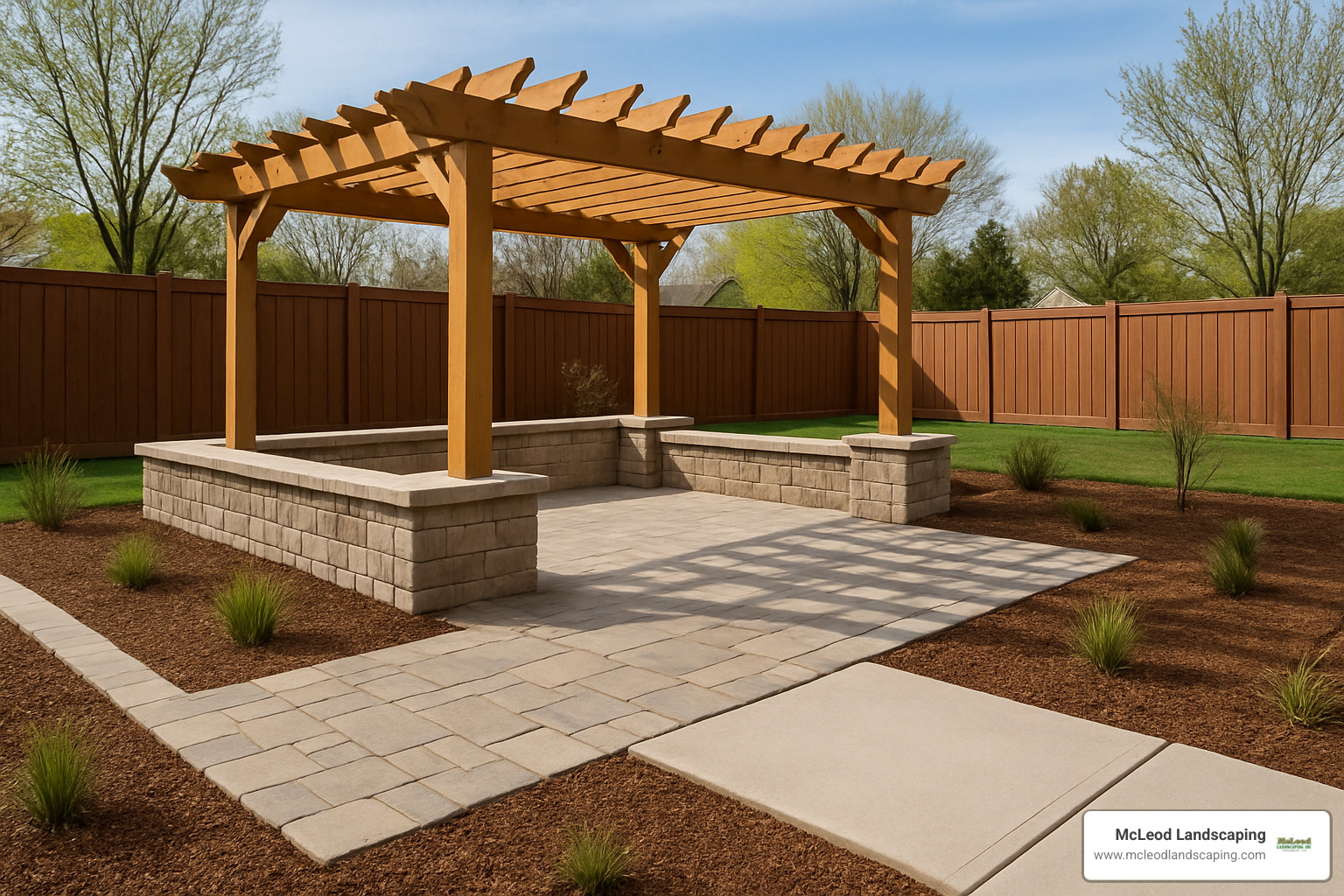
Have you ever admired a beautiful stone patio or a curved retaining wall that perfectly complements a garden? That’s hardscaping at work!
As I tell my clients, hardscaping encompasses all the non-living elements that give structure and function to your outdoor spaces. These are the patios where you’ll host summer barbecues, the walkways that guide visitors through your garden, and the retaining walls that tame sloping yards.
The term first appeared in print back in 1972, and has since become fundamental to how we think about outdoor design. When we define hardscaping, we’re talking about the backbone of your landscape – the permanent features that remain steadfast through every season.
| Hardscaping | Definition |
|---|---|
| What it is | Non-living, hard landscape materials and structures |
| Common materials | Stone, brick, concrete, wood, metal |
| Examples | Patios, walkways, retaining walls, decks, driveways |
| Primary functions | Structure, accessibility, erosion control, drainage |
| Origin of term | First appeared in print in 1972 |
Unlike your perennials that need constant attention or shrubs that change with the seasons, hardscape elements provide year-round structure with minimal upkeep. They’re the reliable foundation that lets the rest of your landscape shine.
I’ve seen how thoughtful hardscaping transforms properties. Beyond just looking beautiful, these permanent features solve practical problems. A well-designed retaining wall prevents erosion on a hillside. Permeable pavers help manage rainwater. A stone pathway makes your garden accessible even after a spring shower.
The benefits extend beyond function, too. Properties with balanced hardscaping can see value increases up to 20%. That patio isn’t just a place to relax—it’s an investment in your home’s future.
What makes hardscaping truly special is how it complements softscaping (your plants, soil, and other living elements). Think of a curved stone path winding through lush greenery, or a wooden pergola draped with flowering vines. When these elements work together, magic happens.
I’m Scott McLeod, owner of McLeod Landscaping. After three decades installing hardscaping throughout the Merrimack Valley, I’ve helped countless homeowners define hardscaping solutions that not only look stunning but solve real challenges with drainage, accessibility, and curb appeal.
Want to learn more about specific hardscaping services? We’ve made it easy to explore:
– hardscape maintenance service
– hardscape designers near me
– hardscaping vs landscaping
When I first started working with homeowners in the Merrimack Valley, I noticed many weren’t familiar with the term “hardscaping.” To define hardscaping simply, it’s all the non-living elements in your landscape design. According to Merriam-Webster, hardscape refers to “structures (such as fountains, benches, or gazebos) that are incorporated into a landscape.”
Interestingly, the term only entered our vocabulary in 1972 – relatively new in the landscaping world! As hardscape expert Joe Raboine puts it: “While softscapes are your plants and living elements, hardscaping encompasses the nonliving elements of landscaping—like a paver patio, stone wall, or a gazebo.”
Your home’s hardscaping serves multiple important roles beyond just looking nice. It provides structural support for your entire landscape, controls drainage to prevent flooding, creates accessible pathways, defines boundaries for privacy, and ties together your home’s architectural style with your outdoor space.
Whether we’re talking about grand public plazas with fountains or the charming stone path leading to your front door, these elements all fall under the hardscaping umbrella. For more detailed information, you can also check the Wikipedia page on hardscape.
When we sit down with clients to define hardscaping elements for their property, we cover quite a range of features:
Those beautiful patios and decks that create outdoor living rooms for your family barbecues and morning coffee spots. Retaining walls that not only prevent erosion on sloped properties but can double as neat seating or planter areas. The pathways and walkways that guide visitors through your garden and connect different outdoor “rooms.”
Water lovers appreciate water features like fountains and ponds that add tranquil sounds to mask traffic noise while creating visual focal points. For evening enjoyment, fire features extend your outdoor season well into New England’s cooler months, creating natural gathering spots for friends and family.
Don’t forget the practical elements like driveways that can be transformed from utilitarian concrete to beautiful permeable pavers, fences and gates that define boundaries with style, and pergolas and arbors that frame views and support climbing plants. For serious entertainers, outdoor kitchens bring the heart of the home outside.
At McLeod Landscaping, we always tackle hardscaping planning before softscaping – and for good reason.
Hardscaping provides the structural foundation for everything else in your landscape. As landscape designer Keith Davitt notes, “A garden can’t be complete without the structure hardscaping provides.” It’s like building a house – you need the framework before adding the decorative elements.
Proper grading and drainage planning through hardscape prevents disaster scenarios like flooded basements, washed-out gardens, and mud flowing onto driveways. Getting this right from the start saves enormous headaches later.
We also need to plan for utilities early. That outdoor kitchen needs gas lines, the landscape lighting requires electrical planning, and water features need proper plumbing. Trying to add these after plants are established is disruptive and expensive.
New England’s challenging freeze-thaw cycles make erosion prevention through proper hardscaping absolutely essential. Well-designed retaining walls and drainage systems protect your property investment for decades.
Finally, thoughtful hardscape planning ensures good accessibility and flow throughout your property. We want your outdoor spaces to be not just beautiful, but functional and enjoyable to use.
In my 30+ years of experience in the Merrimack Valley, I’ve seen how proper hardscape planning makes the difference between outdoor spaces that merely look good and those that truly improve your quality of life year after year.
When you’re planning your outdoor space, understanding the difference between hardscaping and landscaping is essential. Let me help you define hardscaping in relation to the bigger picture of outdoor design.
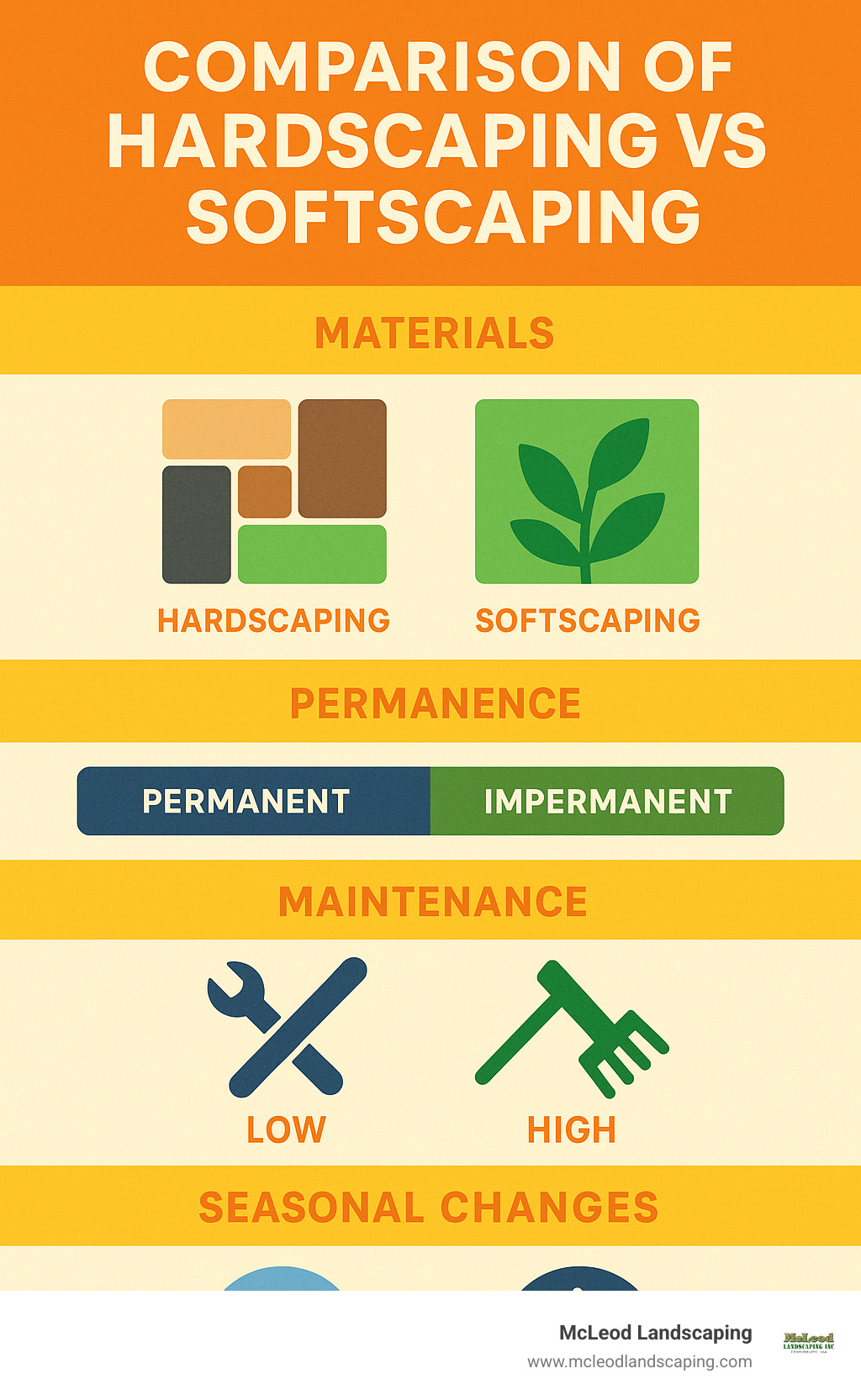
Think of landscaping as the entire canvas of your outdoor space. Within this canvas, we have two complementary elements that work together to create harmony: hardscaping (the permanent, non-living elements) and softscaping (the living, growing elements).
Here’s how they compare:
| Aspect | Hardscaping | Softscaping |
|---|---|---|
| Materials | Stone, concrete, brick, wood, metal | Plants, trees, shrubs, flowers, soil |
| Permanence | Stays put for decades | Changes with seasons and growth |
| Maintenance | Occasional cleaning and sealing | Regular watering, pruning, fertilizing |
| Purpose | Creates structure and function | Provides beauty, shade, and habitat |
| Installation timing | Typically installed first | Follows after hardscape is complete |
| Seasonal appearance | Remains consistent year-round | Transforms dramatically with seasons |
I always tell my clients that hardscaping and softscaping are like dance partners – they need each other to create something truly special. A yard with only plants can feel unstructured, while a yard with only hardscape elements can feel cold and unwelcoming.
Creating a cohesive outdoor space means thinking about how your hardscape elements will interact with your plantings. Here at McLeod Landscaping, we’ve been blending these elements for over 30 years in the Merrimack Valley, and we’ve learned a few key principles.
Flow & Zones are crucial when planning your outdoor space. Your hardscape elements should guide movement through your property while creating distinct areas for different activities. Picture a flagstone path that meanders from your patio dining area to a quiet garden reading nook – the hardscaping is creating both flow and purpose.
Material-Plant Harmony makes all the difference in a polished design. We carefully select hardscape materials that complement both your home’s architecture and the planned plantings. Natural granite and bluestone pair beautifully with traditional New England plantings, while sleeker concrete pavers might better suit contemporary, architectural plants.

When we define hardscaping elements in your yard, we’re also thinking about scale and proportion. A tiny patio next to a sprawling colonial home will look out of place, just as an enormous expanse of paving can overwhelm a modest property. As landscape designer David Stevens wisely notes, “A good design need not be perfectly symmetrical to be balanced.” Sometimes the most interesting yards have asymmetrical balance, creating visual interest without perfect symmetry.
Color coordination between your hardscape, home exterior, and plant palette creates a sense of unity that’s pleasing to the eye. This doesn’t mean everything needs to match exactly – complementary colors create dynamic spaces that feel cohesive throughout the changing seasons.
The magic happens when hardscape and softscape elements blend seamlessly together. Here’s how we integrate living elements around hardscape features:
Shade trees strategically placed near patios and decks provide natural cooling during hot summer months, making your outdoor living space more comfortable and inviting. A maple or oak that casts dappled shade over a stone patio creates a natural outdoor room.
Groundcovers planted along the edges of walkways and patios soften hard lines and create natural transitions. Imagine creeping thyme or sedum spilling slightly over the edge of your walkway, breaking up the rigid boundary between stone and lawn.
Planter walls are one of my favorite design elements because they serve double duty. A retaining wall that also includes space for cascading plants like creeping phlox or sweet potato vine softens what could otherwise be an imposing structure.
As the experts at Dargan Landscaping point out, “nothing makes a deck, patio or other hardscape look more natural than draping plantings around them.” This technique effectively blurs the lines between the built and natural environments.
Vertical gardens using trellises and pergolas support climbing plants like clematis or wisteria, creating living walls and ceilings. When a pergola becomes covered with flowering vines, it transforms from a wooden structure into a blooming garden room.
In our experience at McLeod Landscaping, the most successful landscapes in the Merrimack Valley achieve roughly a 40/60 balance between hardscape and softscape elements. This ratio creates spaces that are both functional and beautiful, though we always adjust based on your specific property and lifestyle needs.
For more insights about how hardscape and landscape elements work together, check out our detailed guide on Hardscape and Landscape or explore the differences further in our article on Hardscaping vs Landscaping.
When we define hardscaping for our clients, we often discuss the wide range of materials and structures available. Each material has unique characteristics, aesthetics, and performance qualities, especially important in New England’s variable climate.
Natural Stone: Granite, bluestone, limestone, and flagstone are durable options that withstand freeze-thaw cycles. Granite, quarried locally in New England, is particularly durable for steps and walls. Bluestone, with its distinctive blue-gray color, is popular for patios and walkways.
Concrete Pavers: These manufactured units come in countless shapes, colors, and textures. They’re typically more affordable than natural stone while offering excellent durability and design flexibility. As one industry expert notes, “Concrete pavers can be dyed any color, formed into any shape, and interlocked without mortar for versatile design.”
Brick: Clay brick provides a warm, traditional look that complements many New England architectural styles. It’s particularly well-suited for walkways and patios.
Wood: Cedar, redwood, and pressure-treated lumber are common choices for decks, pergolas, and other structures. Increasingly, we’re seeing interest in thermally modified wood, which offers improved durability without chemical treatments.
Metal Accents: Corten steel, aluminum, and wrought iron add contemporary touches to landscape designs. As one designer notes, “Metal features impart a rustic yet sophisticated feel to landscape designs.”
Composite Decking: These engineered materials combine wood fibers and recycled plastic to create low-maintenance decking options that resist rot, insects, and weathering.
When planning hardscape elements for your property, consider these practical approaches:
Focal Points: Create visual interest with a distinctive feature like a fire pit, water element, or unique paving pattern. As Joe Raboine suggests, “Mixing materials, textures, and colors in a well-designed space can create eye-popping focal points and designs.”
Accessibility: Ensure pathways are wide enough (typically 3-4 feet minimum) and surfaces are stable. Avoid excessive slopes where possible, and include handrails where needed.
ADA Guidelines: While residential properties aren’t required to meet ADA standards, these guidelines provide excellent accessibility benchmarks. Key considerations include:
– Pathway widths of at least 36 inches
– Slopes not exceeding 1:20 for paths and 1:12 for ramps
– Non-slip surfaces, especially for wet areas
– Minimal gaps between paving units
Permeable Options: Consider permeable pavers or gravel systems that allow water to infiltrate rather than run off. This is especially important in areas with stormwater regulations and can help prevent drainage issues on your property.
Climate Considerations: In New England, frost-heave resistance is crucial. We install hardscape elements below the frost line (typically 4 feet in our region) and use proper base materials to prevent shifting and cracking.
Some of the most striking hardscape elements combine functionality with artistic expression:
Fountains: From simple bubbling rocks to elaborate multi-tiered displays, fountains add the soothing sound of water and serve as focal points. They can also mask traffic noise and create a sense of privacy, as noted by industry experts.
Ponds: These water features can include fish, aquatic plants, and waterfalls. They create habitat for wildlife while adding visual interest.
Stream Beds: Even when dry, designed stream beds add texture and can serve practical drainage functions during heavy rain.
Fire Pits: These gathering spots extend outdoor living into cooler seasons. Materials range from simple metal rings to elaborate stone constructions.
Fireplaces: More substantial than fire pits, outdoor fireplaces create dramatic focal points and can include mantels, hearths, and chimneys.
Combination Features: Some of our most popular installations combine fire and water elements, creating dramatic contrasts that engage multiple senses.
When we define hardscaping projects that include water or fire features, we carefully consider safety, maintenance, and utility connections. Proper planning ensures these elements function beautifully for years to come.
When it comes to bringing your hardscape dreams to life, thoughtful planning is the foundation of success. At McLeod Landscaping, we’ve spent three decades perfecting our approach to ensure your outdoor spaces are both beautiful and functional.
We begin every project with a comprehensive site assessment. This means walking your property, noting elevation changes, examining soil composition, and understanding how water moves across your land. These observations help us identify potential challenges before they become expensive surprises during construction.
“The most expensive mistake in hardscaping is poor planning,” I often tell clients. “When we take the time to understand your property’s unique characteristics, we can design solutions that will stand the test of time—especially important in New England’s challenging climate.”
Permits are often overlooked by homeowners but are crucial for many hardscaping projects. Requirements vary significantly between Tewksbury, Andover, Billerica, and other Merrimack Valley communities. Retaining walls over a certain height (typically 4 feet), projects affecting drainage patterns, or work near wetlands usually require permits. We steer these regulations daily and can help ensure your project meets all local requirements.
Proper grading is essential for any hardscape project. Even a slight slope—typically 1-2%—ensures water flows away from your home and hardscape features. As one industry expert puts it, “Hardscaping must include a slight slope away from the house or an underground drainage system with proper outlets.” This simple consideration prevents costly water damage down the road.
Drainage solutions are often integrated into our hardscape designs. French drains, catch basins, and permeable surfaces all play important roles in managing water effectively. In New England’s climate, with heavy spring rains and winter snowmelt, proper drainage isn’t optional—it’s essential.
While DIY hardscaping might seem appealing, professional installation often delivers superior results, especially for complex projects. Beyond the heavy lifting, professional hardscaping requires specialized equipment, technical knowledge, and years of experience. I’ve seen many well-intentioned weekend projects that eventually required professional intervention—often at greater expense than hiring professionals from the start.
Based on industry averages (not McLeod Landscaping pricing), hardscaping costs typically range from $7 to $22 per square foot, depending on materials, complexity, and site conditions. Here’s what homeowners might expect to invest in common projects:
Several factors can influence these costs, including material selection (natural stone typically costs more than concrete pavers), site accessibility (difficult-to-reach areas require more labor), soil conditions (rocky soil is more challenging to excavate), and design complexity (curved patterns require more cutting and fitting than straight lines).

Understanding what happens during construction helps homeowners prepare for the change of their outdoor spaces:
We begin with a concept sketch that serves as our roadmap. These detailed plans show layout, materials, and dimensions, ensuring everyone shares the same vision for the final result.
Material selection comes next, where we help you choose options that balance aesthetics, function, and budget. This is when your personal style really shines through—whether you prefer the timeless appeal of natural stone or the versatility of concrete pavers.
Site preparation is where the physical work begins. We carefully remove existing vegetation, address grading issues, and prepare the area for construction. This critical step lays the groundwork for everything that follows.
Base compaction might not be visible in the finished project, but it’s arguably the most important step. A properly compacted base of crushed stone prevents settling and shifting. In New England, where freeze-thaw cycles are common, skimping on base preparation leads to uneven surfaces and failed walls.
The excitement builds during unit installation, as pavers, natural stone, or other materials are precisely placed to create your new outdoor space. This craftsmanship requires both technical skill and an artistic eye.
Joint treatment might seem minor, but it significantly impacts both appearance and longevity. For pavers and stone, we fill joints with appropriate materials to prevent weed growth and improve stability. The right joint material also improves the overall aesthetic of your hardscape.
Many hardscape materials benefit from sealing to improve color, prevent staining, and extend longevity. This protective layer is especially important for porous materials like natural stone.
We complete the hardscape with final grading and cleanup, ensuring proper drainage away from structures and a thoroughly clean site. This attention to detail reflects our commitment to excellence at every stage.
Finally, we add complementary plantings to soften edges and create a cohesive landscape. This integration of hardscape and softscape creates the balanced outdoor environment that makes your space truly special.
While simple projects might tempt the DIY enthusiast, certain situations call for professional expertise:
Complex slopes require specialized knowledge to create safe, stable solutions. Properties with significant grade changes often need engineered retaining walls and sophisticated drainage systems best handled by professionals.
Load-bearing walls over 4 feet typically require engineering and permits, as they must withstand significant soil pressure. Improperly built walls can fail catastrophically, posing safety risks and requiring costly repairs.
Integrated lighting improves both safety and aesthetics but requires electrical expertise. Low-voltage systems must be properly installed to withstand outdoor conditions and meet local codes.
Large-format pavers are increasingly popular but challenging to install. These heavy units—some weighing over 100 pounds—require special equipment and precise installation techniques to prevent shifting over time.
Drainage challenges need comprehensive solutions integrated with your hardscaping. Properties with existing water issues benefit from professional assessment and remediation to prevent future problems.
At McLeod Landscaping, we bring over 30 years of experience to hardscaping projects throughout the Merrimack Valley. Our knowledge of local soils, climate conditions, and municipal requirements ensures your project is completed correctly the first time. We’re not just installing pavers and walls—we’re creating outdoor spaces where memories will be made for generations.
When we define hardscaping for our clients, we emphasize that these features are low-maintenance compared to plants—but they’re not maintenance-free. With proper care, your stone patios and retaining walls can remain beautiful and functional for decades.
Regular sweeping and occasional pressure washing keep hardscape surfaces looking fresh by removing dirt, pollen, and organic material. Each material has specific cleaning needs—for example, delicate surfaces shouldn’t face wire brushes, and wood requires gentler pressure washing to avoid damage. A little regular attention prevents bigger problems down the road.
Most hardscape materials benefit from periodic sealing too. Concrete pavers typically need a fresh coat every 2-3 years, while natural stone might go 3-5 years between treatments. This simple maintenance step preserves color and prevents staining from leaves, food spills, or rust.
Even with proper installation, the occasional stubborn weed might appear between pavers. Catching these early prevents them from becoming established and causing damage. Similarly, joint material between pavers or stones naturally washes away over time, so replenishing it prevents shifting and keeps everything looking tidy.
In New England’s freeze-thaw climate, addressing small cracks promptly is especially important. What begins as a hairline fracture can quickly expand during winter if water gets inside and freezes.

The hardscaping world is becoming increasingly eco-conscious, with several sustainability trends gaining momentum. Permeable pavers allow rainwater to soak into the ground rather than running off into storm drains, helping replenish groundwater and reducing flooding. Products made from recycled plastic, glass, or concrete reduce environmental impact while creating beautiful spaces.
Light-colored materials with high Solar Reflectivity Index values are growing in popularity as they absorb less heat, keeping outdoor spaces cooler and reducing urban heat island effects. Smart irrigation systems that monitor weather conditions and soil moisture optimize water use around hardscaped areas.
Using locally sourced stone not only supports regional economies but reduces transportation emissions. Many of our Merrimack Valley clients appreciate the authentic New England character that native materials bring to their properties.
Beyond looking beautiful, quality hardscaping delivers impressive financial returns. Studies consistently show well-designed outdoor living spaces can increase property value by up to 20%. As one real estate agent told me recently, “A beautiful patio or outdoor kitchen isn’t just enjoyable—it’s an investment that pays dividends when it’s time to sell.”
You don’t need harsh chemicals to maintain your hardscape. Regular sweeping and occasional rinsing with plain water removes most debris without environmental harm. When deeper cleaning is needed, a simple vinegar-water solution works wonders on most surfaces, or you can choose specialized eco-friendly cleaners.
Plant-derived sealers offer an excellent alternative to petroleum-based products, reducing chemical exposure while still protecting your investment. These bio-based options have improved dramatically in recent years and now offer performance comparable to traditional sealers.
Strategic landscaping around hardscape features can actually help maintain them. Rain gardens capture runoff and filter pollutants, while French drains direct water away from sensitive areas and allow for natural infiltration. Even with traditional pavers, using permeable joint material allows some water to seep through rather than running off.
Surrounding your patio or walkway with native plants not only looks beautiful but reduces water needs and supports local ecosystems. The right plants can help prevent soil erosion near hardscape features while attracting beneficial insects and birds.
As we look toward the coming years, several exciting design trends are emerging in the hardscaping world. Mixing different materials and textures creates visual interest and helps define spaces. As hardscape expert Joe Raboine notes, “Mixing materials, textures, and colors in a well-designed space can create eye-popping focal points and designs.”
The concept of modular outdoor rooms continues to gain popularity, with hardscape elements defining distinct areas for dining, relaxing, cooking, and entertaining. These outdoor rooms often feature clean lines and uncluttered spaces that reflect contemporary architectural trends.
Technology integration is becoming seamless, with charging stations, Wi-Fi extenders, and built-in lighting and sound systems incorporated directly into hardscape features. The boundary between indoor and outdoor living continues to blur, with consistent flooring materials and level thresholds creating smooth transitions between spaces.
Climate adaptation is increasingly important in hardscape design, with features like shade structures, wind breaks, and sophisticated drainage systems helping homeowners enjoy their outdoor spaces regardless of weather conditions. We’re also seeing more biophilic elements—integrating nature within hardscapes through plant pockets in walls or living edges on patios.
At McLeod Landscaping, we stay ahead of these trends while respecting the traditional New England aesthetic that defines our region. After all, the best hardscapes feel both timeless and contemporary—rooted in place while looking toward the future.
After three decades of changing outdoor spaces throughout the Merrimack Valley, we’ve fielded just about every hardscaping question imaginable. Here are the ones our clients ask most often:
When we define hardscaping for homeowners, we keep it straightforward: hardscaping includes all the non-living, permanent elements in your landscape made from hard materials. Think patios, walkways, walls, fences, and structures like pergolas or fire pits.
I like how hardscape expert Joe Raboine puts it: “While softscapes are your plants and living elements, hardscaping encompasses the nonliving elements of landscaping—like a paver patio, stone wall, or a gazebo.”
The term first appeared back in 1972 and has since become fundamental to landscape design. These elements create the “bones” of your outdoor space—the framework that supports and improves everything else.
Our New England climate certainly puts materials to the test! Between our freeze-thaw cycles, snowy winters, and humid summers, not everything can stand up to the challenge. The most durable options we recommend include:
Granite stands as the champion of durability. This locally quarried stone shrugs off freezing temperatures and resists cracking beautifully. We particularly recommend it for steps, wall caps, and high-traffic areas where durability matters most.
Concrete pavers from quality manufacturers can last 50+ years when properly installed. Just be sure to select ones rated specifically for freeze-thaw conditions.
Bluestone has proven itself time and again in New England landscapes. This dense natural stone handles our weather extremes well, though it can get quite warm underfoot during summer afternoons.
Composite decking has come a long way in recent years. Modern composites resist rot, insects, and weathering far better than traditional wood options.
Porcelain pavers are gaining popularity for good reason. These dense, non-porous materials resist staining, fading, and frost damage remarkably well.
I always remind clients that proper installation is just as crucial as material selection. Even the finest materials will fail prematurely without the right base preparation and drainage—especially important in our regional climate.
Absolutely! Quality hardscaping typically provides an excellent return on investment. Industry studies consistently show that thoughtful hardscaping can increase property value by up to 20%.
Real estate agents I’ve worked with over the years confirm that outdoor living spaces have become major selling points. As one local realtor told me, “When buyers see a beautiful patio or outdoor kitchen, they’re already imagining themselves entertaining there—that emotional connection often seals the deal.”
The highest ROI typically comes from well-designed patios that effectively extend living space, outdoor kitchens (especially here in New England where we cherish our outdoor time), fire features that create natural gathering spots, professional landscape lighting, and attractive front walkways that boost curb appeal.
If you’re planning with resale in mind, I recommend focusing on quality materials, professional installation, and designs with broad appeal. While that bright purple paver pattern might be your personal favorite, a more neutral palette will appeal to a wider range of potential buyers.
We also frequently answer these common questions:
“How long does hardscaping last?” With proper installation and maintenance, most hardscape elements last at least 25 years, with many natural stone features lasting for generations. I’ve seen well-built stone walls that are still standing strong after a century!
“Can hardscaping help with drainage problems?” Yes, and this is especially important in many Merrimack Valley properties. Properly designed hardscaping includes careful grading, strategic drainage systems, and sometimes permeable materials to manage water effectively.
“Is hardscaping better than softscaping?” Neither is inherently “better”—they serve different purposes and work best when they complement each other. The most beautiful landscapes strike a thoughtful balance between both elements. I often tell clients to think of hardscaping as the frame and softscaping as the painting.
“How do I maintain my hardscape features?” Regular sweeping, occasional washing, joint maintenance, and periodic sealing (for most materials) will keep your hardscapes looking their best for years to come. The good news is that compared to plant maintenance, hardscape upkeep is relatively minimal.
“Can hardscaping be environmentally friendly?” Absolutely! With permeable materials that allow water infiltration, locally sourced stone that reduces transportation impacts, and thoughtful integration with appropriate native plantings, hardscaping can be quite sustainable. We’re seeing more eco-friendly options become available every year.
At McLeod Landscaping, we’re always happy to answer your specific hardscaping questions—just give us a call or stop by our Tewksbury office to chat about your project!
When we define hardscaping, we’re talking about more than just patios and walkways—we’re describing the structural foundation that makes your outdoor space functional, accessible, and beautiful. From retaining walls that tame slopes to outdoor kitchens that extend living space, hardscape elements transform properties throughout the Merrimack Valley.
At McLeod Landscaping, we’ve spent over three decades perfecting the art and science of hardscaping. We understand the unique challenges of New England’s climate, soils, and architectural traditions. Our approach balances technical expertise with creative design, ensuring your hardscape features are both beautiful and durable.
The key to successful hardscaping lies in thoughtful planning, quality materials, proper installation, and the right balance between hardscape and softscape elements. When these factors align, the result is an outdoor space that improves your property value, reduces maintenance, and creates opportunities for enjoyment throughout the seasons.
Whether you’re considering a simple walkway or a complete outdoor living space, understanding hardscaping principles helps you make informed decisions. Hardscaping provides the framework for your landscape—the permanent elements that define spaces, manage water, and create the foundation for everything else.
We invite you to explore the possibilities that hardscaping offers for your property. From traditional New England stone walls to contemporary outdoor rooms, the right hardscape elements can transform your outdoor space while reflecting your personal style and meeting your family’s needs.
For more information about our hardscaping services throughout Andover, Billerica, Burlington, Carlisle, Chelmsford, Concord, Lowell, Tewksbury, Westford, and Wilmington, please visit our hardscaping services page or contact us to discuss your project.
Contact McLeod Landscaping today at (978) 640-0957 or click here to schedule a consultation for retaining wall installation. Let our experienced team design and install a functional and visually appealing retaining wall that enhances your landscape.


1881 Main St Unit 1, Tewksbury, MA 01876