
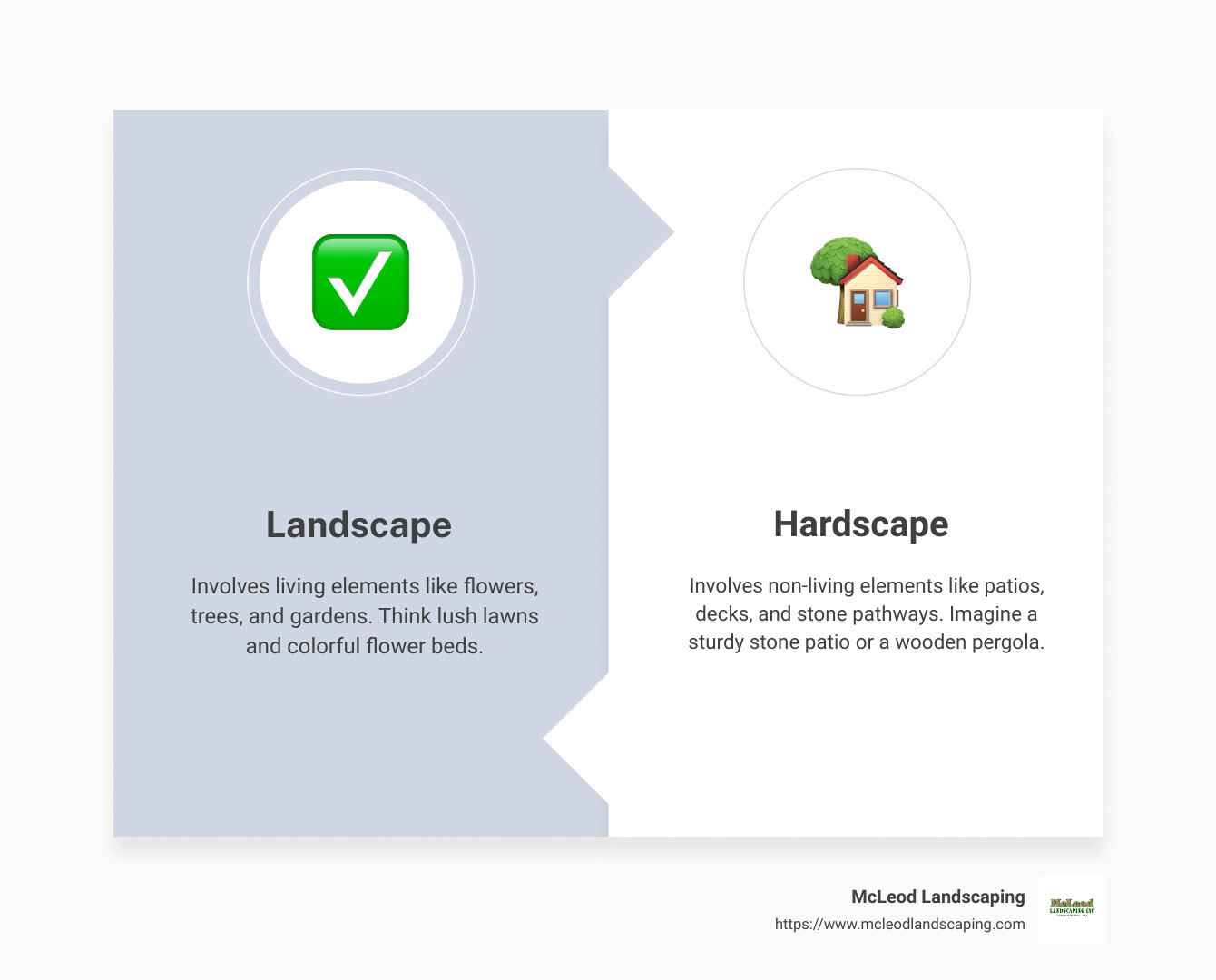
When it comes to hardscape and landscape, knowing the difference can transform your outdoor space into a beautiful and functional haven. At its core:
This quick breakdown helps set the stage for planning your perfect outdoor area.
I’m Scott McLeod, owner of McLeod Landscaping Inc. With over 30 years in the landscaping industry, I bring expertise in both hardscape and landscape projects. My team and I transform outdoor spaces with creativity and quality craftsmanship.
When designing an outdoor space, it’s crucial to understand the terms hardscape and landscape. Knowing the differences and how they integrate can help you make informed decisions for your yard.
Hardscape refers to the non-living elements in landscaping. These include:
Landscape, on the other hand, involves all the living elements. Think of:
The primary difference between hardscape and landscape lies in their composition and function. Hardscape elements are permanent and require minimal maintenance once installed. They provide structure and usability to outdoor spaces. For example, a stone pathway can guide visitors through a garden, while a patio can serve as an outdoor dining area.
Landscape elements, however, are dynamic and require regular upkeep. Plants grow, bloom, and sometimes die, necessitating ongoing care. Lawns need mowing, gardens need weeding, and flowers need watering. These elements add softness, color, and life to an outdoor space.
The magic happens when hardscape and landscape elements are integrated seamlessly. A well-designed yard balances both to create a cohesive and functional outdoor environment.
By understanding these elements and how they work together, you can create an outdoor space that is both beautiful and practical.
Hardscaping forms the backbone of your outdoor space. It includes all the non-living elements that provide structure and utility. Here are some key elements:
Patios are the heart of many backyards. They provide a solid surface for furniture, barbecues, and gatherings. Common materials include concrete, pavers, and natural stone. A well-designed patio can seamlessly integrate with your landscape, creating a cohesive look.
Decks lift your outdoor living space, literally and figuratively. Made from wood or composite materials, decks are great for uneven terrains and can offer stunning views. They also serve as an excellent base for outdoor furniture and kitchens.
Driveways are not just for parking. They can be a statement piece. Using materials like concrete, pavers, or gravel, you can create a welcoming entrance to your home. Permeable pavers are a great eco-friendly option that helps manage water runoff.
Retaining walls are both functional and decorative. They help manage soil erosion and create level areas on sloped terrains. Made from stone, concrete blocks, or wood, these walls can also serve as seating or planters.
Pergolas add a vertical dimension to your outdoor space. These structures provide shade and can be used to support climbing plants. Made from wood, metal, or vinyl, pergolas can transform a simple patio into a cozy, shaded retreat.
Water features like fountains, ponds, and waterfalls add a soothing element to your yard. The sound of flowing water can create a tranquil atmosphere and attract wildlife. These features can be integrated into any hardscape design to improve its aesthetic appeal.
By incorporating these elements, you can create a well-rounded and functional outdoor space. Each component not only adds to the beauty but also improves the usability of your yard.
When it comes to landscape design, several key elements can transform your outdoor space into a vibrant, living environment. These elements include lawns, gardens, trees, shrubs, and flowers. Let’s explore how each of these can contribute to a beautiful and functional landscape.
A well-maintained lawn is often the centerpiece of a landscape. It provides a lush, green area for activities and relaxation. Lawns can also help to cool the surrounding area and improve air quality. However, they do require regular maintenance, including mowing, watering, and fertilizing.
Gardens bring life and color to your outdoor space. They can be custom to fit any size or style, from vegetable gardens to flower beds. Gardens not only improve the aesthetic appeal but also offer the joy of growing your own plants. Planting the right flowers can attract pollinators like bees, butterflies, and hummingbirds, adding to the biodiversity of your yard.
Trees are a crucial element in landscape design. They provide shade, reduce energy costs, and improve air quality. Trees also offer habitat for birds and other wildlife. When selecting trees, consider their size, growth rate, and maintenance needs. Some trees can live for decades, making them a long-term investment in your landscape.
Shrubs add structure and depth to your landscape. They can be used to create natural barriers, add privacy, or define different areas of your yard. Shrubs come in various sizes and shapes, making them versatile for any design. They also require less maintenance compared to lawns and trees, making them a practical choice for busy homeowners.
Flowers are the most colorful and diverse element of any landscape. They can be planted in beds, borders, or containers to add visual interest. Annual flowers provide seasonal color, while perennials can bloom year after year. Flowers also play a vital role in attracting pollinators, which are essential for a healthy ecosystem.
By integrating these key elements, you can create a balanced and harmonious landscape that is both beautiful and functional. Next, we’ll explore the benefits of combining hardscape and landscape elements to maximize the potential of your outdoor space.
Combining hardscape and landscape elements creates a visually appealing outdoor space. Imagine a stone patio surrounded by lush greenery and colorful flowers. The hard materials (like stone or wood) contrast beautifully with the soft textures of plants and flowers, making the space feel balanced and inviting.
For instance, a well-designed garden path made of pavers can guide the eye through a landscape filled with vibrant plants, creating a harmonious flow that improves the beauty of your yard.
Integrating hardscape and landscape elements can also improve the functionality of your outdoor space. Hardscape features like patios, decks, and walkways provide solid, usable surfaces for activities like dining, entertaining, or simply relaxing.
Meanwhile, landscape elements like trees and shrubs can offer shade, privacy, and even windbreaks. For example, a pergola covered with climbing plants can create a cozy, shaded area perfect for outdoor gatherings.
One of the most compelling reasons to combine hardscape and landscape elements is the increase in property value. According to real estate experts, professional landscaping can boost property value by up to 20%. Features like patios, decks, and well-maintained gardens are highly attractive to potential buyers.
A new deck, for instance, can provide a return on investment (ROI) of approximately 80% of the cost, making it a smart financial decision.
Combining hardscape and landscape elements can also have positive environmental impacts. Trees and plants improve air quality by absorbing carbon dioxide and releasing oxygen. They also provide habitats for birds, bees, and other wildlife.
Moreover, certain hardscape elements can be environmentally friendly. For example, permeable pavers allow water to seep through, reducing runoff and promoting groundwater recharge. Mulch, another landscaping element, helps retain soil moisture, reducing the need for frequent watering.
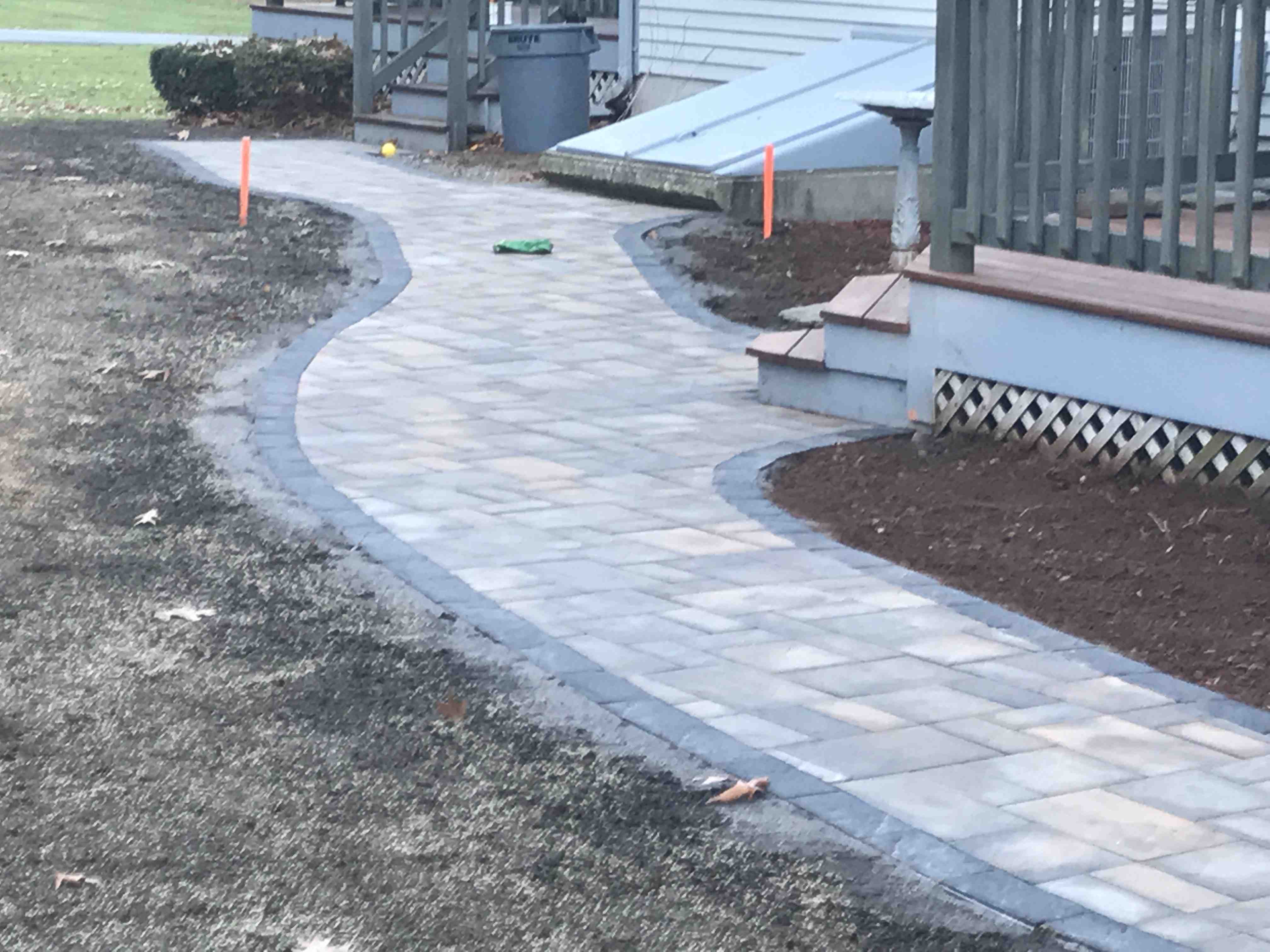
By thoughtfully combining hardscape and landscape elements, you can create an outdoor space that is not only beautiful and functional but also beneficial to the environment and your property value. Next, let’s dig into the practical applications of these elements in home improvement projects.
When planning hardscape and landscape elements, the design principles differ significantly. Hardscaping focuses on creating a solid, permanent structure. Think of it as the backbone of your outdoor space. Elements like patios, driveways, and retaining walls provide form and function. They define areas and guide movement.
On the other hand, landscaping is all about bringing life and softness to your yard. Trees, shrubs, and flowers add color, texture, and a sense of tranquility. The goal is to create a harmonious blend of hard and soft elements that complement each other.
The materials used in hardscape and landscape elements also vary. Hardscape materials are typically durable and long-lasting. Common choices include:
Landscaping materials, however, are organic and living. These include:
Maintenance for hardscape and landscape elements differs greatly. Hardscape features are generally low-maintenance. Once installed, they require minimal upkeep. Occasionally, you might need to clean surfaces or repair minor damages, but they are built to last.
Landscaping, however, demands regular attention. Plants need watering, pruning, and fertilizing. Grass requires mowing, and flower beds need weeding. The beauty of landscaping is fleeting; it changes with the seasons and requires ongoing care to maintain its appeal.
Nelson Landscaping Inc notes that while hardscaping can significantly reduce maintenance efforts, landscaping brings a dynamic, ever-changing beauty to your yard. Combining both effectively can create a balanced, visually appealing outdoor space that’s easy to manage.
Next, let’s dig into the practical applications of these elements in home improvement projects.
When it comes to home improvement, combining hardscape and landscape elements can transform your outdoor space into a functional and beautiful oasis. Here are some practical applications:
Outdoor kitchens are a fantastic way to extend your living space. They allow for cooking and dining outside, making your backyard a hub for gatherings.
Fire pits create a cozy atmosphere and extend the usability of your outdoor space into cooler seasons.
Privacy walls offer seclusion and can be both functional and decorative.
Immersive gardens create a lush, inviting environment that feels like a personal retreat.
For those who want beauty without the hassle, low-maintenance setups are ideal.
Combining these hardscape and landscape elements can make your outdoor space more functional, beautiful, and easier to maintain.
Next, let’s talk about how McLeod Landscaping can help you improve your property with expert services.
At McLeod Landscaping, we offer full-service solutions to meet all your outdoor needs. From design to installation and maintenance, we’ve got you covered. Our team handles everything, so you can sit back and enjoy your beautiful yard.
Whether you own a business or a home, we can improve your property.
Every property is unique, and so are our designs. We work closely with you to create a landscape that reflects your style and meets your needs.
Ready to improve your property? Contact McLeod Landscaping for expert services that make a difference.
Next, we’ll explore the long-term value of investing in professional landscaping and how to choose the right experts for your project.
Investing in professional landscaping offers significant long-term value. A well-designed outdoor space not only boosts your home’s curb appeal but also improves its functionality and environmental impact.
Long-term value: Landscaping improves property value and can provide a substantial return on investment. A survey from Virginia Tech found that landscaping can increase home value, and this value may continue to grow as your plants mature. Plus, thoughtful landscaping can reduce energy costs by providing natural shade and windbreaks.
Choosing the right professionals: It’s crucial to select experts who understand both hardscape and landscape elements. Professionals like McLeod Landscaping bring years of experience and knowledge, ensuring that your outdoor space is both beautiful and functional. They use high-quality materials and customized solutions to fit your specific needs.
Contact McLeod Landscaping for expert services: Ready to transform your outdoor space? McLeod Landscaping offers comprehensive hardscaping services that integrate seamlessly with your landscape. From patios and retaining walls to lush gardens and neat water features, we do it all.
Reach out to us today to start your journey towards a stunning and sustainable outdoor environment. Let us help you create a space that not only meets but exceeds your expectations.
Contact McLeod Landscaping today at (978) 640-0957 or click here to schedule a consultation for retaining wall installation. Let our experienced team design and install a functional and visually appealing retaining wall that enhances your landscape.


1881 Main St Unit 1, Tewksbury, MA 01876