

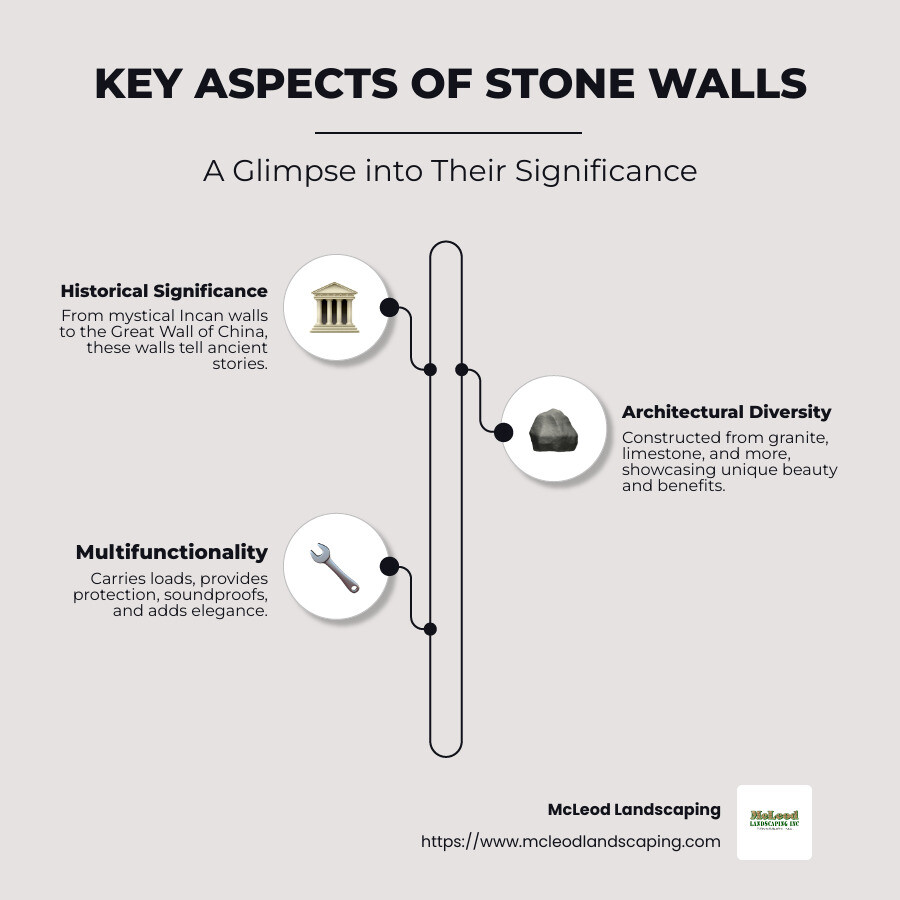
Stone wall structures have captivated human imagination for centuries due to their historical significance and remarkable architectural diversity. These enduring structures are more than just barriers; they carry stories of ancient civilizations, embody artistic expression, and provide practical, lasting solutions. Notably, they come in a variety of forms including dry stone walls, which stand without mortar, celebrating the craftsmanship of ages past. Stone walls not only offer strength and durability but also improve landscapes, lending a unique aesthetic charm. Here’s a quick rundown on why stone walls matter:
I’m Scott McLeod, a landscaping expert with over three decades of experience, especially in crafting stunning stone wall designs. Whether you’re considering enhancing your property with a classic stone wall or seeking professional insights, you’re in the right place. In the next section, we’ll explore the rich historical and cultural journey of stone walls.
Simple stone wall glossary:
– block walls
– landscape blocks
– rock walls
Stone walls have long been a symbol of strength and resilience, capturing the essence of human history and culture through their enduring presence. Let’s explore some of the most notable examples that highlight their significance.
The Stonewall Riots are a cornerstone in the history of LGBTQ+ rights. On June 28, 1969, patrons of the Stonewall Inn in New York City fought back against a police raid, sparking a movement for equality and justice. This uprising is often compared to other pivotal moments in history, like Rosa Parks’ refusal to give up her bus seat, and it marked a turning point for gay liberation movements worldwide. The riots demonstrated the power of community resistance and became a rallying cry for LGBTQ+ rights.

The Great Wall of China stands as a testament to human ingenuity and perseverance. Spanning over 5,000 kilometers, it was constructed to protect Chinese states from invasions. Built across mountains, deserts, and prairies, this monumental structure showcases the architectural prowess of ancient China and remains one of the most iconic stone walls in history.
In the United Kingdom, Hadrian’s Wall is a remarkable example of Roman engineering. Built between 122 and 126 AD, it stretched 120 kilometers across northern England to defend the Roman Empire from the Picts of Scotland. Though not as well-preserved as some other ancient structures, Hadrian’s Wall still captivates visitors with its historical significance and the story of Roman conquest and defense.
These stone walls are not just physical structures; they are cultural landmarks that tell stories of human endeavor, conflict, and triumph. Each wall, whether it be a symbol of protest, a defensive barrier, or a marvel of ancient engineering, has left an indelible mark on history and continues to inspire awe today.
In the next section, we’ll explore the various types and materials of stone walls, delving into the unique characteristics that make each one special.
Stone walls come in many forms, each with its unique charm and practical benefits. Let’s explore some of the most common materials used in stone wall construction: granite, limestone, sandstone, and flint.
Granite is a popular choice for stone walls due to its durability and resistance to weathering. Known for its strength, granite can withstand harsh climates and maintain its appearance over time. This makes it ideal for both structural and decorative purposes. Its natural beauty, with speckled patterns and a range of colors, adds a touch of elegance to any landscape or building.
Limestone offers a softer and more uniform appearance compared to granite. It’s easier to work with, which allows for more intricate designs and smooth finishes. However, not all limestone is created equal. Some varieties, like Portland stone, are highly resistant to weathering, making them suitable for exterior walls. Others are more vulnerable to the elements and may require additional protection.
Sandstone is prized for its warm, earthy tones and textured surface. It is often used in retaining walls and garden features, providing a natural look that blends seamlessly with the environment. Sandstone is generally easy to cut and shape, which makes it a versatile option for various architectural styles. However, it may require sealing to protect against water absorption and erosion.
Flint is a unique material that has been used in construction for centuries, particularly in regions where it is abundant. It is known for its hardness and distinctive, glossy appearance. Flint walls are often seen in historical buildings and rural settings, adding a rustic charm. While flint can be challenging to work with due to its irregular shapes, it offers excellent durability and weather resistance.
Each of these materials brings its own set of characteristics to a stone wall, influencing both the aesthetic and functional aspects of the structure. Selecting the right material depends on the specific requirements of your project, including climate, design preferences, and budget.
In the next section, we’ll dig into the costs and installation considerations for stone walls, providing insights into the financial and labor aspects of these timeless structures.
Building a stone wall can be a rewarding project, but understand the costs and labor involved. Here’s a breakdown of what you can expect.
The cost of a stone wall depends on several factors, including the type of stone, size, and complexity of the design. Here’s a general idea:
These prices include materials and labor, but not additional features like drainage systems or decorative elements.

Stone wall installation is labor-intensive. It requires careful planning and skilled craftsmanship to ensure stability and longevity.
Due to these complexities, hiring professionals is often recommended, especially for larger projects.
If you’re considering a DIY approach, here are some tips:
DIY can save on labor costs, but mistakes can be costly. For example, improper drainage could lead to wall collapse, requiring expensive repairs.
In the next section, we’ll explore the design and aesthetic appeal of stone walls, showcasing how they can transform both interiors and landscapes.
Stone walls are more than just functional structures; they are a timeless design element that can lift any space. From interior design to landscape architecture, these walls bring a unique aesthetic appeal that is hard to match.
Inside homes, stone walls add character and warmth. They can transform a plain room into a cozy retreat or a modern space into a rustic haven. Here are some popular uses:
In outdoor settings, stone walls are integral to landscape design. They blend seamlessly with natural surroundings and provide structure and definition to gardens and yards.
The exterior of a home benefits greatly from the addition of stone walls. They offer a sense of permanence and craftsmanship that boosts curb appeal.
Stone walls are versatile and durable, making them a valuable addition to any property. Whether used indoors or out, they improve aesthetics and add value, creating spaces that are both beautiful and functional.
In the next section, we’ll address common questions about stone walls, including costs and symbolism.
The cost of a stone wall can vary widely based on several factors. For a typical 4-foot by 25-foot wall, you might spend between $1,000 and $10,000. On average, building a stone wall costs around $5,500. The price depends on the materials you choose, such as granite or limestone, and the complexity of the labor involved. For example, natural stone materials can range from $13 to $95 per square foot, depending on the type and quality.
The term “Stonewall” carries significant historical and cultural weight. It refers to the Stonewall Riots, which were pivotal in the fight for LGBTQ rights. The riots began in June 1969 at the Stonewall Inn in New York City, marking a major turning point in the LGBTQ rights movement. This event symbolizes resistance against oppression and the ongoing struggle for equality and acceptance.
Building a stone wall can be a significant investment, but it’s important to consider the long-term benefits. While the upfront costs might be higher compared to other materials, stone walls offer durability and timeless beauty. They are less likely to need repairs and can last for generations, making them a cost-effective choice over time. Depending on the materials and design, a stone wall can range from affordable to premium, allowing flexibility based on your budget and aesthetic preferences.
In the next section, we’ll explore the expertise and sustainable practices of McLeod Landscaping, focusing on custom designs that meet your unique needs.
At McLeod Landscaping, we believe that stone walls are more than just functional structures; they are a canvas for creativity and sustainability. With over 30 years of experience, our team is dedicated to changing your outdoor space into a stunning extension of your home.
Sustainability is at the heart of what we do. We use environmentally friendly practices to ensure that our stone wall installations are not only beautiful but also sustainable. By selecting native materials and employing water-efficient techniques, we minimize environmental impact while enhancing the natural beauty of your landscape. This commitment to sustainability means that your stone wall will be a lasting, eco-friendly feature in your outdoor space.
Every outdoor space is unique, and we take pride in offering custom designs custom to your specific needs and style. Whether you’re looking for a rustic garden wall or a sleek, modern feature, our team will work closely with you to bring your vision to life. Our designs incorporate the latest trends in landscape architecture, ensuring that your stone wall is both timeless and contemporary.
By choosing McLeod Landscaping, you’re not just investing in a stone wall; you’re investing in a partnership that values quality, sustainability, and personalized service. Let us help you create an outdoor space that reflects your personality and improves your lifestyle.
Ready to transform your landscape? Contact us today to learn more about our retaining wall installation services and start your journey towards a more beautiful and sustainable outdoor space.
Contact McLeod Landscaping today at (978) 640-0957 or click here to schedule a consultation for retaining wall installation. Let our experienced team design and install a functional and visually appealing retaining wall that enhances your landscape.


1881 Main St Unit 1, Tewksbury, MA 01876