
Patio Contractors are specialized professionals who design, build, and maintain outdoor living spaces for commercial properties. Here’s what you need to know:
What Patio Contractors Do:
– Site assessment and custom design
– Material selection (concrete, pavers, flagstone, natural stone)
– Permit acquisition and code compliance
– Base preparation and installation
– Drainage solutions and ADA accessibility
– Lighting, fire features, and outdoor kitchens
Key Benefits for Commercial Properties:
– 80-84% ROI on outdoor dining spaces
– Increased customer dwell time and revenue per seat
– Year-round usability with proper design
– Improved curb appeal and property value
The outdoor dining boom started during the pandemic and never stopped. Smart business owners know that a well-designed patio isn’t just an amenity – it’s a profit center. Whether you’re running a restaurant, hotel, or retail center, the right patio can transform dead space into revenue-generating square footage.
Commercial patio projects require different expertise than residential work. You need contractors who understand ADA compliance, commercial-grade materials, and high-traffic durability. Most importantly, you need professionals who get that downtime costs money.
As Scott McLeod, owner of McLeod Landscaping with over 30 years of experience serving commercial properties in the Merrimack Valley, I’ve seen how the right Patio Contractors can transform a business’s outdoor space into a competitive advantage.

Patio Contractors terms explained:
– deck and patio
– outdoor living contractors
– landscape plan
When you’re looking for commercial Patio Contractors, you need specialists who understand that your outdoor space isn’t just decoration – it’s a business asset that needs to perform. The scope of work goes way beyond throwing down some concrete and hoping for the best.
Professional Patio Contractors handle the entire process from start to finish. We begin with thorough site surveys that include soil analysis, drainage assessment, and utility mapping. Then comes the design-build phase, complete with 3D renderings so you can visualize your space before we break ground.
The permitting maze alone is worth hiring professionals for. Commercial projects must steer ADA compliance requirements, local building codes, and drainage regulations that are completely different from residential work. One missed permit can shut down your project for weeks.
Here’s where the numbers get interesting: the revenue-per-seat math on outdoor dining is compelling. Studies show outdoor spaces can deliver 80-84% ROI, compared to traditional indoor renovations. For a restaurant adding twenty outdoor seats, that could mean hundreds of thousands in additional annual revenue.
Material selection becomes critical in commercial applications. While your backyard patio might handle weekend barbecues just fine, commercial spaces need materials that can withstand constant foot traffic, commercial cleaning equipment, and New England weather extremes.
The best Patio Contractors eliminate the headache of coordinating multiple vendors by offering comprehensive services under one roof.
Site surveys and assessments form the foundation of every successful project. Professional contractors conduct thorough evaluations including soil testing, drainage analysis, and utility location.
3D design and rendering services have revolutionized how we approach patio projects. Modern contractors use advanced software to create detailed visualizations of your project. When you can see exactly how your patio will look before construction begins, you make better decisions and avoid costly changes mid-project.
Base preparation separates amateur contractors from professionals. Proper preparation involves excavating to the correct depth (typically 8-10 inches for commercial applications), installing crushed limestone base material, and using proper compaction techniques.
Hardscape installation follows strict industry standards, particularly ICPI (Interlocking Concrete Pavement Institute) guidelines. This includes proper edge restraints, joint sand application, and final compaction.
Warranties and maintenance plans back up quality work with guarantees. Most professional contractors offer 3-5 year craftsmanship warranties, and when using certified materials, you can secure lifetime transferable warranties for the materials themselves.
Smart business owners recognize that outdoor spaces aren’t just amenities – they’re revenue generators with measurable impact on the bottom line.
Curb appeal matters more than ever in our social media-driven world. A stunning patio becomes a marketing asset that generates Instagram posts, Google reviews, and word-of-mouth referrals.
Customer dwell time increases by 25-40% in well-designed outdoor spaces, directly translating to higher per-customer spending. People linger longer in comfortable outdoor environments, ordering that extra drink or dessert they might skip indoors.
Seasonal seating extends your revenue-generating capacity far beyond traditional seasons. With proper design elements like fire features, radiant heating systems, and weather protection, your patio can operate profitably from early spring through late fall.
Event rentals represent an often-overlooked revenue stream. Many commercial clients rent their patio spaces for private parties, corporate events, and special occasions during off-peak hours.

Choosing patio materials for your commercial space is a lot like buying a work truck – you need something that looks good but can handle whatever you throw at it. After three decades of building commercial patios across the Merrimack Valley, I’ve learned that the cheapest option upfront rarely saves money in the long run.
Concrete patios are the workhorses of commercial outdoor spaces. Basic concrete installation typically ranges from $8-15 per square foot based on internet data, while stamped concrete can run anywhere from $15-50 per square foot depending on complexity. What makes concrete appealing for businesses is its ability to handle heavy foot traffic and commercial cleaning equipment without breaking a sweat.
Modular pavers hit the sweet spot for most commercial applications. These engineered units offer the durability of concrete with much better repairability. Internet pricing data shows concrete pavers typically range from $12-40 per square foot installed, with premium options reaching $60+ per square foot. The real advantage isn’t just aesthetics – it’s peace of mind.
Permeable pavers are becoming the smart choice for forward-thinking business owners. These specialized systems allow water to drain through the surface, which can help you meet stormwater regulations and potentially earn tax incentives. Based on industry data, expect to invest $18-55 per square foot for permeable paver systems.
Natural stone options like flagstone, bluestone, and granite represent the premium end of commercial patio materials. Flagstone installations typically range from $25-75+ per square foot according to internet sources, while bluestone and granite can command even higher prices. These materials can literally last centuries with minimal maintenance.
Brick pavers offer that timeless New England charm that never goes out of style. Traditional clay brick runs $15-45 per square foot based on market data, while reclaimed brick can cost $20-65 per square foot.
Here in Massachusetts, snow load considerations aren’t optional – they’re survival. Every material we recommend needs to handle freeze-thaw cycles, snow plows, and rock salt without falling apart.
When clients ask me to break down the real-world performance of different materials, here’s what I tell them:
Concrete offers unbeatable value for high-traffic areas and provides excellent durability for the investment. The slip-resistance is good when properly finished, and heat-retention stays moderate even in summer. However, aesthetics are limited, and repairs can be disruptive to business operations.
Pavers excel in aesthetics and sustainability since individual units can be replaced or recycled. They handle snow-load requirements well and offer excellent slip-resistance with proper textures. The trade-off is higher initial cost and the need for occasional joint sand maintenance.
Natural stone wins hands-down for durability and aesthetics, often increasing property values significantly. Heat-retention varies by stone type, with lighter colors staying cooler. The main drawbacks are higher costs and potential slip-resistance issues when wet, though proper finishing techniques can address this.
Financing options have expanded dramatically in recent years. Many commercial patio projects now qualify for low-interest business loans, and some municipalities offer rebates for sustainable installations like permeable pavers.
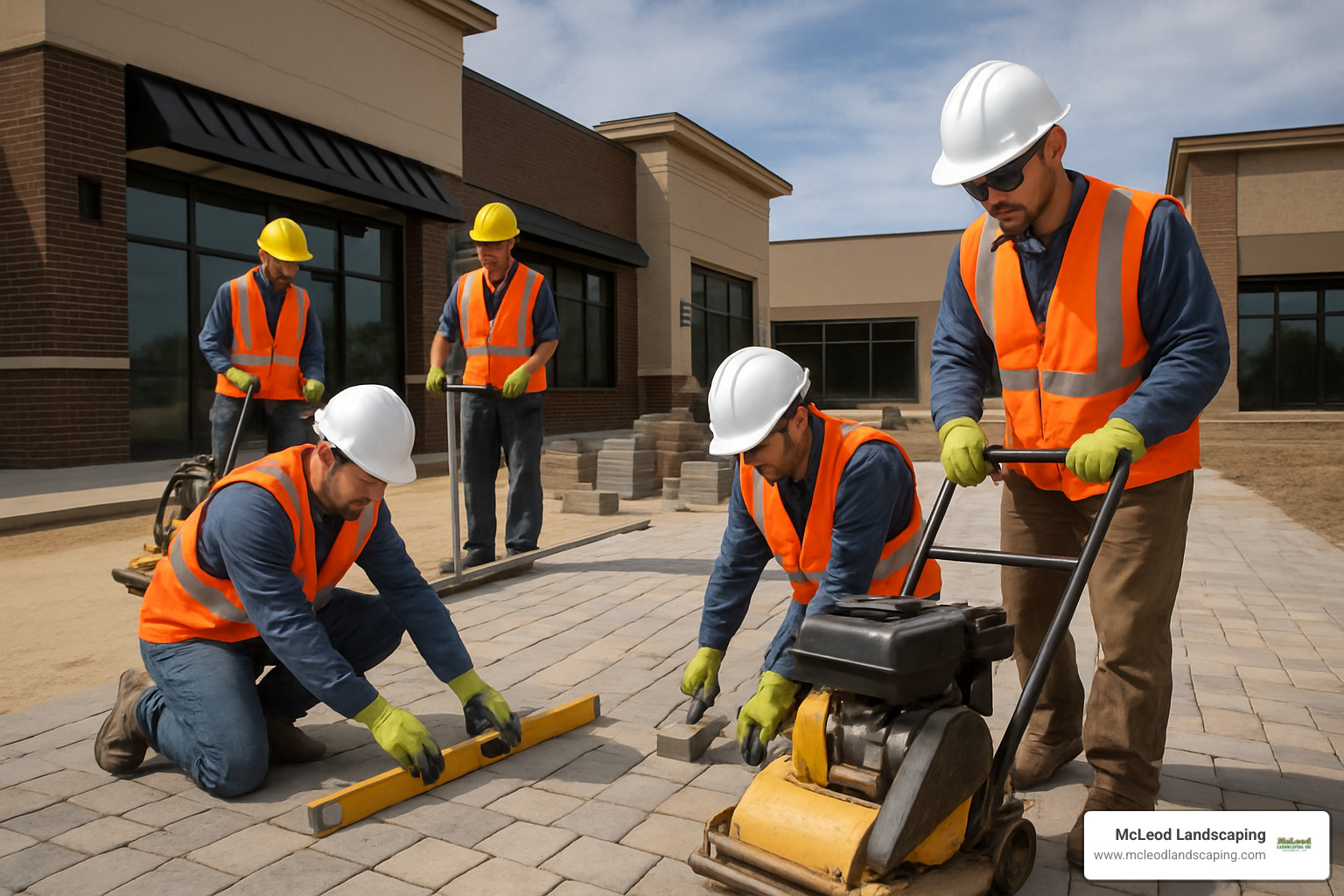
Hiring the right Patio Contractors for your commercial project feels a bit like choosing a business partner – because that’s essentially what you’re doing. Your contractor needs to understand that when your business is disrupted by construction delays or shoddy work, real money is on the line.
The horror stories are out there: contractors who disappear mid-project, installations that fail within months, and code violations that shut down business operations. But here’s the good news – these disasters are completely avoidable when you know what to look for.
Start with the basics, but don’t stop there. Yes, your contractor needs proper licensing and insurance, but commercial projects require a deeper level of expertise. The contractor who builds beautiful backyard patios might be completely out of their depth when it comes to ADA compliance or commercial drainage requirements.
Professional Patio Contractors understand that your business can’t afford surprises. They provide detailed timelines, handle all permitting, and maintain open communication throughout the project. Most importantly, they stand behind their work with comprehensive warranties and proven maintenance plans.
When it comes to commercial work, proper licensing and insurance aren’t just nice-to-have credentials – they’re your protection against financial disaster. In Massachusetts, any contractor performing work over $1,000 must carry a Home Improvement Contractor License, but commercial projects often require additional certifications.
Look for ICPI certification (Interlocking Concrete Pavement Institute), which demonstrates specialized knowledge in professional paver installation. This isn’t just a piece of paper – ICPI-certified contractors understand proper base preparation, drainage solutions, and installation techniques that prevent costly failures down the road.
Insurance requirements jump significantly for commercial work. Your contractor should carry general liability insurance of at least $1-2 million, along with workers’ compensation coverage for all employees. Don’t just take their word for it – ask for certificates of insurance and verify coverage directly with their carrier.
Bonding becomes especially important for municipal projects or large commercial installations. A bonded contractor provides an additional layer of financial protection if something goes wrong during construction.
The permitting process can be a maze of regulations, especially for commercial properties. Professional contractors handle all permit applications and understand local codes, ADA requirements, and commercial building standards.
Share your project requirements with licensed contractors to get accurate assessments of permit requirements for your specific situation.
The right questions can save you thousands of dollars and weeks of headaches. These ten questions will help you separate confident professionals from contractors who are in over their heads.
Timeline questions matter more in commercial work than residential projects. Ask for realistic completion schedules that account for weather delays and permit processing times.
Change order procedures should be crystal clear before you sign anything. Changes are inevitable in construction, but the process should involve written approvals and transparent pricing before any additional work begins.
Material sourcing reveals a lot about a contractor’s professionalism. Quality contractors work with established suppliers and can provide material certifications.
Warranty coverage should be comprehensive, covering both materials and workmanship. Look for contractors offering 3-5 year craftsmanship guarantees.
Project management structure matters for commercial projects. You should have a dedicated project manager handling day-to-day communication.
Site cleanup protocols are crucial for maintaining business operations during construction. Professional contractors understand that commercial properties need thorough daily cleanup and proper waste management.
Payment schedules should be reasonable and tied to completion milestones. Avoid contractors demanding large upfront payments – legitimate contractors typically request 10-20% down with progress payments.
Ask about local references from similar commercial projects. A contractor’s residential portfolio might be beautiful, but commercial work requires different expertise.
Weather delay policies should be established upfront to prevent disputes later.
Finally, clarify warranty procedures and response times. Knowing exactly how problems will be handled after completion prevents misunderstandings later.
Some warning signs should immediately disqualify a contractor from consideration. Door-to-door solicitation is the biggest red flag – legitimate commercial contractors don’t need to hunt for work this way.
Unusually low bids almost always indicate problems. If one estimate is significantly lower than others, they’re either cutting corners, using inferior materials, or planning to hit you with change orders later.
Vague scope of work in written estimates suggests the contractor doesn’t really understand your project. Professional estimates specify materials, quantities, installation methods, and detailed timelines.
Pressure sales tactics like “sign today for a special price” should send you running. Quality Patio Contractors don’t need high-pressure tactics because their work speaks for itself.
Lack of portfolio or inability to show similar commercial projects indicates inexperience with commercial requirements.
Cash-only payment requirements often indicate contractors trying to avoid taxes or licensing requirements. Legitimate contractors accept checks and credit cards as standard business practice.
Trust your instincts throughout the vetting process. If something feels off during initial meetings, it probably is. For reliable Patio Contractors Tewksbury MA services, look for established local companies with proven track records in commercial work.

The outdoor dining scene has exploded beyond simple tables and chairs. Today’s successful commercial patios are destination experiences that keep customers coming back and spending more. As someone who’s designed hundreds of commercial outdoor spaces, I can tell you that the right add-ons don’t just look impressive – they pay for themselves through increased revenue.
Fire pits and outdoor fireplaces are absolute game-changers for Massachusetts businesses. I’ve watched restaurants extend their outdoor season from May through November, sometimes even into December, just by adding proper fire features. That’s potentially four extra months of revenue from your patio investment.
Outdoor bars create their own profit centers while reducing crowding inside your main establishment. We’ve installed outdoor bars that become the most popular spots during happy hour and weekend events. When you add an outdoor kitchen to the mix, you’re looking at live cooking demonstrations, special events, and the ability to handle larger crowds without overwhelming your indoor kitchen.
Weather protection has gotten incredibly sophisticated. Retractable awnings and automated pergola systems can extend and retract based on weather conditions, protecting customers from both blazing sun and unexpected showers.
Radiant heating systems built right into the patio surface provide invisible warmth that works even on windy days when overhead heaters struggle. The initial investment pays off when you’re serving customers outdoors in March and October while your competitors’ patios sit empty.
Smart lighting has revolutionized patio ambiance. LED systems that change color and brightness throughout the evening create different moods for different times of day. Business lunch requires bright, energetic lighting, while evening dining calls for warm, romantic tones.
Wi-Fi speakers integrated into landscaping provide perfect background music without the eyesore of visible equipment. Weather-resistant systems deliver restaurant-quality sound while maintaining the natural beauty of your outdoor space.
Seating walls serve triple duty as seating, architectural features, and storage solutions. We often incorporate planters, heating elements, and even storage compartments into custom seating walls.
The sustainability trend is driving demand for green roof patios and living walls. These features aren’t just Instagram-worthy – they can earn LEED credits, reduce cooling costs, and demonstrate your commitment to environmental responsibility.

Solar-powered lighting and rainwater collection systems reduce operating costs while appealing to environmentally conscious customers. Native plant landscaping requires less water and maintenance while supporting local ecosystems.
The financing landscape for commercial patio projects has improved dramatically. Many Patio Contractors now partner with commercial lenders to offer 0% financing options, making it easier to justify larger projects with better revenue potential.
Quality contractors back their work with 3- to 5-year craftsmanship guarantees that cover installation defects, settling issues, and workmanship problems. This isn’t just about fixing problems – it’s about protecting your investment and ensuring your patio continues generating revenue without unexpected repair costs.
When you work with manufacturer-certified contractors, you open up improved warranty options. For example, certified Belgard contractors can offer lifetime paver warranties that transfer to new owners if you sell your property.
For comprehensive information about professional Patio Installation Service, look for contractors who offer complete packages including design, installation, and ongoing maintenance.
Let’s tackle the three questions we hear most often from business owners considering a commercial patio project. These answers come from real experience working with restaurants, retail centers, and commercial properties throughout the Merrimack Valley.
Here’s where commercial projects get tricky – even ground-level patios often need permits because of what comes with them. While a simple residential patio might slide by without paperwork, commercial spaces have different rules.
The size and scope of your project matters most. A small 200-square-foot seating area might not need permits, but most commercial patios involve additional work that triggers requirements. We’re talking about drainage modifications to handle increased water runoff, electrical work for proper lighting, and gas lines for those popular fire features.
ADA accessibility is another big factor. If your patio serves the public, it needs to meet accessibility standards. This often means specific slope requirements, accessible pathways, and proper transitions from indoor to outdoor spaces.
Proximity to property lines and utilities also comes into play. Many municipalities have setback requirements for commercial outdoor dining areas, plus safety regulations about spacing between tables and emergency access routes.
Our advice? Always check with your local building department early in the planning process. Most Patio Contractors worth their salt will handle this for you, but it’s smart to understand what’s involved. The permit process typically takes 2-4 weeks, so factor that into your timeline.
This is where realistic expectations save headaches later. A 1,000-square-foot commercial patio isn’t something you decide on Monday and open Friday – but it’s not a year-long project either.
Design takes 2-3 weeks when you’re working with experienced Patio Contractors. This includes initial site assessment, creating detailed plans, possibly 3D renderings, and getting your final approval. Rush this phase and you’ll pay for it later with change orders and delays.
Permitting adds another 2-4 weeks depending on your local municipality and project complexity. Some towns move faster than others, and complete applications always process quicker than incomplete ones.
The actual construction typically takes 1-2 weeks for a project this size. That includes excavation, base preparation, material installation, and final cleanup. Weather can stretch this timeline, especially during Massachusetts spring and fall seasons.
Final inspections usually wrap up within a week, assuming everything passes the first time. Quality contractors rarely have inspection failures because they know the codes inside and out.
Total realistic timeline: 6-9 weeks from your first meeting to serving customers on your new patio. Summer projects often move faster due to better weather, while spring projects might face rain delays.
Smart maintenance is like changing your oil regularly – a little attention now saves major expenses later. The good news is that well-built patios are pretty low-maintenance when you stay on top of things.
Annual maintenance should include professional cleaning and inspection. For concrete patios, this means sealing every 3-5 years to prevent water damage and staining. Paver patios need joint sand replacement and occasional releveling, but individual pavers can be replaced if damaged.
Seasonal attention makes a huge difference. Before winter, clear all drainage systems and store movable furniture. Spring inspections catch any frost damage early when repairs are cheaper. Summer deep cleaning keeps your patio looking professional, and fall preparation protects your investment during snow season.
Drainage system maintenance is critical but often overlooked. Clogged drains lead to water damage, ice problems, and expensive repairs. A simple annual cleaning prevents most issues.
The long-term picture looks pretty good with proper care. Quality materials and professional installation mean your patio should perform well for decades. Plan for re-sealing concrete surfaces every few years and possible paver releveling after 10-15 years of heavy commercial use.
Most business owners find that annual maintenance costs run about 2-4% of their initial investment. That might sound like a lot, but compare it to replacing damaged sections or, worse, losing revenue because your patio looks shabby. Preventive maintenance is always cheaper than emergency repairs.
Working with Patio Contractors who offer maintenance plans takes the guesswork out of care schedules. Many contractors provide annual service contracts that handle everything from cleaning to minor repairs, letting you focus on running your business instead of worrying about your patio.
Your outdoor space has the potential to become one of your most profitable assets – but only if you choose the right Patio Contractors to bring your vision to life. This isn’t just about finding someone who can install pavers; it’s about partnering with professionals who understand that every square foot of your patio needs to earn its keep.
After three decades of designing and building commercial outdoor spaces throughout the Merrimack Valley, we’ve learned that successful patio projects share one common thread: they’re built by contractors who truly understand the business side of outdoor dining. At McLeod Landscaping, we don’t just build patios – we create revenue-generating spaces that work as hard as you do.
The numbers speak for themselves. With outdoor dining showing no signs of slowing down and ROI potential reaching 80-84%, the question isn’t whether you should invest in a commercial patio. The question is whether you can afford not to.
Our comprehensive design-build-maintain approach eliminates the stress of juggling multiple contractors while ensuring your project stays on schedule and on budget. From the initial soil analysis to the final warranty walk-through, you’ll work with one team that understands your business needs and local building requirements.
We’re proud to serve commercial, municipal, and residential clients throughout Andover, Billerica, Burlington, Carlisle, Chelmsford, Concord, Lowell, Tewksbury, Westford, and Wilmington. Our deep knowledge of Massachusetts building codes, weather challenges, and local permitting processes means fewer surprises and faster project completion.
Whether you’re a restaurant owner looking to add 20 outdoor seats or a property manager planning a complete outdoor renovation, we bring the same level of expertise and attention to detail to every project. Our team understands that downtime costs money, which is why we work efficiently to minimize disruption to your daily operations.
Ready to transform your unused outdoor space into a profit center? More info about Patio Installation Services – let’s discuss how we can help your business thrive in the great outdoors.
Contact McLeod Landscaping today at (978) 640-0957 or click here to schedule a consultation for retaining wall installation. Let our experienced team design and install a functional and visually appealing retaining wall that enhances your landscape.


1881 Main St Unit 1, Tewksbury, MA 01876