
Landscaping walls play a crucial role in enhancing the beauty and functionality of any outdoor space. These structures, whether serving as retaining walls or decorative landscape features, can transform steep slopes into usable areas and add a touch of elegance to gardens and yards. Here’s a quick look at what landscaping walls offer:
Integrating art into your landscaping wall lifts its visual impact, making your outdoor space more inviting and memorable. By combining functional elements with artistic flair, landscaping walls can serve as both structural necessities and aesthetic masterpieces.
I’m Scott McLeod, with over three decades of expertise in landscaping wall design and installation through McLeod Landscaping, serving the Merrimack Valley area. We specialize in changing landscapes and enhancing both commercial and residential properties with our top-notch landscaping solutions.

Landscaping wall terms you need:
– boulder walls landscaping
– how to landscape a steep slope without retaining walls
– landscape wall stone
When considering landscaping walls, it’s important to recognize the different types and their unique purposes. Primarily, these walls fall into two categories: retaining walls and landscape walls. Let’s break down each type to understand their functions and distinctions.
Retaining walls are essential structures designed to hold back soil and prevent erosion. They are particularly useful in areas with steep slopes or uneven terrain. By creating level spaces, retaining walls provide opportunities for gardening, seating, or other outdoor activities.
In contrast, landscape walls are primarily decorative. They improve the visual appeal of a garden or yard without the heavy-duty function of retaining walls. These walls can be used to define spaces, create garden beds, or simply add an artistic touch to the landscape.
The main difference between retaining and landscape walls lies in their purpose and structural requirements. Retaining walls must be engineered to withstand lateral earth pressure, making them more complex to design and build. Landscape walls, however, focus on aesthetics and can be more flexible in terms of design and material choice.
Understanding these distinctions helps in choosing the right type of wall for your needs. Whether you’re aiming to solve a practical problem or improve your garden’s beauty, selecting the appropriate wall type is crucial for achieving your landscaping goals.

As we dig into the next section, we’ll explore how to select the best materials for your artistic landscaping wall, ensuring both durability and visual appeal.
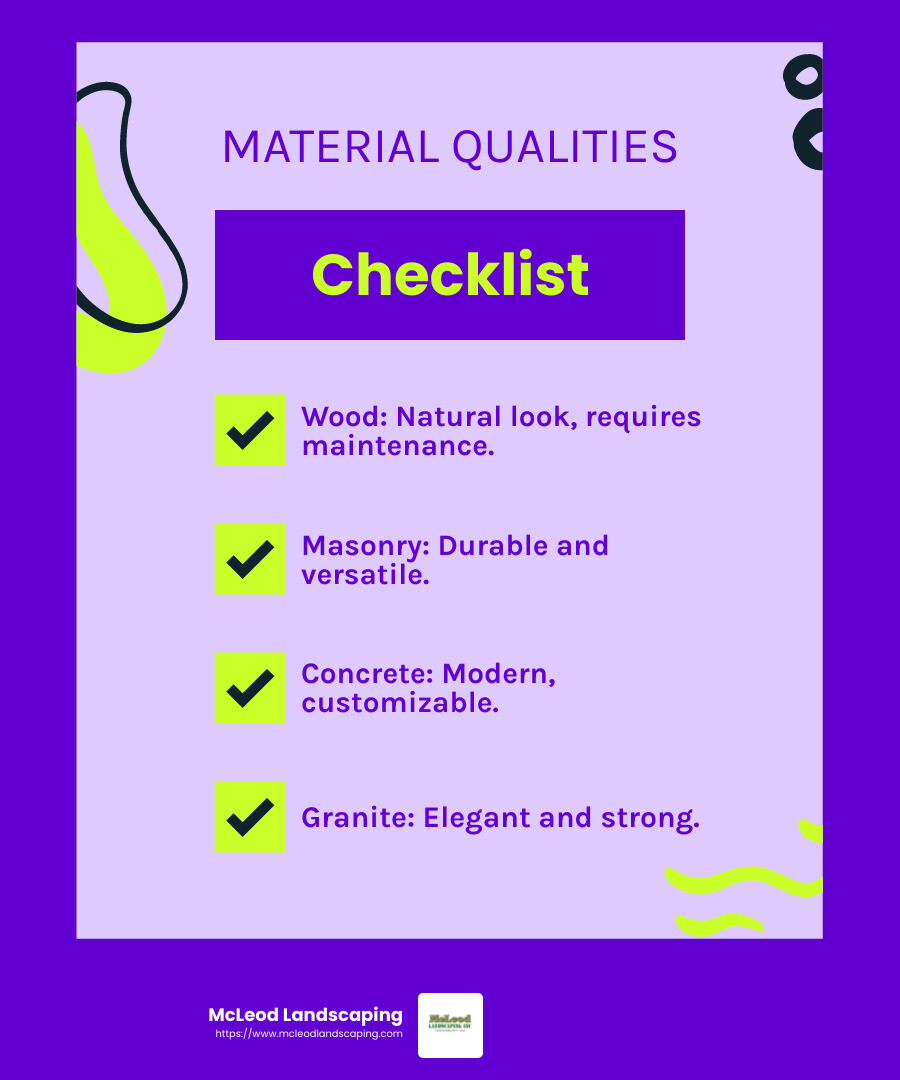
When planning an artistic landscaping wall, the choice of materials plays a crucial role in both the aesthetic and durability of the project. Let’s explore some popular options: wood, masonry, poured concrete, and granite.
Wood is a classic choice for landscaping walls, offering a warm and natural look. It’s especially appealing for those aiming for a rustic or organic feel in their garden. However, wood requires maintenance to prevent rot and extend its lifespan. Opt for pressure-treated wood and apply a wood preservative to improve durability. Be cautious when planting near wooden walls, as chemicals from treated wood can affect surrounding plants.
Masonry, which includes materials like brick and stone, is favored for its durability and timeless appeal. These materials are versatile and can be arranged in various patterns to create unique designs. Masonry walls are excellent for incorporating artistic elements like mosaics or murals. They are sturdy and can withstand harsh weather conditions, making them a reliable choice for long-term projects.
Poured concrete offers a modern and sleek look, perfect for contemporary designs. This material is highly versatile, allowing for customization in shape and texture. Concrete can be stained or painted to add color, or even stamped to mimic other materials like stone. It’s durable and low-maintenance, making it a practical choice for those seeking both functionality and style.
Granite is a premium material known for its elegance and strength. It comes in a variety of colors and patterns, adding a sophisticated touch to any landscape. While granite is more expensive, its durability justifies the investment. It’s resistant to weathering and requires minimal maintenance, making it an ideal choice for artistic landscaping walls that need to stand the test of time.
Choosing the right material depends on your design goals, budget, and the environmental conditions of your area. Each material has its own set of advantages, so consider what aligns best with your vision for an artistic landscaping wall.
Next, we’ll explore creative design ideas to incorporate art into your landscaping walls, changing them into captivating focal points in your outdoor space.
Changing a landscaping wall into a work of art can lift your outdoor space. Here are some creative ways to incorporate artistic elements into these walls:
A mural can turn a plain wall into a vibrant canvas. Choose themes that complement your garden, like nature scenes or abstract designs. Murals can be painted directly onto surfaces like masonry or concrete. Use weather-resistant paints to ensure longevity. Consider hiring a local artist to bring a unique touch to your outdoor area. Murals not only add color but also create a storytelling element in your garden.
Adding sculptural elements to your landscaping wall can create depth and interest. Think about incorporating stone carvings, metal art, or even ceramic tiles. These elements can be embedded into the wall or positioned as standalone pieces. Sculptures can reflect personal tastes or cultural motifs, adding a personalized touch to your garden. They can also serve as focal points, drawing attention and sparking conversation.
Integrated lighting can dramatically change the look of a landscaping wall, especially at night. Use accent lights to highlight murals or sculptures, creating shadows and depth. Path lights can outline the wall’s edges, providing both safety and style. String lights can add a whimsical touch, perfect for evening gatherings. Choose energy-efficient options like LED lights to save on electricity and reduce environmental impact.
By employing these design ideas, you can transform your landscaping wall into a stunning feature that improves the beauty and functionality of your outdoor space. Whether you opt for a colorful mural, intriguing sculptures, or strategic lighting, these artistic elements will make your garden stand out.
Next, we’ll dig into the practical considerations of DIY versus professional installation, helping you decide the best approach for your project.
When deciding whether to tackle a landscaping wall project yourself or hire a professional, there are several key factors to consider. This decision can impact both the success of your project and your budget.
Building a landscaping wall, especially a retaining wall, is labor-intensive. It involves heavy lifting, precise measurements, and careful planning. If you’re considering a DIY approach, be prepared for the physical demands and time commitment. Mistakes in construction can lead to costly repairs down the line. A poorly built wall might not withstand natural forces like erosion and could fail catastrophically.
Hiring a professional brings expertise and peace of mind. Professionals have the experience to handle unexpected challenges, such as soil instability or drainage issues, which are common in wall construction. They can also offer valuable design advice, ensuring your wall not only functions well but also improves your landscape’s aesthetics. Moreover, professionals are up-to-date with the latest materials and techniques, which can improve the quality and durability of your wall.
Depending on your location and the size of your project, you might need local permits to build a landscaping wall. Professionals are familiar with local regulations and can handle the permitting process for you. This can save you time and prevent potential legal issues. If you decide to go the DIY route, make sure to check with your local government to understand the requirements and obtain any necessary permits before starting your project.
In conclusion, while a DIY project might save money upfront, hiring a professional can ensure a high-quality, long-lasting result. Consider the complexity of your project, your own skills and resources, and the potential need for permits when making your decision.
Next, we’ll explore the cost considerations involved in creating an artistic landscaping wall to help you plan your budget effectively.
Creating an artistic landscaping wall can transform your outdoor space, but it’s important to plan for the costs involved. Here’s a breakdown of the key factors that will affect your budget:
The materials you choose for your landscaping wall greatly influence the overall cost. Popular options like poured concrete and natural stone offer durability and aesthetic appeal, with costs ranging from $23 to $45 per square foot for concrete and $13 to $95 per square foot for natural stone. More artistic touches, like integrating murals or sculptural elements, may increase material expenses but add unique character to your space. Consider your design goals and budget when selecting materials.
Excavation is another critical cost factor, especially for retaining walls. The extent of excavation depends on your landscape’s topography and the wall’s size. If your wall is in a hard-to-reach area, expect higher labor costs due to increased difficulty in moving materials and equipment. Additionally, if you’re replacing an existing wall, factor in the costs of removal and disposal.
A proper drainage system is essential to prevent water buildup behind your wall, which can lead to structural failure. Installing drainage involves additional materials like perforated piping, clean stone, and filter fabric. While basic drainage systems are relatively straightforward, complex landscapes may require more sophisticated solutions, increasing costs. Investing in a reliable drainage system is crucial for the longevity and stability of your wall.
By understanding these cost considerations, you can make informed decisions and plan your budget effectively for an artistic landscaping wall that improves your outdoor space.
Next, we’ll address common questions about landscaping walls to provide further clarity and guidance.
A retaining wall is primarily built to hold back soil and prevent erosion, especially on sloped terrains. It’s a functional structure that creates flat, usable spaces in your yard. Retaining walls often require careful planning, including a proper drainage system to manage water pressure behind the wall. Materials like concrete blocks, natural stone, and treated timber are commonly used due to their strength and durability.
A landscape wall, on the other hand, focuses more on aesthetics and defining spaces within your garden. While not designed to support heavy loads, landscape walls can be used to create garden beds, seating areas, or simply improve the visual appeal of your outdoor space. These walls offer more flexibility in materials and design, allowing for artistic elements like murals or integrated lighting.
When budget is a concern, poured concrete is often the most cost-effective option for a landscaping wall. It’s not only affordable but also durable and easy to work with, making it a popular choice for both retaining and landscape walls. Concrete can be molded into various shapes and textures, providing flexibility in design. However, if you’re looking for a natural look, wood is another affordable option, though it may require more maintenance over time to protect against weather and pests.
Incorporating art into your landscaping wall can transform it from a simple structure to a focal point in your garden. Here are a few ideas:
By thoughtfully incorporating these artistic elements, you can lift the aesthetic appeal of your landscaping wall, making it a standout feature in your garden.
At McLeod Landscaping, we believe that landscaping walls can do more than just hold back soil or define garden spaces. They can become canvases that reflect your personal style and improve the beauty of your outdoor environment. With over 30 years of experience in Tewksbury, MA, and the Merrimack Valley, we specialize in creating stunning and functional landscapes that are custom to your unique needs.
Why Choose McLeod Landscaping?
If you’re ready to transform your outdoor space with a beautiful and functional landscaping wall, we invite you to learn more about our retaining wall installation services. Let us help you create an outdoor space that you and your family will enjoy for years to come. At McLeod Landscaping, we’re not just building walls; we’re crafting the backdrop for your family’s best memories.
Contact McLeod Landscaping today at (978) 640-0957 or click here to schedule a consultation for retaining wall installation. Let our experienced team design and install a functional and visually appealing retaining wall that enhances your landscape.


1881 Main St Unit 1, Tewksbury, MA 01876