
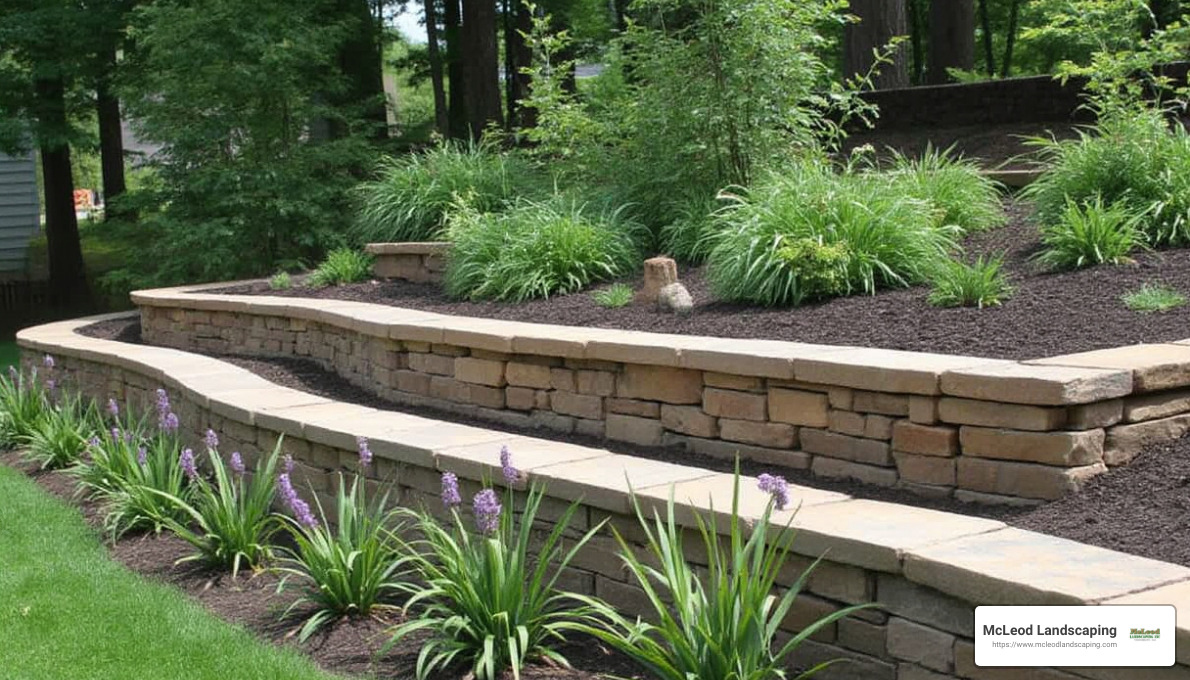
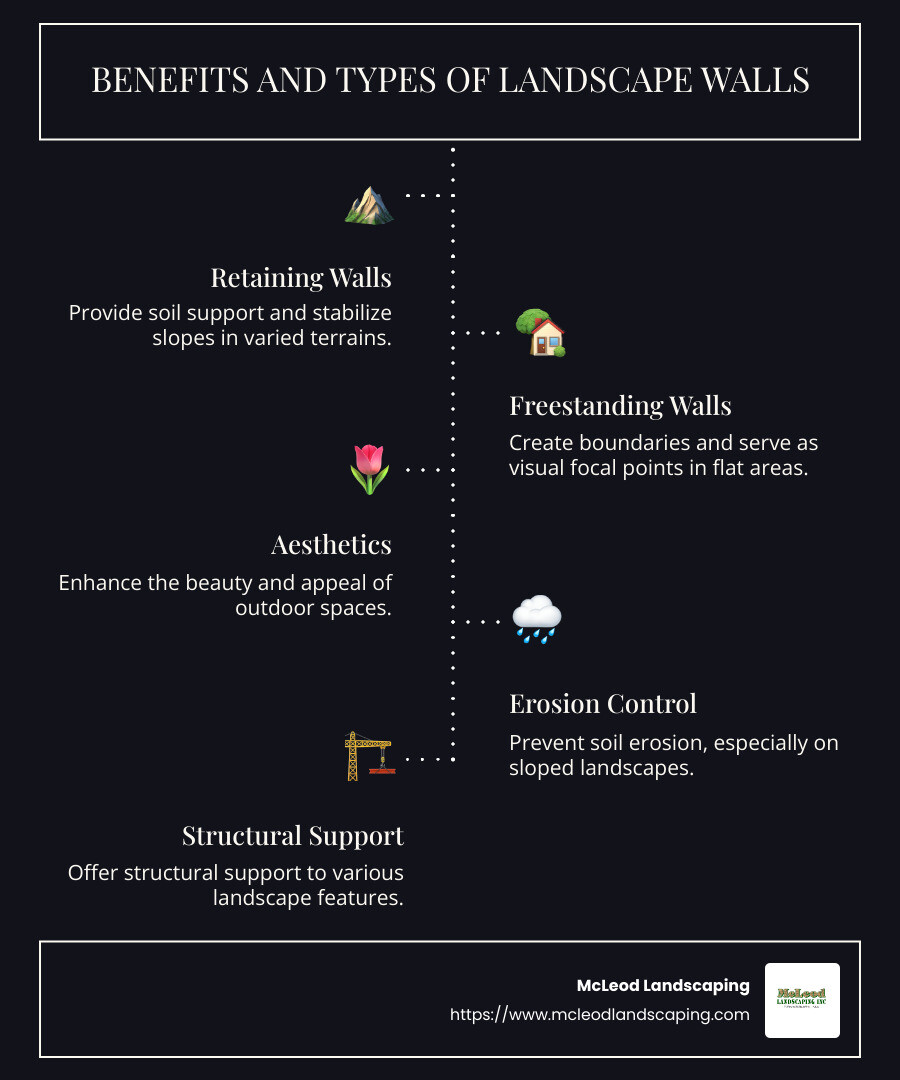
Landscape walls are more than just boundaries in a garden or backyard. They can improve the beauty and functionality of outdoor spaces by offering structural support, aesthetic appeal, and solutions for erosion control. These walls come in two primary types: retaining walls, which are essential for managing sloped terrain and preventing soil erosion, and freestanding walls, often used to divide or highlight certain areas in flat landscapes. Both types serve a unique purpose, combining practicality with visual interest.
If you’re exploring landscape walls to lift your property, here’s a quick overview:
– Retaining Walls: Use them for soil support and to stabilize slopes.
– Freestanding Walls: Ideal for creating boundaries or visual focal points in flat areas.
I’m Scott McLeod, owner of McLeod Landscaping. With over 30 years of experience in creating sustainable and beautiful landscapes, my team and I specialize in installing landscape walls across the Merrimack Valley area, helping both commercial and residential clients improve their outdoor spaces.
Landscape walls vocab explained:
– boulder walls landscaping
– landscape wall stone
– landscaping bricks
When designing your garden or yard, understanding the types of landscape walls is crucial. Let’s explore the two main categories: retaining walls and freestanding walls. Each serves a distinct purpose and can transform your outdoor space in unique ways.
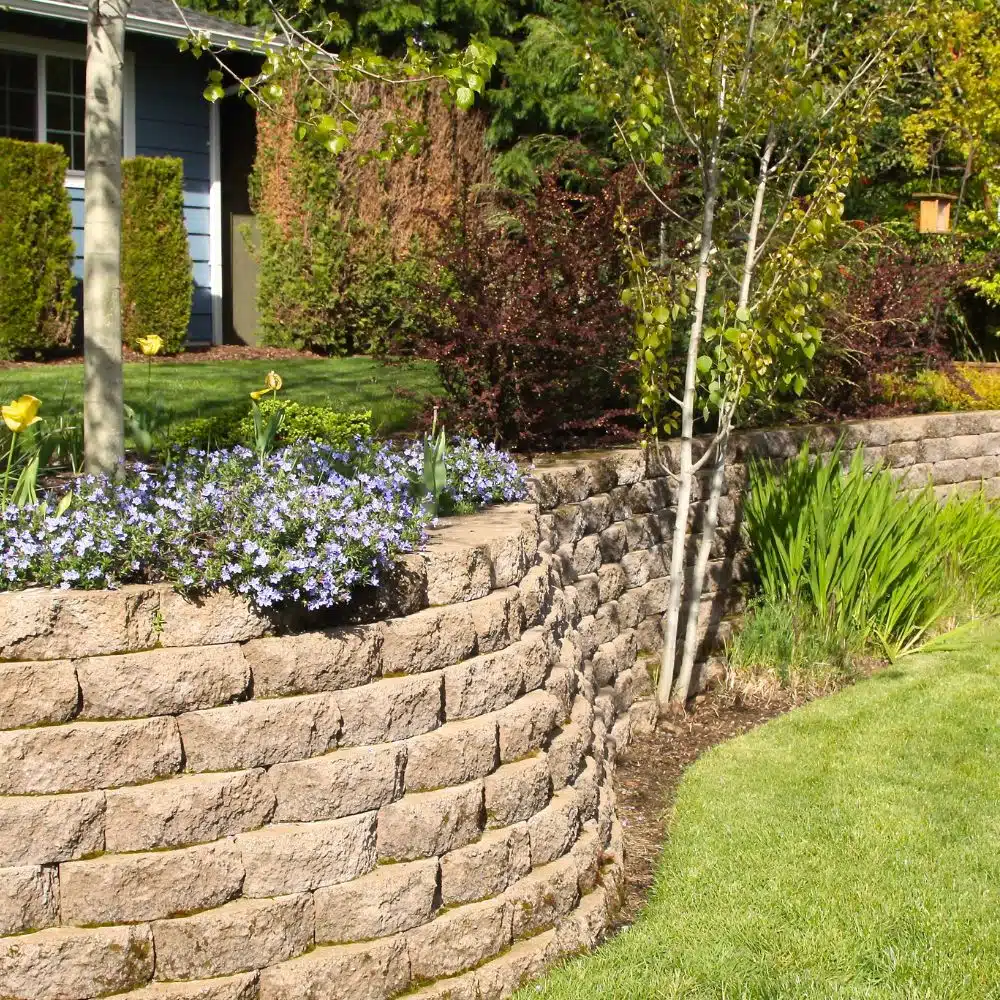
Retaining walls are designed to hold back soil. They are perfect for sloped areas where you need to prevent erosion or create a flat, usable space. These walls use gravity and engineering to stabilize the soil behind them.
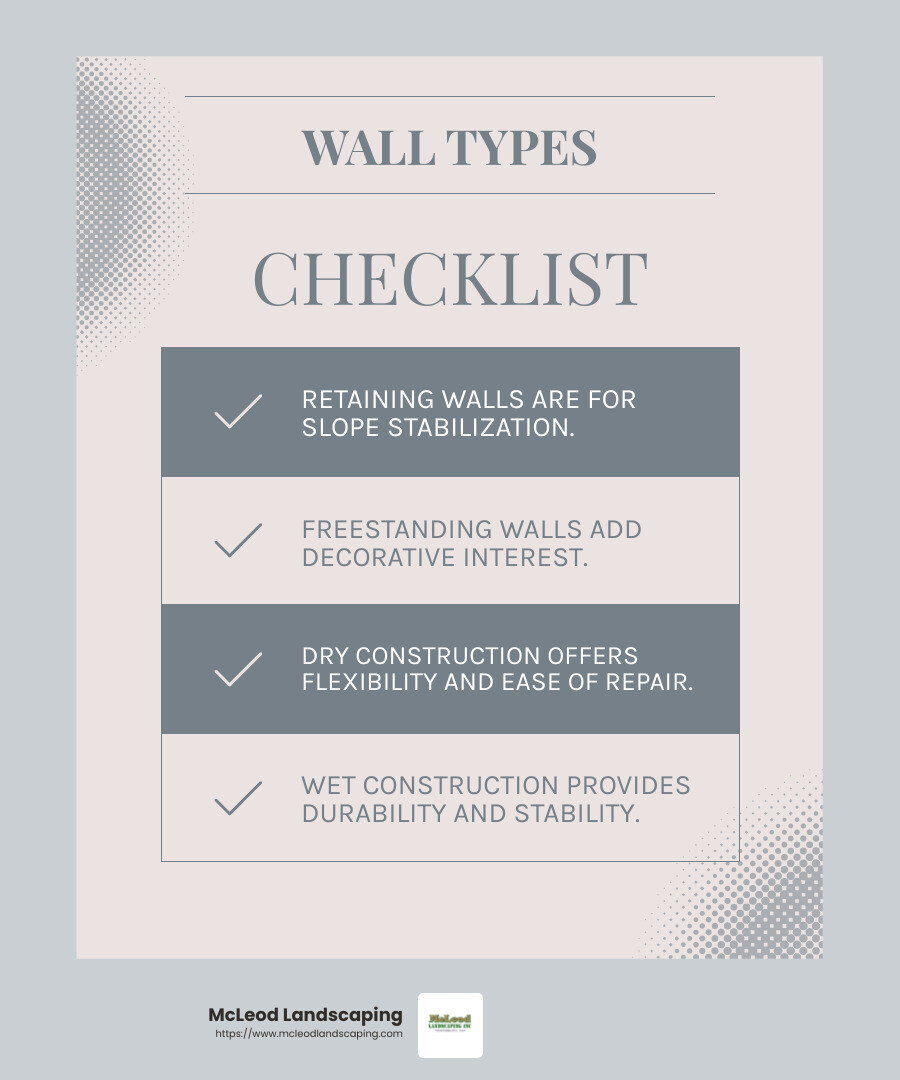
There are two subtypes based on construction:
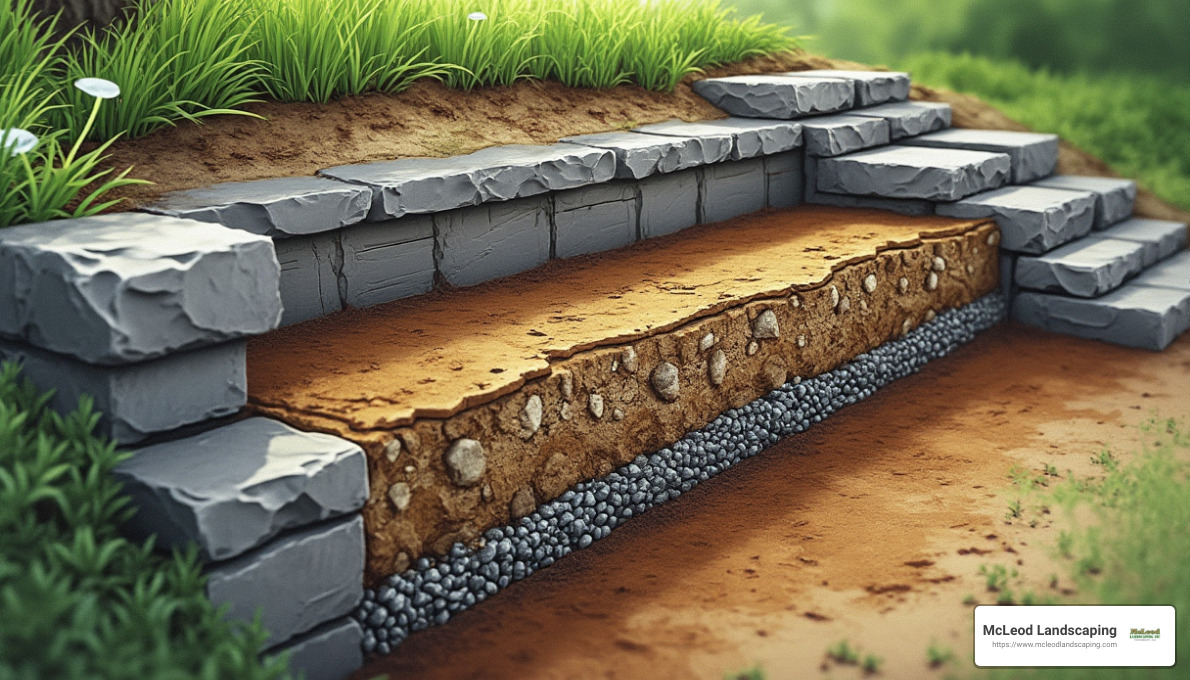
Unlike retaining walls, freestanding walls stand alone and are not meant to hold back soil. They are often used to define spaces, add privacy, or create visual interest.
Freestanding walls also come in dry and wet constructions, similar to retaining walls:
Selecting between retaining and freestanding walls often depends on your landscape’s needs. If you have a slope, retaining walls are essential. For flat areas, freestanding walls can add structure and style without the need for heavy-duty support.
Incorporating these walls into your landscape not only improves functionality but also boosts the aesthetic appeal. Whether you opt for the rustic charm of dry-stacked stones or the sleek finish of wet-constructed walls, your outdoor space will benefit from the added dimension and interest.
Next, let’s explore the Benefits of Landscaping Walls and how they can make your garden more beautiful and functional.
Landscaping walls are much more than just a structural addition to your yard. They offer a range of benefits that can transform your outdoor space into something truly special. Let’s explore some of these advantages.
Landscape walls can dramatically improve the visual appeal of your garden. Whether you’re aiming for a modern, minimalistic look or a classic, rustic style, the right wall can set the tone. Natural stone walls, for example, offer a timeless beauty that blends seamlessly with the environment. You can also choose from various materials like modular blocks or decorative stones to match your personal taste.
“Decorative outdoor stone walls can improve the space and give your yard a whole new look,” notes a landscaping expert from Architectural Digest.
If your yard is on a slope, erosion can be a constant worry. Retaining walls are a practical solution to this problem. They hold back soil, preventing it from washing away during heavy rains. This not only protects your landscape but also keeps your garden tidy and intact.
In neighborhoods where houses are close together, privacy can be hard to come by. Freestanding walls can act as a barrier, offering a sense of seclusion. This is especially useful if you have a patio or pool area and want to enjoy some peace without prying eyes.
“Stone privacy walls might be the answer if you’re looking for a little more privacy for your backyard garden,” suggests a Pinterest article.
For uneven or sloped terrain, retaining walls provide much-needed structural support. They create flat, usable spaces where you can plant a garden, set up a play area, or install outdoor furniture. This makes your yard more functional and enjoyable.
In summary, landscape walls offer aesthetic improvement, erosion control, privacy, and structural support. Whether you’re looking to beautify your garden or solve practical issues, these walls are a versatile solution.
Next, we’ll dive into Cost-Effective Solutions for Landscaping Walls and explore options that fit various budgets.
When it comes to building landscape walls, being budget-conscious doesn’t mean you have to compromise on quality or style. Let’s look at some cost-effective materials that offer both durability and aesthetic appeal.
Poured concrete is a popular choice for those seeking a sturdy and long-lasting solution. It’s one of the cheapest options available for retaining walls. The smooth, sleek finish of concrete can fit well with modern design aesthetics. Plus, it can be molded into various shapes and sizes, giving you flexibility in design.
The strength of poured concrete also makes it excellent for structural support, particularly on sloped terrains. It’s a practical choice for homeowners looking to prevent soil erosion while maintaining a clean, minimalist look.
Another budget-friendly option is pressure-treated pine. This type of wood is treated with chemicals to resist decay and insect damage, making it a durable choice for outdoor use. While not as long-lasting as stone or concrete, it offers a rustic charm that can improve the natural beauty of your garden.
Pressure-treated pine is also relatively easy to work with, allowing for DIY projects. It’s a great option for those who want to add a personal touch to their landscaping without breaking the bank.
For those who want a blend of affordability and style, concrete retaining wall blocks are an excellent choice. These blocks come in various shapes, sizes, and colors, allowing you to create a customized look that complements your landscape.
Concrete blocks are not only cost-effective but also easy to install. They’re designed to interlock, providing stability and strength. This makes them ideal for DIY enthusiasts who want to tackle a project on their own.
In addition to their versatility in design, concrete retaining wall blocks are also known for their durability and low maintenance. They can withstand harsh weather conditions, making them a reliable choice for long-term use.
In the next section, we’ll explore Design Ideas for Landscaping Walls and how you can use these materials creatively to improve your outdoor space.
When it comes to landscape walls, creativity can transform your outdoor space into a stunning sanctuary. Let’s explore some design ideas using stone walls, modular blocks, and decorative outdoor stone walls.
Stone walls are timeless and can add a touch of elegance to any garden. They offer a natural look that blends seamlessly with the surrounding landscape. Stones like buff wall stone and Jurassic wall stone are popular choices due to their durability and aesthetic appeal.
Modular blocks are a versatile solution for those looking to add structure and style to their garden. They come in various shapes and sizes, making them perfect for both retaining and freestanding walls.
A decorative outdoor stone wall can lift the look of your garden by adding texture and color. These walls can be designed to reflect your personal style, whether it’s classic, modern, or whimsical.
By incorporating these design ideas, you can transform simple landscape walls into striking features that improve both the functionality and beauty of your outdoor space.
Next, we’ll tackle some Frequently Asked Questions about Landscaping Walls to help you make informed decisions for your garden.
When it comes to budget-friendly retaining walls, two materials often top the list: poured concrete and pressure-treated pine.
Landscape walls are generally referred to as retaining walls or vertical structures. These walls serve multiple purposes, such as holding back soil, defining spaces, and adding aesthetic value to your garden.
Retaining walls are essential in sloped areas to prevent soil erosion and create level surfaces, while freestanding walls are often used to divide spaces or add visual interest.
Retaining walls come in various designs, each suited for different needs and soil conditions. Here are the four main types:
Understanding these types of retaining walls can help you choose the best option for your landscape, ensuring both functionality and aesthetic appeal.
At McLeod Landscaping, we believe that landscape walls are more than just functional structures. They are an opportunity to improve the beauty and utility of your outdoor spaces. With over 30 years of experience, our team is dedicated to providing comprehensive landscaping services throughout the Merrimack Valley.
Whether you’re looking to add a retaining wall for erosion control or a freestanding wall to create distinct garden areas, we have the expertise to bring your vision to life. Our services are custom to meet the unique needs of each client, ensuring that every project is a perfect blend of aesthetics and practicality.
We understand that every landscape is different, which is why we offer a wide range of materials and design options. From stone walls that provide timeless elegance to modular blocks that offer flexibility and modern appeal, our solutions are designed to fit your style and budget.
Our commitment to quality craftsmanship and customer satisfaction sets us apart as the preferred landscaping provider in the Merrimack Valley. We work closely with you from the initial consultation to the final installation, ensuring that every detail aligns with your expectations.
Ready to transform your outdoor space with stunning landscape walls? Contact McLeod Landscaping today to schedule a consultation and find how we can lift your garden to new heights. Let us help you create a landscape that not only meets your needs but also improves the value and enjoyment of your property.
Contact McLeod Landscaping today at (978) 640-0957 or click here to schedule a consultation for retaining wall installation. Let our experienced team design and install a functional and visually appealing retaining wall that enhances your landscape.

1881 Main St Unit 1, Tewksbury, MA 01876