
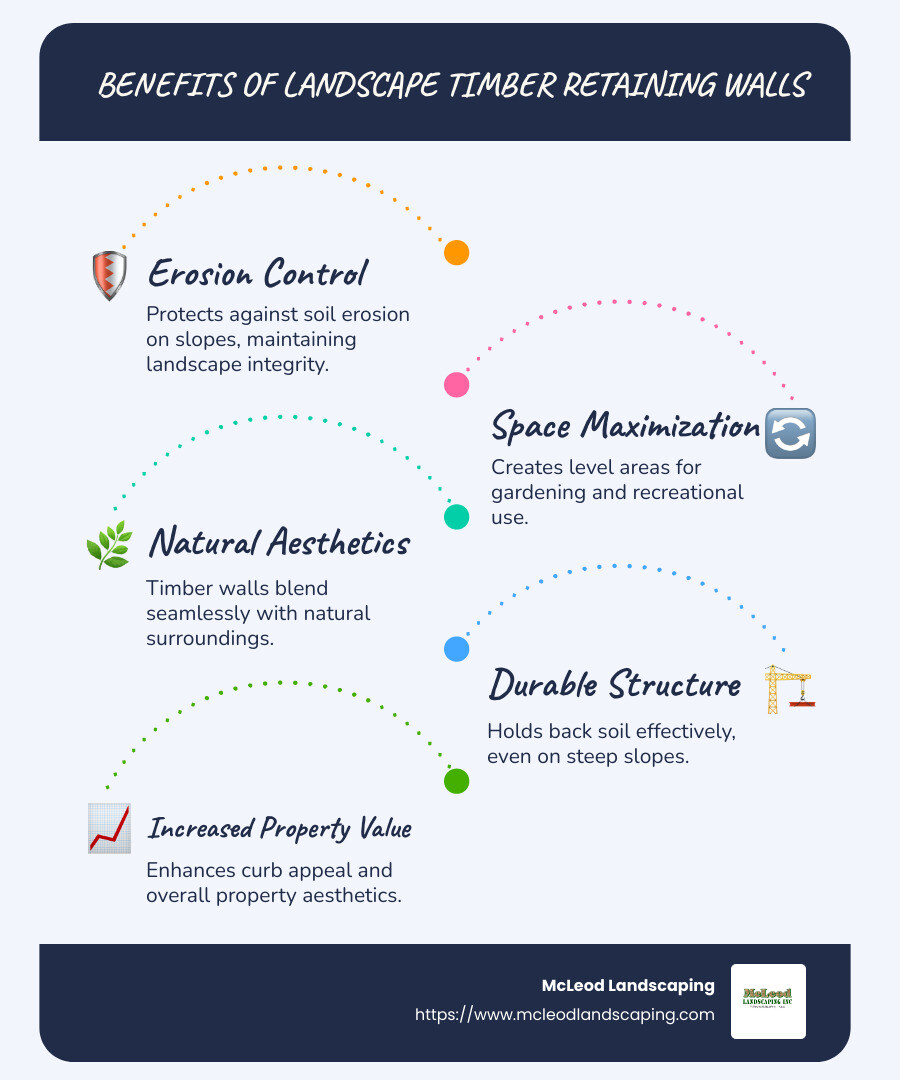
Landscape timber retaining wall systems are not only a practical solution for preventing soil erosion and managing landscapes, but they also add aesthetic value to outdoor spaces. If you’re looking to improve your garden or yard, here’s why opting for a landscape timber retaining wall could be an ideal choice:
As Scott McLeod from McLeod Landscaping, I bring over three decades of experience in designing and building landscape timber retaining walls that are both functional and visually appealing. Our team specializes in creating customized solutions that transform your yard into a stunning outdoor space you’ll love.
Common landscape timber retaining wall vocab:
– landscape retaining wall ideas
– how to landscape a steep slope without retaining walls
– landscape wall stone
Selecting the ideal location for your landscape timber retaining wall is crucial. Start by identifying areas where you need to hold back soil or create level spaces. Consider accessibility for construction and maintenance. Easy access will make installation smoother and future upkeep simpler. Also, think about natural drainage patterns to avoid water issues. Avoid spots prone to flooding or water accumulation, and plan for features like weep holes or French drains to manage water effectively.
Determining Dimensions
The dimensions of your retaining wall depend on your property’s needs. Measure the area carefully to decide on the wall’s height and length. That any wall over 4 feet in height may require professional engineering to ensure stability. Accurate measurements help minimize material waste and prevent structural problems later on.
Understanding Local Building Codes
Before starting construction, check local building codes to see if you need permits. Many areas require permits for walls above a certain height or near property lines. Contact your local building department to learn about specific requirements. Obtaining the necessary permits will help you avoid fines and ensure your wall meets safety standards.
Considering Drainage
Proper drainage is key to the longevity of your retaining wall. Without it, water can build up behind the wall, causing pressure that may lead to failure. Plan for a drainage system that includes a perforated drain pipe and filter fabric. Backfill with gravel to facilitate water movement away from the wall. This setup helps reduce water pressure and extends the life of your wall.
By thoughtfully planning your landscape timber retaining wall, you can create a structure that not only serves a practical purpose but also improves the beauty and value of your property.
Building a landscape timber retaining wall requires the right materials and tools to ensure durability and stability. Here’s what you’ll need:
These timbers form the backbone of your retaining wall. Opt for pressure-treated wood to resist decay and insect damage. Each timber should be inspected for straightness and quality before use. Pressure-treated landscape timbers can last about 15–20 years, providing a robust structure for your wall.
Rebar is essential for anchoring the first course of timbers to the ground. Use 3 or 4-foot long, 1/2-inch diameter rebar spikes. These are driven through pre-drilled holes in the timbers to secure them firmly in place.
Timber screws, like the Simpson Strong-Tie 10-inch variety, are used to fasten the layers of timbers together. These screws provide a strong hold and are designed to resist the elements. They ensure that each course of timbers is securely connected to the one below.
A 4-inch perforated drain pipe is crucial for managing water behind the wall. This pipe should be placed at the base of the wall, covered with gravel, and wrapped in filter fabric to prevent soil from clogging it. Proper drainage helps alleviate water pressure and prolongs the wall’s lifespan.
Landscaping filter fabric is used to separate soil from gravel, preventing clogging in the drainage system. This fabric is laid along the back of the wall and wrapped over the drain pipe. It allows water to pass through while keeping soil particles out.
Use 3/4-inch crushed gravel for both the footing and backfill. Gravel provides a stable base for your wall and facilitates drainage. It should be compacted thoroughly to create a firm foundation.

With these materials and tools, you’ll be well-equipped to construct a strong and lasting landscape timber retaining wall. Proper preparation and use of quality materials are key to a successful project.
Building a landscape timber retaining wall requires precision and attention to detail. Follow these steps to ensure a sturdy and effective wall.
Trench Digging: Begin by marking the area where your retaining wall will go using marking paint. Dig a trench that is 16 inches wide and deep enough to accommodate a layer of crushed gravel and one full row of timbers. This trench serves as the footing for your wall.
Gravel Footing: Fill the trench with 6-8 inches of 3/4-inch crushed gravel. Compact the gravel thoroughly to create a stable base. This gravel footing is crucial for drainage and stability.
Leveling: Use a 6-foot level to ensure the gravel base is level both side-to-side and front-to-back. A level base is essential for the structural integrity of your wall.
Rebar Pinning: Lay the first course of timbers on the compacted gravel. Drill 1/2-inch holes through the timbers at 2-foot intervals. Drive 3-foot long rebar through these holes into the ground to anchor the timbers securely.
Leveling Timbers: Check each timber with a level to ensure they are perfectly aligned. Adjust as necessary. This first course sets the foundation for the entire wall, so take your time to get it right.
Perforated Drain Pipe: Place a 4-inch perforated drain pipe behind the first course of timbers. The pipe should lead to an area where water can drain away from the wall, preventing water buildup.
Filter Fabric: Wrap the drain pipe in non-woven filter fabric. Extend the fabric up the back of the hillside to prevent soil from clogging the drainage system. This step is crucial to avoid hydrostatic pressure that can damage the wall.
Backfill with Gravel: Add a layer of gravel over the drain pipe and continue backfilling behind the wall with gravel. This helps with drainage and provides additional support.
Staggering Joints: As you add each new row of timbers, stagger the joints to increase stability. This means aligning the joints of each row with the center of the timbers in the row below.
Fastening Timbers: Use 10-inch timber screws to secure each course of timbers to the one below. This ensures the wall is strong and can withstand pressure from the soil.
Deadmen Installation: For walls over 3 feet high, install deadmen—timbers that extend back into the hillside perpendicular to the wall. These provide additional support and prevent the wall from leaning.
Sealing Timbers: Apply a wood preservative to exposed ends of the timbers to protect them from moisture and decay. This will extend the life of your wall.
Topsoil Backfill: Once the wall is complete, backfill the area behind it with topsoil. Compact the soil in layers to prevent settling.
Landscaping: Finally, add landscaping elements such as bark mulch or plants to improve the appearance of your retaining wall. This not only improves aesthetics but also helps with erosion control.
With these steps, your landscape timber retaining wall will be both functional and attractive, providing a lasting solution for your landscaping needs.
Proper maintenance is key to ensuring your landscape timber retaining wall remains sturdy and effective over time. Here are some essential tips for keeping your wall in top condition.
Regular inspections are vital for identifying potential issues before they become major problems. Check your wall annually for signs of shifting, bulging, or decay. Look closely at the timbers for any signs of rot or insect damage, especially at the base where moisture can accumulate. If you notice any problems, address them promptly to prevent further deterioration.
To protect your timber retaining wall from the elements, consider applying a wood preservative or sealant. This treatment helps to prevent moisture absorption, which can lead to rot and decay. Make sure to follow the manufacturer’s instructions for application and reapply as needed to maintain the protective barrier.
A well-functioning drainage system is crucial for the longevity of your retaining wall. Regularly check the drainage systems to ensure they are clear of debris and functioning properly. This includes inspecting the perforated drain pipe and ensuring that the filter fabric is intact and not clogged with soil. Proper drainage prevents water buildup behind the wall, which can lead to increased pressure and potential failure.
By following these maintenance practices, you can keep your landscape timber retaining wall in excellent condition, ensuring it remains a beautiful and functional part of your landscape for years to come.
Next, we’ll address some frequently asked questions about landscape timber retaining walls to help you better understand their benefits and limitations.
A landscape timber retaining wall is a great addition to your yard, but it’s important to know its lifespan. Typically, a well-maintained timber wall can last between 15 to 20 years. However, this depends on several factors such as the quality of the wood, local climate, and how well the wall is maintained. Pressure-treated lumber is often used to extend the wall’s life, but even then, regular inspections and maintenance are crucial to address any signs of decay or damage early on.
Absolutely, drainage is essential for the longevity of your timber retaining wall. Without proper drainage, water can accumulate behind the wall, increasing pressure and potentially causing the wall to fail. Installing a perforated drain pipe and using filter fabric along with backfilling with gravel are effective strategies to ensure proper drainage. This setup allows water to flow away from the wall, reducing pressure and minimizing the risk of damage.
Yes, timber retaining walls are excellent for managing sloped landscapes. They help prevent soil erosion and create flat, usable spaces for gardening or other activities. However, it’s important to consider the height and design of the wall. For walls over four feet tall, consulting with a professional engineer is recommended to ensure stability and safety. Additionally, incorporating deadmen—timbers laid perpendicular to the wall—can provide extra support by anchoring the wall into the hillside.
By understanding these key aspects, you can make informed decisions when planning and maintaining your landscape timber retaining wall. This knowledge ensures your wall is both a functional and beautiful part of your outdoor space.
Transform your yard with a landscape timber retaining wall and experience a blend of beauty and functionality. These walls not only improve the visual appeal of your outdoor space but also offer practical benefits like erosion control and creating level areas for gardening or entertaining.
At McLeod Landscaping, we specialize in crafting durable and stunning retaining walls that lift your landscape. With over 30 years of experience serving the Merrimack Valley, our team is committed to delivering exceptional service and quality craftsmanship. We understand the unique challenges and opportunities that come with designing and building retaining walls, and we tailor our solutions to meet your specific needs.
Whether you’re looking to create a terraced garden, define your outdoor space, or prevent soil erosion, our expert team is ready to help. We use high-quality materials and proven techniques to ensure your retaining wall is both beautiful and long-lasting.
Ready to transform your yard? Find our retaining wall services and let us bring your vision to life. At McLeod Landscaping, we’re not just building walls; we’re crafting the backdrop for your family’s best memories.
Contact McLeod Landscaping today at (978) 640-0957 or click here to schedule a consultation for retaining wall installation. Let our experienced team design and install a functional and visually appealing retaining wall that enhances your landscape.


1881 Main St Unit 1, Tewksbury, MA 01876