
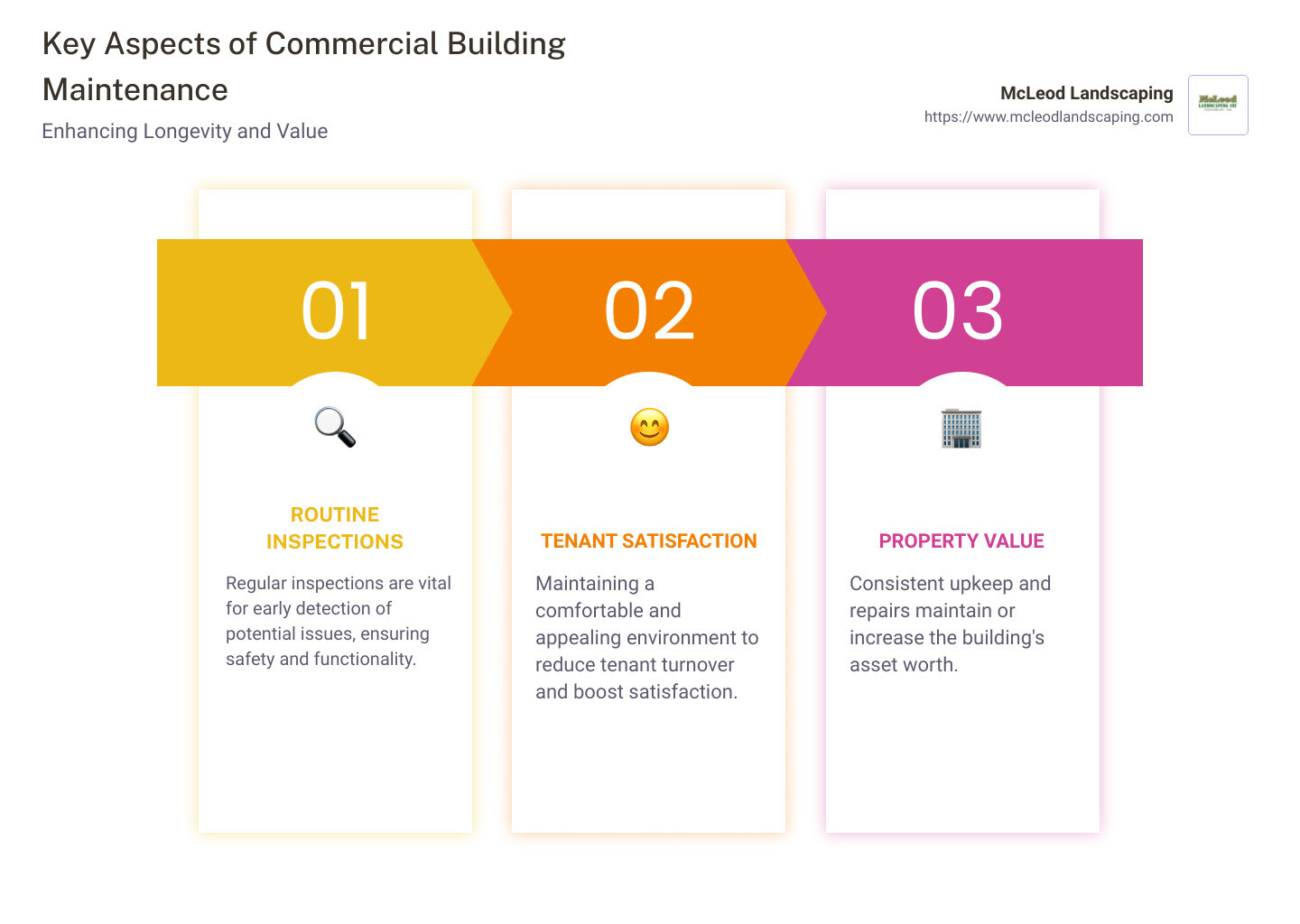
Commercial building maintenance is crucial for keeping properties attractive, safe, and functional. It plays a vital role in ensuring tenant satisfaction, preserving property value, and preventing expensive future repairs. In a commercial setting, this maintenance includes regular inspections, routine upkeep, and timely repairs that improve the longevity and appeal of a building.
I’m Scott McLeod, owner of McLeod Landscaping. With over 30 years of experience, I specialize in creating and maintaining beautiful, functional landscapes for commercial properties in the Merrimack Valley. This article will explore the fundamentals of commercial building maintenance and demonstrate how it contributes to tenant satisfaction and property value.
Commercial building maintenance further reading:
– Commercial Property Maintenance
– benefits of commercial property maintenance
– commercial property lawn maintenance
Commercial building maintenance is all about keeping your property in top shape. It involves several key activities: routine upkeep, preventive maintenance, and repairs and replacements. Let’s break these down.
Routine upkeep is the bread and butter of maintenance. Think of it as the regular chores that keep your building looking and functioning well. This includes tasks like cleaning floors, emptying trash, and checking common areas. Routine upkeep ensures your property remains inviting and pleasant for tenants and visitors alike.
Preventive maintenance is like a health check-up for your building. It involves regular inspections and servicing to catch potential issues before they become big problems. This proactive approach can save you money and headaches in the long run.
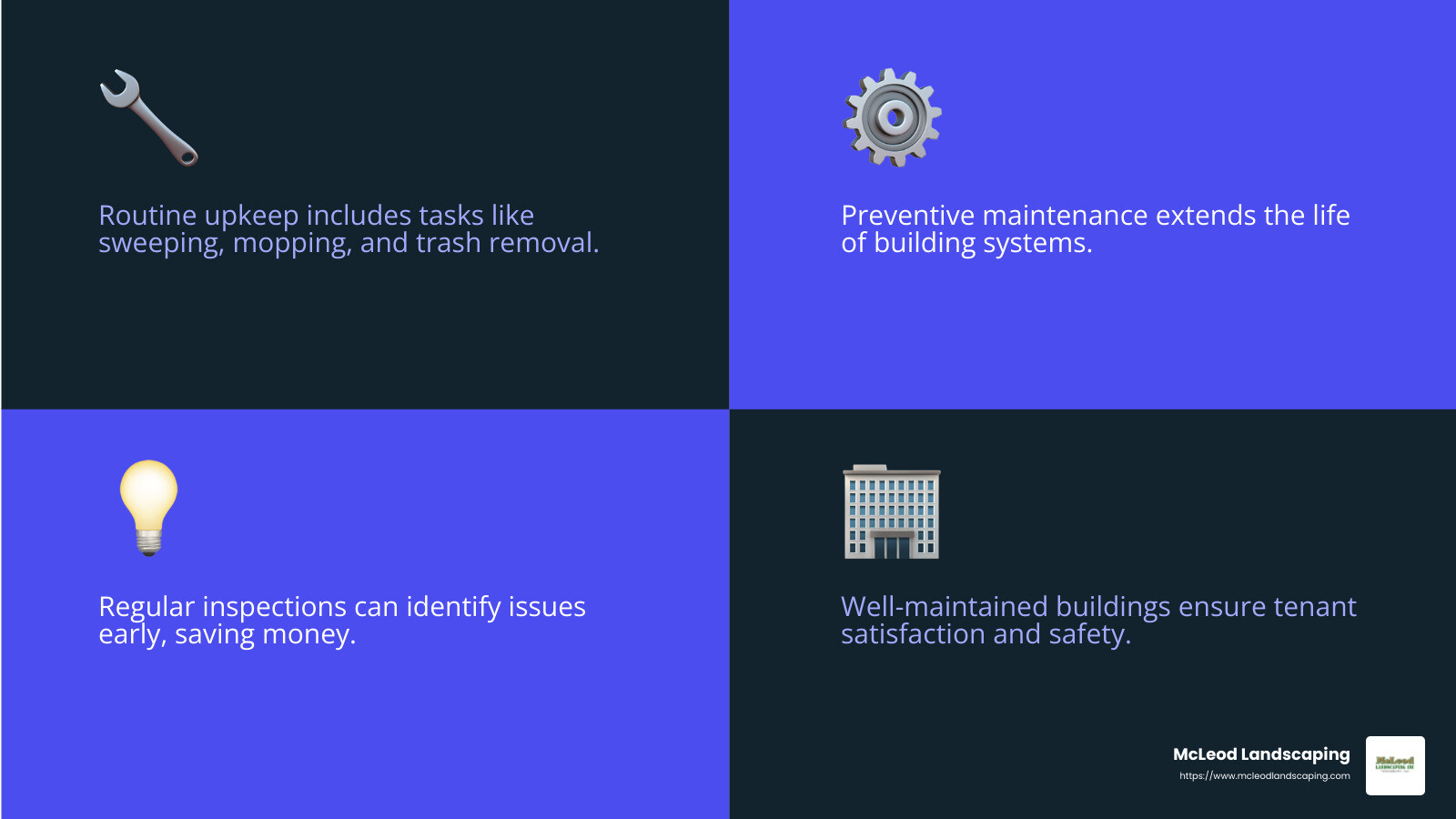
Despite the best preventive measures, things can still break or wear out. That’s where repairs and replacements come in. This might involve fixing a leaky faucet, replacing a broken window, or addressing structural issues. Timely repairs and replacements are crucial to maintaining safety and functionality.
By focusing on these aspects of commercial building maintenance, property managers can create a safe, attractive, and efficient environment. Next, we’ll dig into the key components of a maintenance plan that ties all these elements together.
Creating a solid maintenance plan is crucial for keeping your commercial property running smoothly. Let’s explore the three essential components: inspection, scheduling, and a tracking system.
Regular inspections are the backbone of any maintenance plan. They help you spot potential issues before they become costly problems. Inspections should cover both the interior and exterior of your property. This includes checking for wear and tear, ensuring systems are working properly, and identifying any risks.
By conducting thorough inspections, you can prioritize repairs and address them before they escalate.
A well-organized schedule is vital for effective maintenance. It ensures that all tasks are completed consistently and on time. Create a calendar that outlines daily, weekly, and monthly tasks. For example, daily tasks might include cleaning common areas, while monthly tasks could involve checking HVAC filters.
Establishing a schedule helps prevent oversight and ensures every aspect of your property gets the attention it needs.
A robust tracking system ties everything together. It helps you monitor maintenance activities, track repairs, and manage costs. Whether you use a simple spreadsheet or a dedicated software, the goal is to have a clear record of all maintenance activities.
A tracking system ensures accountability and allows you to make informed decisions about future maintenance needs.
By focusing on inspections, scheduling, and a tracking system, you can create an effective maintenance plan that keeps your commercial property in top condition. Up next, we’ll explore the different types of commercial property maintenance that can further improve your maintenance strategy.
When it comes to commercial building maintenance, understanding the different types is key to keeping your property in tip-top shape. Let’s break down the four main types: routine upkeep, preventive maintenance, predictive maintenance, and reactive maintenance.
Routine upkeep is all about the basics. These are the tasks you do regularly to keep your property looking sharp and functioning well. Think of it as the day-to-day chores that prevent your building from falling into disrepair.
Routine upkeep might seem minor, but it’s essential for maintaining a clean and welcoming environment.
Preventive maintenance is all about staying ahead of the game. This involves regular checks and minor fixes that stop small problems from becoming big headaches. It’s like giving your building a regular check-up.
Preventive maintenance can save you a lot of money in the long run by avoiding costly repairs.
Predictive maintenance takes things up a notch. It uses technology to predict when equipment might fail, allowing you to fix issues before they happen. This approach relies on data and sensors to keep your building running smoothly.
By investing in predictive maintenance, you can minimize disruptions and keep everything operating efficiently.
Reactive maintenance is the “fix it when it breaks” approach. While not ideal, it’s sometimes necessary for non-critical issues. This type of maintenance involves addressing problems as they arise.
While reactive maintenance isn’t the most efficient strategy, it’s essential for dealing with unexpected issues.
By understanding these four types of maintenance, you can create a balanced plan that keeps your property in excellent condition. Next, we’ll explore the top areas of focus for building maintenance to ensure nothing slips through the cracks.
When it comes to commercial building maintenance, focusing on key areas ensures your property remains in excellent condition. Here are the top areas to prioritize:
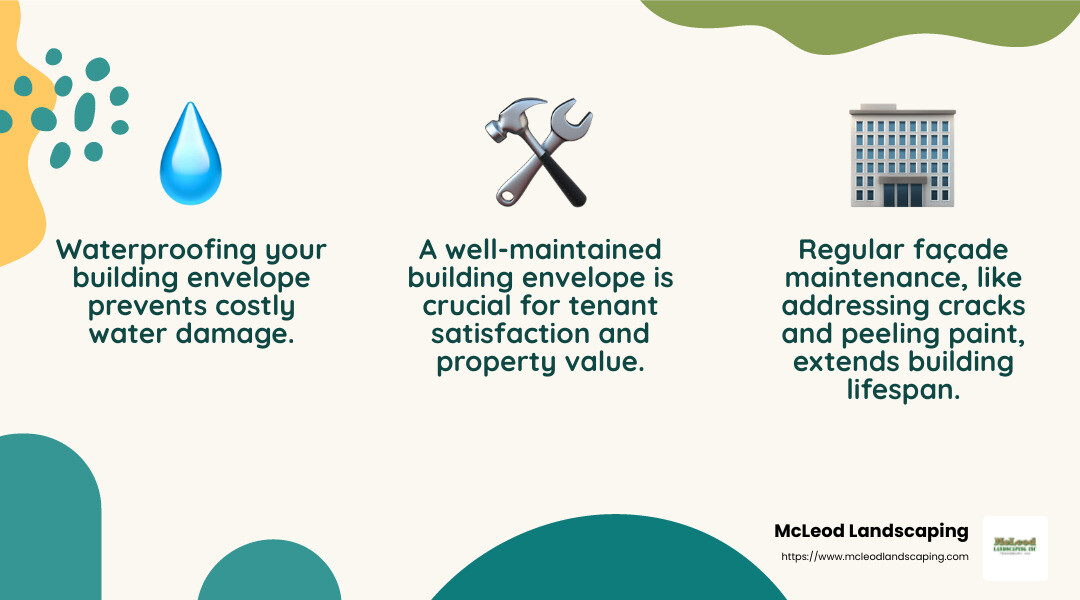
The building envelope is your property’s first line of defense against the elements. It includes the roof, walls, windows, and doors. Keeping these components in good shape is crucial for protecting the interior from weather damage.
Interior renovations focus on updating and maintaining the inside of your building. This can greatly impact tenant satisfaction and property value.
Elevators are essential for high-rise buildings and require special attention. Regular maintenance ensures they operate safely and efficiently.
Surface refinishing involves the upkeep of interior and exterior surfaces. This ensures your building looks appealing and is protected from wear and tear.
By focusing on these critical areas, you can ensure your commercial building remains a safe, attractive, and functional space. Up next, we’ll address some frequently asked questions about commercial building maintenance to help clear up any lingering concerns.
Commercial building maintenance involves keeping essential systems like HVAC, plumbing, and electrical systems in working order.
Building maintenance services cover a wide range of tasks to keep the property in top shape:
Understanding the costs associated with building maintenance is important for budgeting:
Keeping a balance between operating costs and capital expenditures ensures that the building remains functional and attractive without overspending. Proper planning and regular maintenance can help manage these expenses effectively.
By understanding these aspects of commercial building maintenance, you can better manage your property and address any concerns that arise. This knowledge is crucial for maintaining a safe, efficient, and appealing environment for tenants and visitors.
At McLeod Landscaping, we know that commercial building maintenance is not just about keeping things running—it’s about enhancing the value, safety, and appeal of your property. With over 30 years of experience in the Merrimack Valley, we offer a comprehensive range of services that cater to commercial, municipal, and residential clients.
Our expertise in landscape design, installation, and maintenance ensures that your property not only looks great but also functions optimally year-round. From routine maintenance to snow management, we cover all aspects to keep your property pristine and operational.
Choosing McLeod Landscaping means trusting a team that understands the unique needs of the Merrimack Valley area. Our proactive approach and clear communication ensure that your property is always in capable hands. We aim to provide services that improve your property’s image and contribute positively to your bottom line.
For a property that stands out for all the right reasons, explore our commercial property maintenance services. Let us help you make a lasting impression with a well-maintained and inviting environment.
Contact McLeod Landscaping today at (978) 640-0957 or click here to schedule a consultation for retaining wall installation. Let our experienced team design and install a functional and visually appealing retaining wall that enhances your landscape.


1881 Main St Unit 1, Tewksbury, MA 01876