
A backyard paver walkway is a simple way to add a durable, attractive surface to your outdoor space, improving both curb appeal and functionality. It can create a stunning path from a patio to a garden or provide a practical route through your landscape, combining beauty with utility.
Quick Overview: Backyard Paver Walkway Essentials
Note: The cost listed is an average based on internet data and not an actual quote from McLeod Landscaping. Prices can vary significantly.
Paver walkways are popular for their durability, ease of installation, and aesthetic appeal. A traditional installation consists of several layers: a 6-inch gravel paver base, a 1-inch layer of sand, the pavers themselves, and polymeric sand in the joints.
The installation process requires careful planning for proper drainage, with the walkway sloping away from any structures at about a 1/4-inch drop per foot. Modern alternatives like interlocking paver base panels can simplify the project by requiring less excavation.
I’m Scott McLeod of McLeod Landscaping. With over 30 years of experience in the Merrimack Valley, I’ve installed countless backyard paver walkway projects. I’ve seen how a well-designed walkway, from a simple path to a complex, lighted design, can transform a backyard’s usability and appeal.
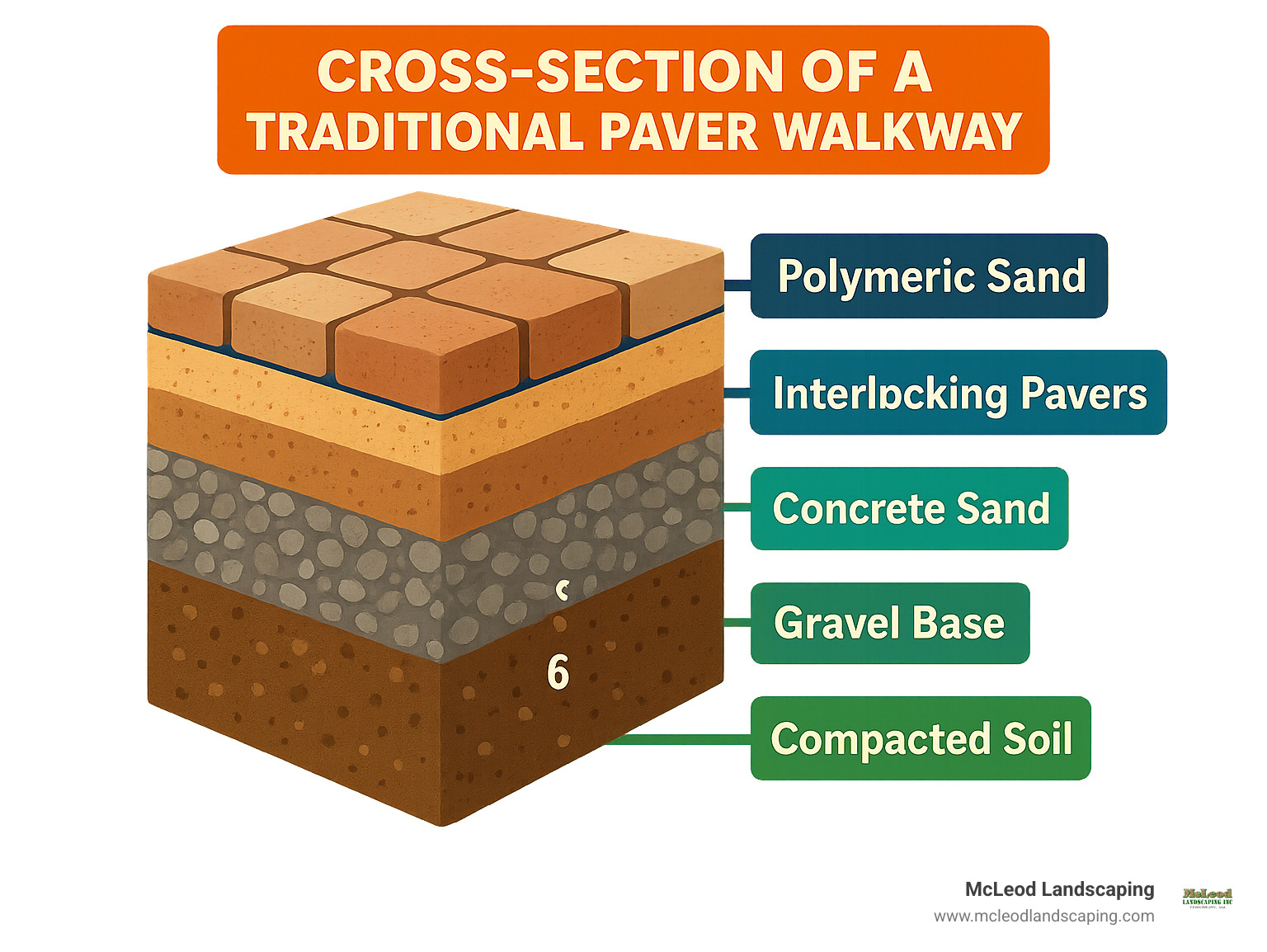
Basic backyard paver walkway terms:
The design phase is where your backyard paver walkway vision comes to life. It’s the critical stage for balancing beauty with practicality to ensure your walkway looks great and functions perfectly for years. A well-designed walkway does more than connect two points—it can genuinely improve your curb appeal and tie your entire landscape together. Your walkway can also connect with other hardscaping elements like patios or retaining walls. You can find more info about hardscaping services on our website.
Choosing the right paver material is crucial for your project’s long-term success. Each option offers a unique combination of aesthetics, durability, and maintenance needs.
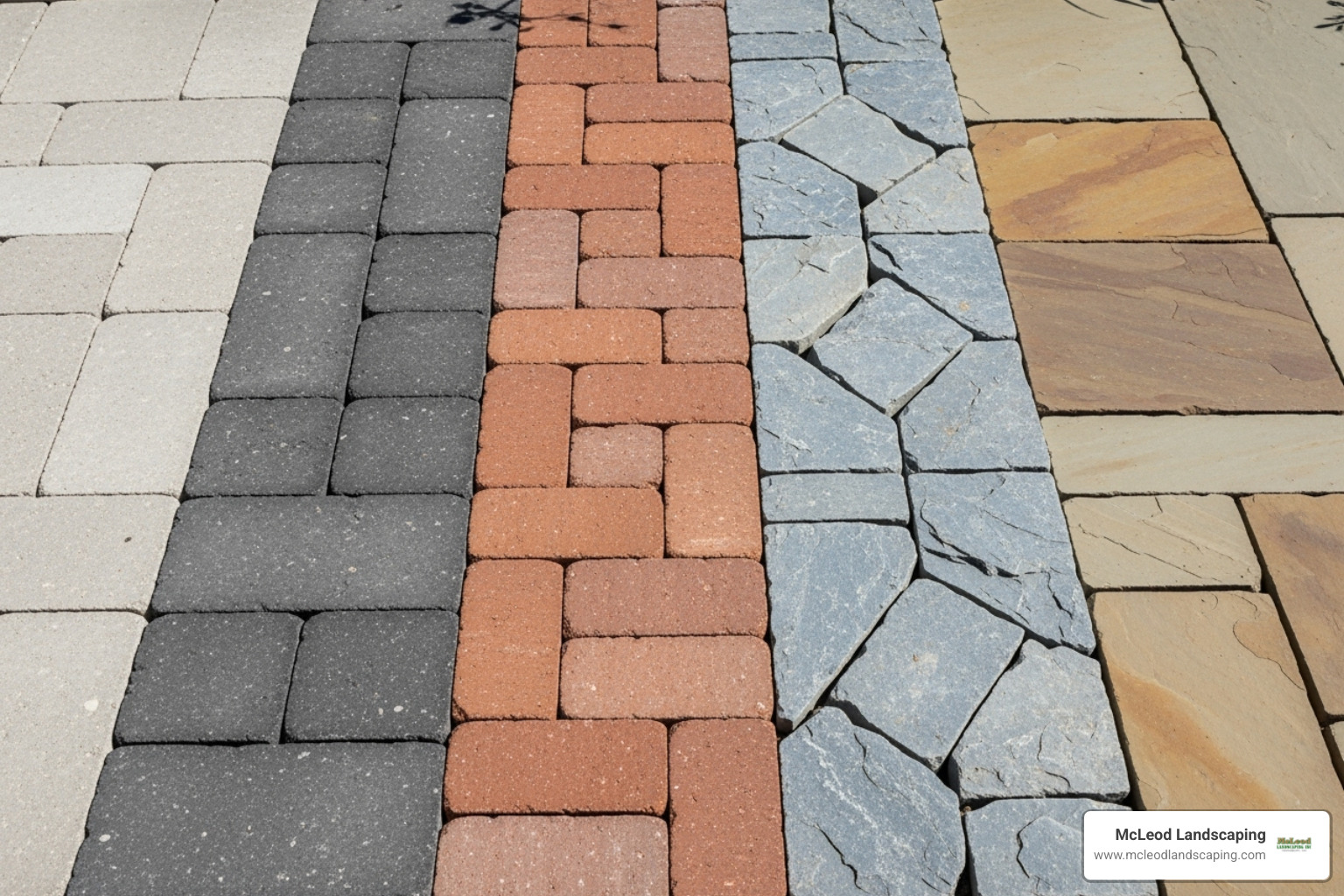
Concrete pavers are highly versatile, available in a vast range of shapes, sizes, colors, and textures, often mimicking natural stone at a lower cost. They are durable and their interlocking design provides excellent stability. However, they can fade without proper sealing and may lack the authentic feel of natural materials.
Brick pavers offer a timeless, classic charm that complements traditional home styles. They are extremely durable, and individual bricks are relatively easy to replace if damaged. The main drawbacks are a higher cost than concrete and a more limited color selection. They can also be prone to moss growth.
Porcelain pavers are a modern, high-performance option. They are incredibly strong, stain-proof, and resistant to mold and moss due to their low porosity. This premium performance comes with a higher price tag, and they can be more difficult to cut for custom shapes.
Travertine pavers provide authentic natural stone beauty. They remain cool in hot weather and have a natural texture that offers good slip resistance. Their porous nature requires regular sealing to prevent stains, and they can be susceptible to chipping if not installed correctly.
| Paver Material | Pros | Cons | Average Cost (per sq. ft.) |
|---|---|---|---|
| Brick Pavers | – Classic, timeless appeal – Durable and long-lasting – Variety of colors and sizes – Relatively easy to replace individual units |
– Can be more expensive than concrete – Limited color palette compared to concrete – May require more maintenance for moss growth |
$5 – $20+ |
| Concrete Pavers | – Highly versatile in shapes, sizes, colors, textures – Can mimic natural stone or bricks – Durable and cost-effective – Interlocking designs offer stability |
– Can fade over time if not sealed – May not have the same “natural” feel as stone – Quality varies widely by manufacturer |
$4 – $15+ |
| Porcelain Pavers | – Extremely strong and durable – Very low porosity (resistant to stains, mold, moss) – Excellent for both indoor and outdoor use – Wide range of modern and traditional finishes |
– Higher upfront cost – Can be more challenging to cut – Less natural variation than stone |
$8 – $30+ |
| Travertine Pavers | – Natural stone with unique, rustic appearance – Known for durability and staying cool in hot weather – Porous nature provides good slip resistance |
– Higher cost than concrete – Requires sealing to prevent staining – Can chip or crack if not properly installed |
$6 – $25+ |
Note: These are average costs based on internet data and not actual costs for McLeod Landscaping. Prices can vary significantly based on location, supplier, paver type, and project complexity.
The pattern you choose can completely change the look of your backyard paver walkway. The same pavers can appear formal in one layout and casual in another.
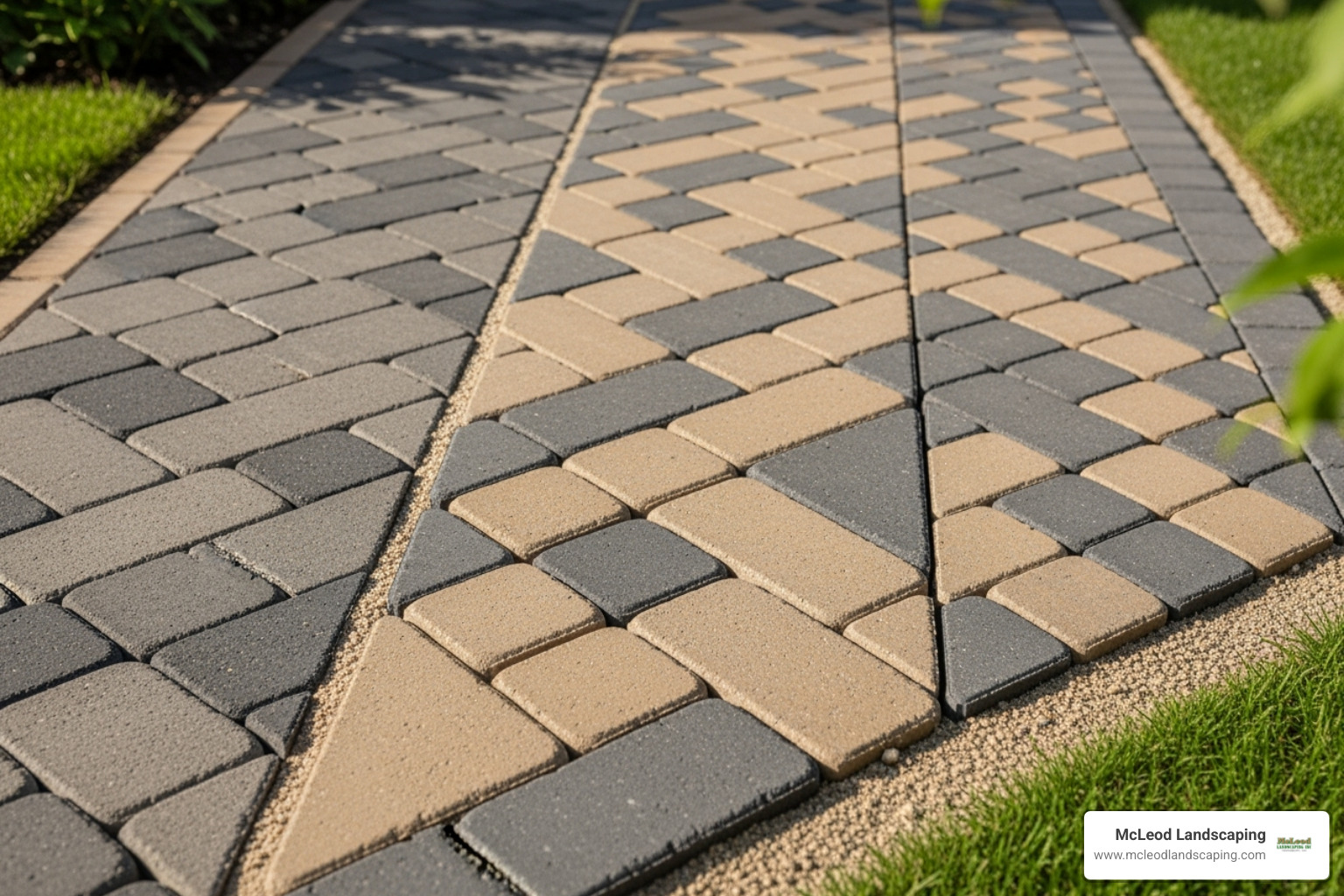
For more unique designs, consider these ideas:
Proper planning of these details is essential for a successful backyard paver walkway.
Walkway width is a key consideration. A width of 36 inches is standard for single-file walking, while 48 inches allows two people to walk side-by-side. For accessibility, designs should meet ADA compliance for walkways, which requires a minimum of 36 inches.
Proper slope is critical for drainage. The walkway must slope away from your house and other structures, typically with a 1/4-inch drop per foot. This prevents water from pooling or running toward your foundation.
Marking the layout brings your vision to life. Use stakes and string to define straight lines. For curves, a garden hose is an excellent tool for laying out the shape before marking it with paint. This allows you to visualize the path and make adjustments before any digging begins.
Installing a backyard paver walkway is an achievable project when broken down into manageable steps. The keys to success are patience, thorough preparation, and using the right tools. Safety is paramount, as this project involves heavy lifting and power tools, so always use proper safety gear. For larger projects, you might explore more info about patio installation services to see how walkways can integrate with other hardscaping.
Having the right equipment is the first step to a successful backyard paver walkway project. For excavation, you’ll need a shovel and rake. A plate compactor is crucial for creating a stable base; you can rent one from most home improvement stores. For precision work, you’ll need a rubber mallet, a level, a tape measure, and a chalk reel. For cutting pavers, a circular saw with a masonry blade or an angle grinder is necessary. For finishing, have a broom, leaf blower, and a garden hose with a misting nozzle. A wheelbarrow is essential for moving materials.
Materials include your chosen pavers, gravel paver base, leveling sand, and polymeric sand. You will also need landscape fabric, paver restraints with spikes, and some PVC pipe or 2x4s for screeding the sand.
Safety gear is non-negotiable. Always use safety glasses, hearing protection, a dust mask, work gloves, and knee pads.

Proper site preparation is the most critical phase of the project. A solid foundation ensures the longevity and stability of your backyard paver walkway.
First, mark your walkway with stakes and string, then clear all sod and plants. Before digging, call 811 or your local utility marking service to locate any underground lines. This is a crucial safety step.
The excavation depth for a standard walkway is 6-8 inches. This allows for a 6-inch gravel base, 1 inch of sand, and the paver’s thickness. The excavated area must maintain the planned 1/4-inch per foot slope for drainage.
Next, grade and compact the subgrade. The exposed soil should be smooth and follow the slope. Use a plate compactor to thoroughly compact the entire area to prevent future settling. Finally, install landscape fabric over the compacted soil to reduce weed growth.
The base layer is the backbone of your backyard paver walkway. You have two main options for this foundation.
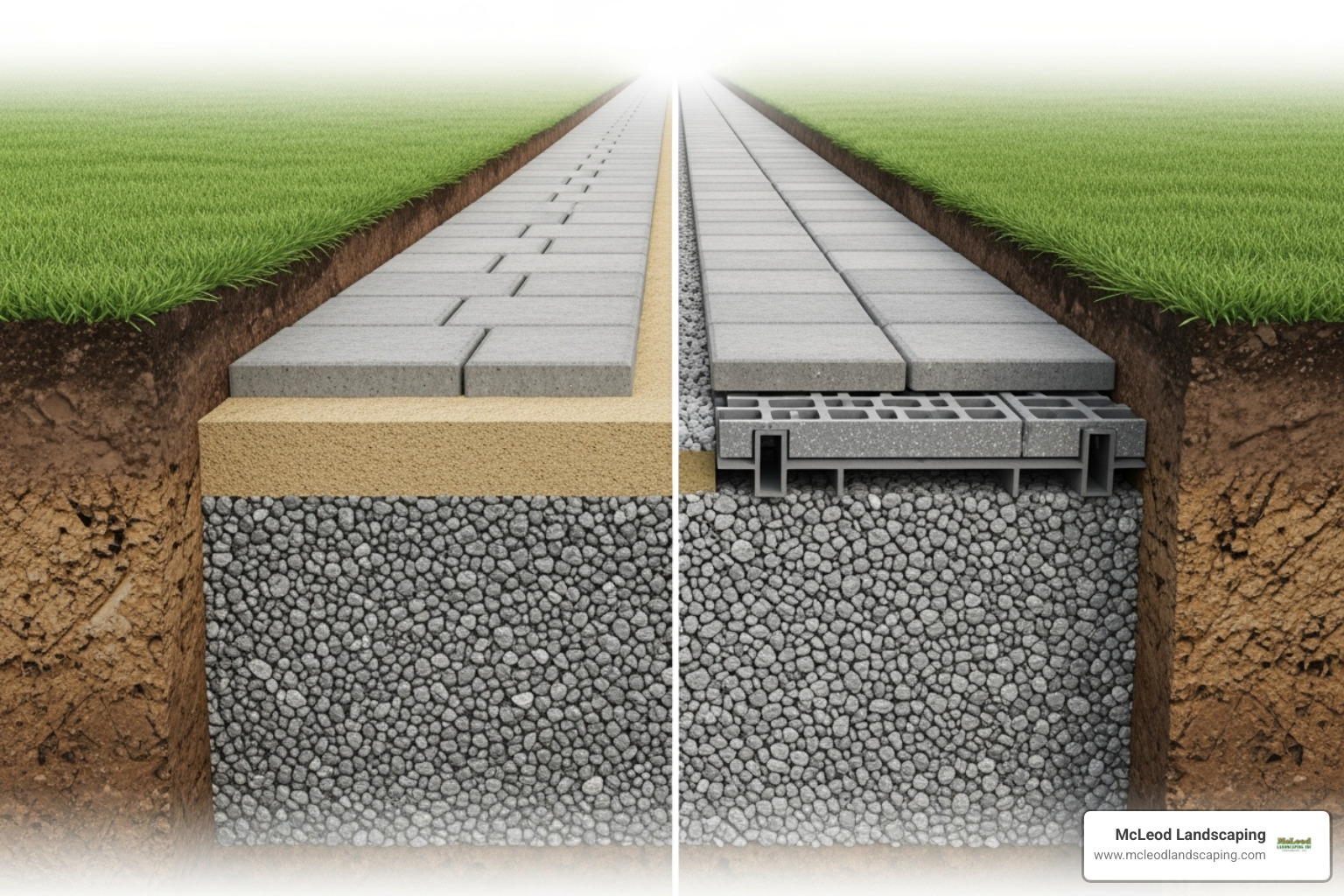
The traditional gravel base involves installing a 6-inch layer of crushed stone. Add the gravel in 2-inch lifts, compacting each layer thoroughly. On top of the compacted gravel, spread a 1-inch layer of concrete sand. Use PVC pipes and a 2×4 board to screed the sand perfectly level.
Interlocking paver base panels are a newer, lightweight alternative that requires less excavation. After leveling a thin sand layer according to the manufacturer’s instructions, you lay the panels down, interlocking them as you go. Staggering the panel joints provides maximum stability.
Both methods provide excellent long-term performance for your backyard paver walkway when installed correctly.
This is the stage where your walkway takes shape. Start from a corner and work systematically, using string lines to keep your rows straight. If you have a border, lay those pavers first. Maintain a consistent ⅛ to ¼-inch gap between pavers; many have built-in spacer nubs. As you place each paver, tap it with a rubber mallet to set it in the sand. Frequently check that the surface is level and maintains the proper slope.
Cutting pavers will be necessary for edges and curves. Use a masonry saw for straight cuts and an angle grinder for more detailed curves. Always wear full safety gear when cutting pavers. Once all pavers are in place, install paver edging around the perimeter, securing it with spikes to prevent the walkway from spreading over time.
Applying polymeric sand is the final, crucial step for a durable backyard paver walkway. This sand contains additives that harden when wet, locking pavers together, preventing weeds, and deterring insects.
The pavers must be completely dry before application. Pour the sand over the walkway and use a stiff broom to sweep it into every joint until full. Run a plate compactor (with a protective mat) over the pavers to settle the sand, then add more sand as needed.
Next, use a leaf blower to remove all excess sand from the paver surfaces. Any remaining sand will harden and stain the pavers. Finally, use a garden hose on a gentle mist setting to lightly wet the entire walkway, activating the polymers. Allow the sand to cure for at least 24 hours before use.
A well-installed backyard paver walkway can last for decades with minimal maintenance. Following a simple routine and addressing small issues promptly will protect your investment and keep it looking great. For those planning additional hardscape features, you can find more info about retaining wall installation on our website.
Winter care is about keeping the walkway safe without causing damage.
Over 30 years with McLeod Landscaping, I’ve answered many questions about backyard paver walkway projects. Here are some of the most common ones.
The cost of a backyard paver walkway varies widely based on several factors. Material costs are a primary driver, with pavers ranging from $4 to $20+ per square foot. Premium materials like natural stone or high-end porcelain can cost significantly more, sometimes exceeding $60 per square foot. Concrete pavers are typically the most budget-friendly option.
Other materials like the gravel base, sand, and edging also contribute to the total cost. For a DIY project of around 90 square feet, material and tool rental costs might be under $1,000 for mid-range pavers.
Labor costs for professional installation generally add $5 to $25+ per square foot, depending on location and design complexity. A simple, straight path will cost less in labor than a curved one with intricate patterns.
The DIY versus professional choice depends on your budget, time, and skill level. DIY saves on labor costs, but professional installation offers expertise, efficiency, and often a warranty.
Note: These are average costs based on internet data and not actual costs for McLeod Landscaping. Every project is unique, and costs can vary significantly based on site conditions, design complexity, and material choices.
The timeline for a backyard paver walkway project depends on the installation method and project complexity.
Factors that can affect the timeline include the walkway’s size, design complexity (curves and intricate patterns take longer), soil conditions, and weather delays.
Yes, building a backyard paver walkway on a slope is possible with careful planning.
Proper grading is even more important on sloped sites. You must work with the existing grade while ensuring water drains correctly away from the path and any structures. This may involve cutting into the slope in some areas and building it up in others.
For steeper slopes, a walkway that follows the natural grade may be too steep to be safe. In these cases, incorporating steps is the best solution. Creating a terraced design with steps breaks up the incline, making the path more comfortable and visually interesting. If you’re considering this, you can find more info about front stairs and step installation on our website.
Water management is critical on slopes to prevent erosion and washout of the base materials. Proper drainage must be integrated into the design to direct water flow away from the walkway.
A backyard paver walkway is a valuable investment that improves your home’s curb appeal, functionality, and overall value. With proper installation and care, it provides a durable and attractive feature for decades. Whether you choose classic brick, versatile concrete, or luxurious natural stone, your walkway will serve as both a practical and aesthetic focal point.
The key to a long-lasting installation lies in proper technique, from a stable, well-drained base to the final application of polymeric sand. The modular nature of pavers also allows for simple repairs, ensuring your walkway remains beautiful for years.
For homeowners who enjoy hands-on projects, installing a backyard paver walkway can be a rewarding experience. However, for complex designs, sloped sites, or to ensure a flawless, professional finish, hiring an expert is often the best choice. An experienced installer handles the heavy lifting, guarantees proper drainage, and delivers a polished result.
At McLeod Landscaping, we have spent over 30 years perfecting paver walkway installation in the Merrimack Valley. We understand how the right path can transform your experience of your outdoor space.
If you’re ready to create your dream backyard paver walkway, we would love to help bring your vision to life. Our team combines decades of experience with a passion for creating beautiful, functional outdoor spaces. Contact us for your walkway installation project and let’s start planning the perfect path for your home.
Contact McLeod Landscaping today at (978) 640-0957 or click here to schedule a consultation for retaining wall installation. Let our experienced team design and install a functional and visually appealing retaining wall that enhances your landscape.


1881 Main St Unit 1, Tewksbury, MA 01876